When AI learns to listen
How Map Action is using AI and local languages to make climate reporting more accessible in Mali

In communities experiencing flooding, illegal dumping or other environmental hazards, local residents are often the first to know something is wrong. But reporting what they see is not always straightforward. When Boubacar Keita and his team looked at where people were dropping out of the reporting process, they found the problem wasn't where they expected.
“It was never the photo or the location,” says Keita, Founder and CEO of the Malian technology company Kaicedra. “Those are one tap. It was the description box. To describe an incident in written French, you need to be literate in French. That excludes most of the people, who are more comfortable speaking a national language. That one field decides who gets to take part in environmental governance in Mali.”

If reporting depends on written text, smartphones or languages that artificial intelligence systems struggle to understand, many of the people closest to environmental hazards can be left out. Map Action is working to change that.
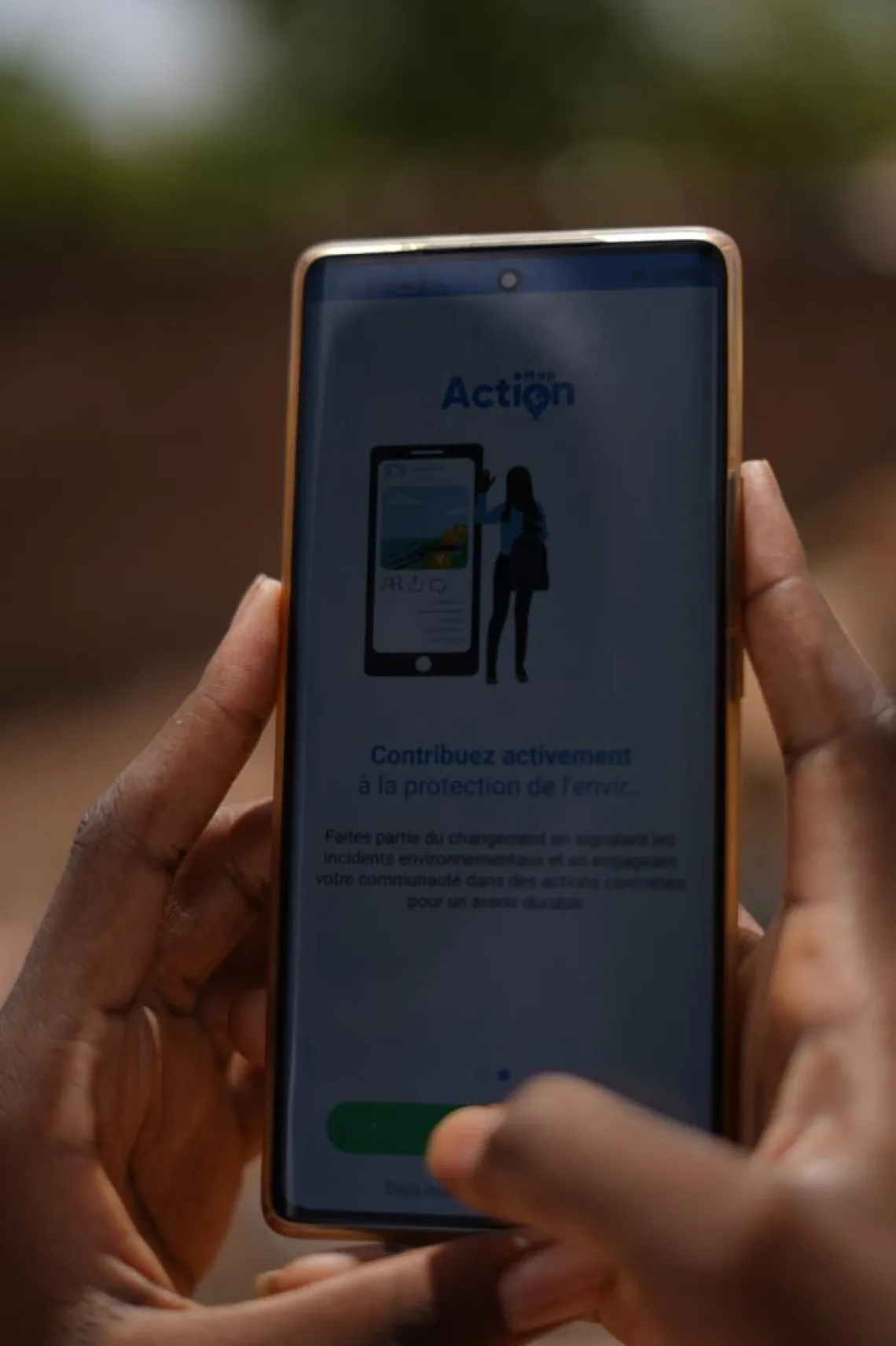
Developed by Kaicedra, the platform combines citizen reports with satellite imagery and open source maps to generate real-time pictures of environmental risks. Local governments can use these insights to identify emerging risks, coordinate responses and allocate resources more effectively.
Kaicedra first partnered with UNICEF through the Venture Fund's inaugural climate cohort, where it developed and tested Map Action as a more locally led approach to environmental reporting and early warning systems. Today, through UNICEF's SPARK accelerator, the team is building on that foundation and working towards wider implementation in Mali using AI-powered voice reporting.
Rather than replacing the app, the new voice reporting system expands who can use it. Through a toll-free phone line, people can report environmental hazards simply by speaking in their local language. Voice reports move through the same platform as reports submitted through the app, allowing AI to identify key information before it is reviewed by a human operator and shared with local authorities.
Building AI that understands Bambara and other local languages is not simply a matter of translation. These languages have far fewer digital resources than English or French, making them significantly harder to train and evaluate.

"The hard part isn't architecture, it's data, and even more than data, evaluation. There was no way to measure whether a model worked on environmental reports in Bambara because no such test set existed. We had to build the ruler before we could measure anything."
Through SPARK, Kaicedra is now working with UNICEF and government partners to refine the platform, strengthen the dashboard used by local authorities and support training ahead of implementation. For Keita, that collaboration has also helped move Map Action from a technology developed by a local startup towards a system being shaped with the institutions that will ultimately use it.
"Before, we were a Malian startup knocking on doors," says Keita. "Being selected through SPARK gave us a standing we couldn't have manufactured ourselves, and UNICEF walked into those rooms with us rather than sending us in alone. Doors that had been closed for two years opened in a matter of months."
That collaboration resulted in a national onboarding workshop bringing together representatives from government institutions across all 19 regions of Mali and the District of Bamako ahead of the platform's rollout. The discussions also reinforced that making the technology work is only part of the challenge. For Keita, the most important feedback was not about a new feature.
"Their number one request wasn't a feature. It was: bring the training to the regions."
The challenge Kaicedra is tackling extends beyond Mali. Across the region, many of the languages people use every day remain poorly represented in the data and tools underpinning AI. For Map Action, making those languages usable in environmental reporting is not only a technical challenge. It can determine who is able to report what is happening around them, and whose knowledge becomes part of the response.
"We are not solving a Malian problem," says Keita. "We are solving a regional one that happens to start in Mali."