What do young innovators in Uganda and Sweden have in common?
UPSHIFT creates a shared space for youth-led solutions and global exchange


Across contexts and continents, young people are responding to the challenges around them with the same instinct: to create, adapt and lead. Through solutions shaped by local realities, their drive to make positive social impact is universal.
This became clear during a recent visit to western Uganda, when a delegation of Swedish Parliamentarians, led by UNICEF Sweden, travelled to Fort Portal to see UNICEF’s UPSHIFT programme in action. The visit was framed as an opportunity to observe how youth-led innovation takes shape when it is embedded in local systems and supported over time.
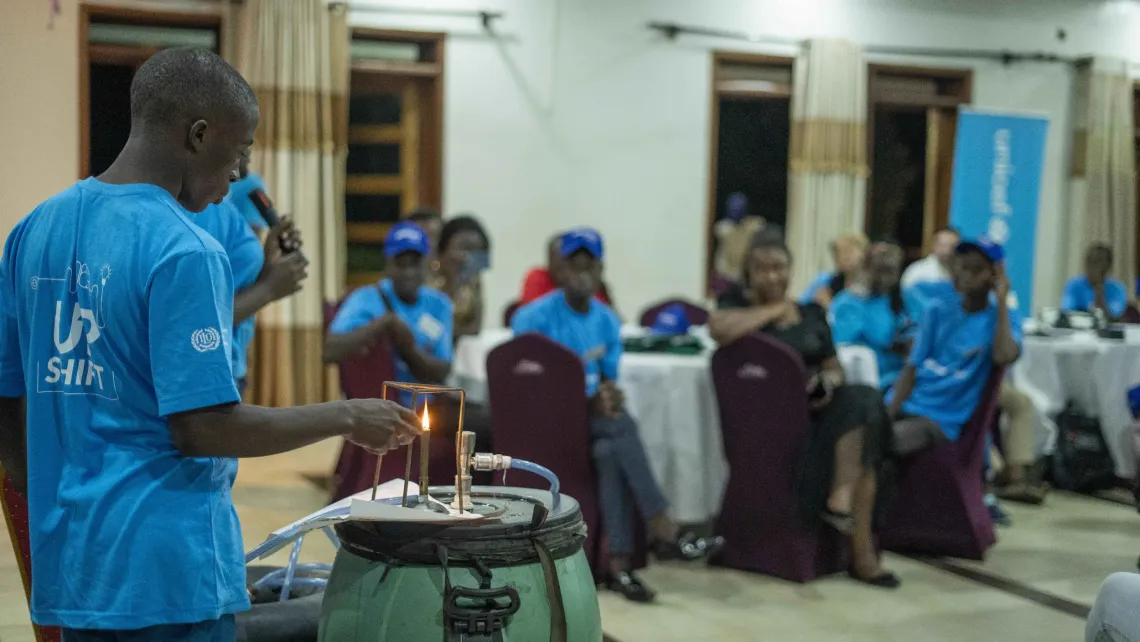
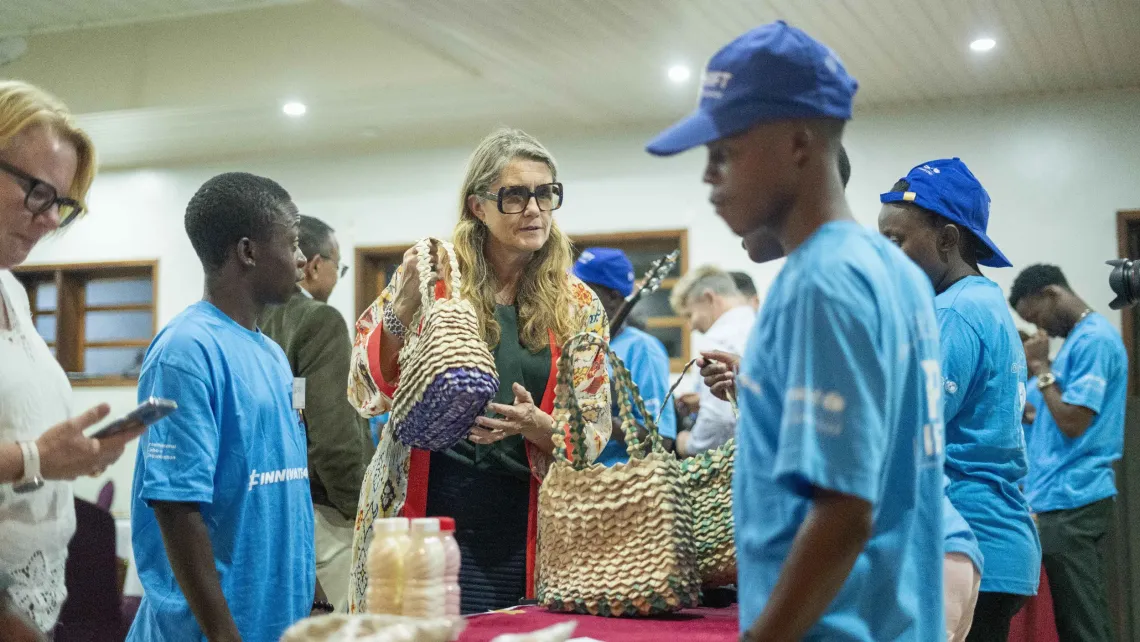
After a seven-hour journey along winding mountain roads, the delegation met a group of UPSHIFTers, many from refugee settlements near the Uganda–Democratic Republic of Congo border. They presented solutions they had developed to address challenges in their own communities. Standing in front of national and international leaders, they pitched with clarity and confidence, grounding their ideas in everyday realities rather than abstract ambition.


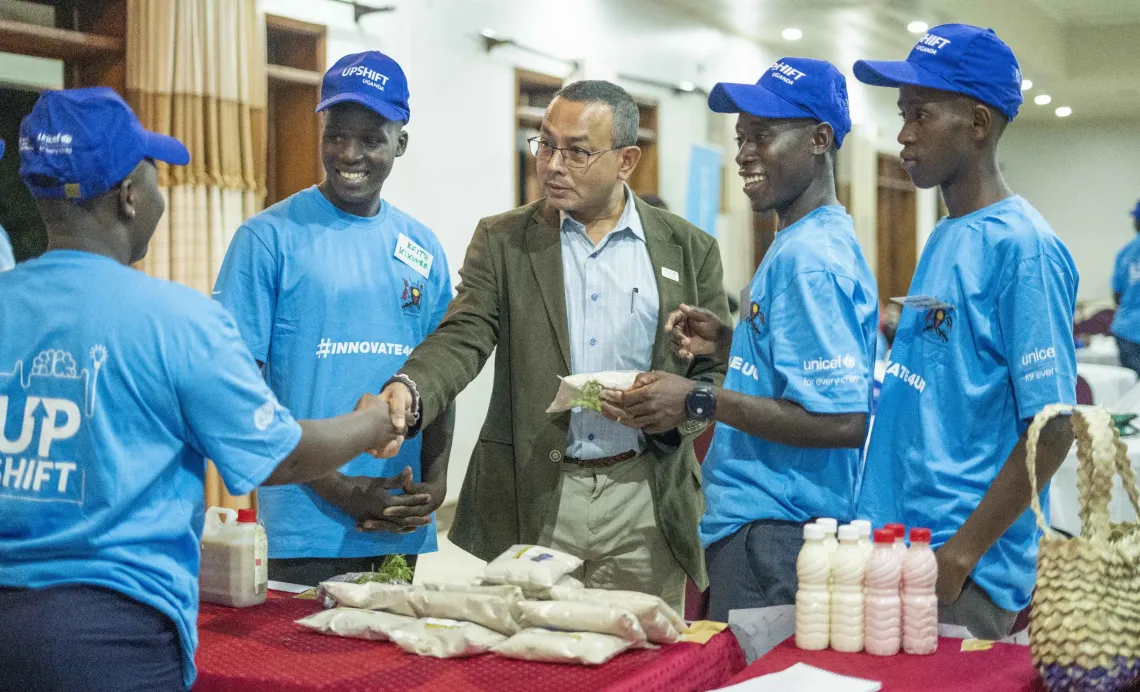


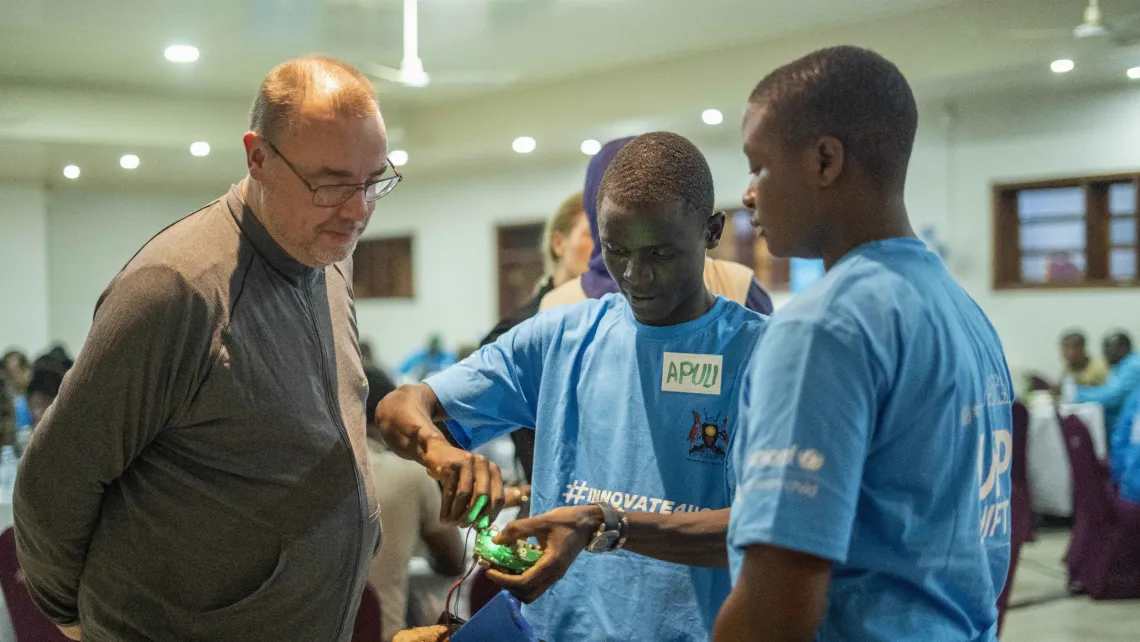
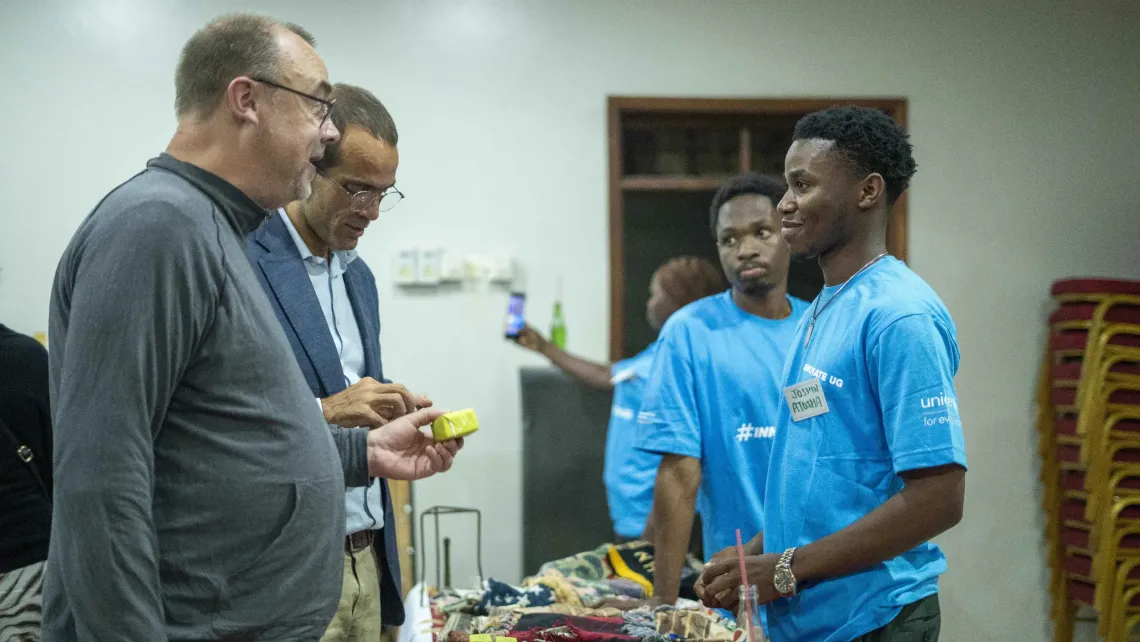
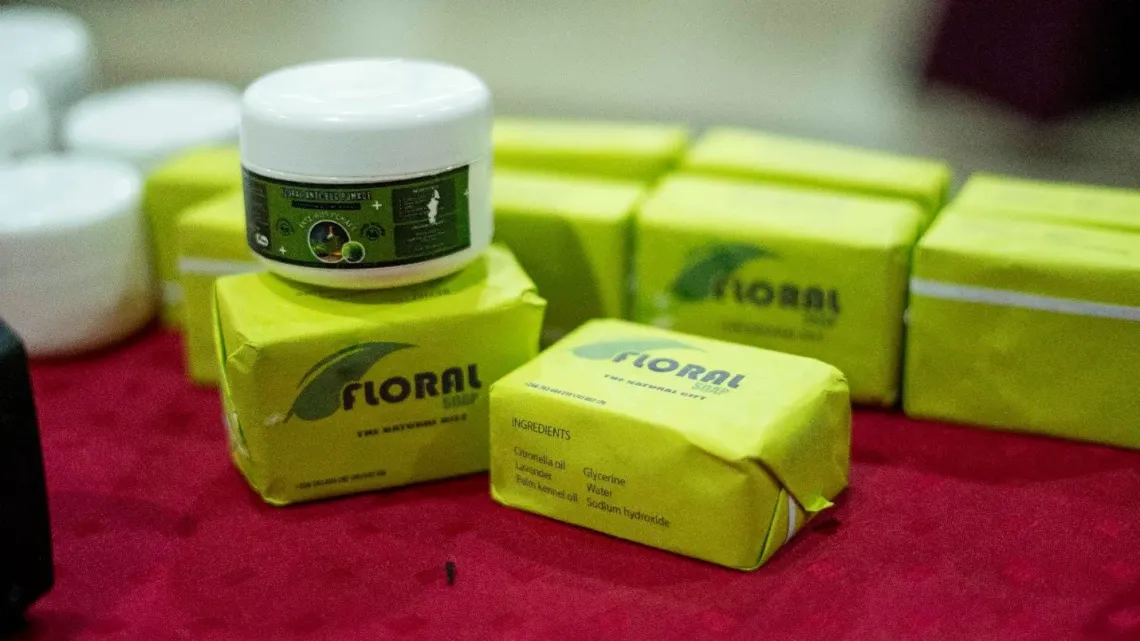
One innovation, addressing a persistent public health challenge, drew particular attention from Markus Kauppinen, a Swedish Member of Parliament. “One thing that stood out was the UPSHIFTers fantastic product, the malaria-repellent soap. It is a brilliant idea! I wondered why no one had thought of it before.”
Innovation where it's needed most
UPSHIFT is UNICEF’s flagship youth social innovation programme, enabling young people to identify challenges in their communities and design practical solutions. It combines life skills, entrepreneurship, design thinking, and mentorship, guiding participants from problem analysis to prototype development, and in many cases, toward launching their own ventures.
UPSHIFT has become a powerful tool for expanding opportunity in Uganda, where 41 per cent of adolescents are not in education, employment, or training. Since launching nationally in 2022 — in partnership with the International Labour Organization (ILO) — UPSHIFT has been embedded into the TVET curriculum, ensuring long-term sustainability and reach.
Early results point to the value of this approach. Fifty per cent of UPSHIFTers launch income-generating social enterprises, 35 per cent are more likely to transition into employability pathways, and 23 per cent achieve higher practical skills acquisition. These outcomes reflect both individual initiative and the enabling role of the systems around them.
That ecosystem was most visible in November 2025, when Uganda hosted the National i-UPSHIFT Youth Social Innovation Summit in Kampala. The Summit brought together 1,200 participating youth, recognized 72 youth groups for outstanding innovations, and awarded UGX 1.7 billion (USD 450,000) in Innovation Development Grants. Through exhibitions, mentoring, and networking, young innovators from refugee and host communities engaged directly with government actors, development partners, and investors, linking early-stage ideas to pathways for growth and scale.
“Witnessing UPSHIFT in action in Uganda — especially in a refugee setting — was truly inspiring. The confidence and creativity of the young participants showed exactly what’s possible when we invest in youth potential.”
Karin Strömstedt, International Advocacy Advisor, UNICEF Sweden
Youth innovation as a global unifier
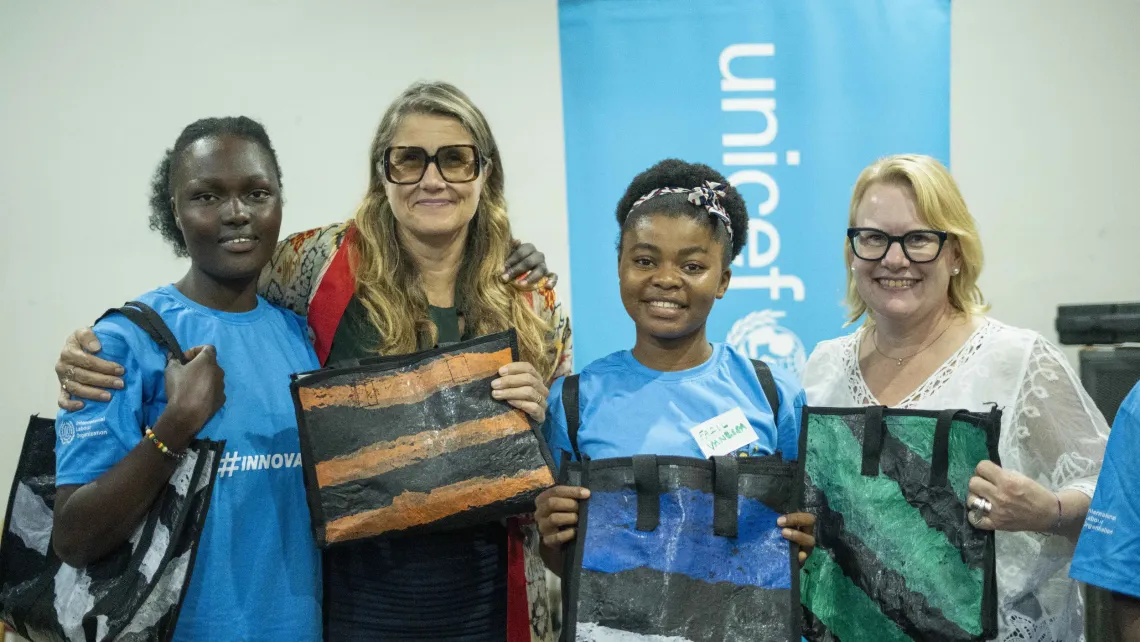
Conversations during the visit prompted reflections on Sweden’s own youth entrepreneurship landscape, with delegation members noting parallels between UPSHIFT and initiatives supporting young innovators in Sweden. While contexts differ, similar questions emerge across settings: how to create space for young people to test ideas, how to reduce the risks of early failure, and how to ensure that innovation pathways connect to real economic and social opportunity.
UPSHIFT’s presence in 59 countries globally demonstrates how youth-led solutions can emerge in many forms when programmes are grounded in local context and backed by long-term commitment. Together, the Government of Uganda, the Government of Sweden, and UNICEF are contributing to creating a future where every young person can build skills, strengthen livelihoods and drive local innovation.