Innovation Across Borders: Egypt
Rasha Marzouk, UNICEF Egypt, shares how her team moved beyond one-size-fits-all aid to deliver customized hygiene support shaped by people’s needs.
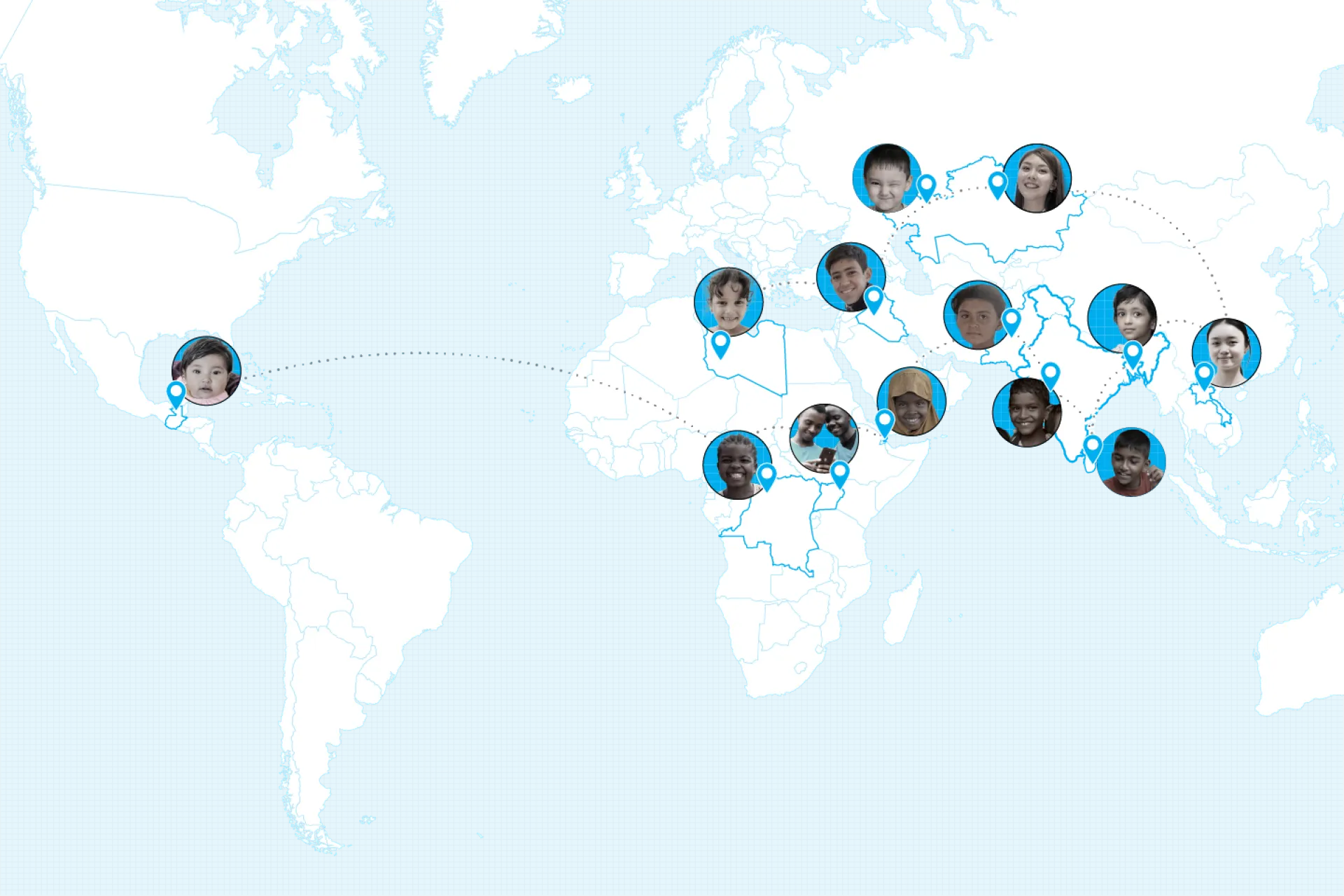
Across 190 countries and territories, UNICEF colleagues and partners are on the frontlines of the greatest challenges affecting the lives of children and young people. Innovation Across Borders highlights the experiences, successes and learnings of innovation champions, committed to making positive social impact.


What is the problem you set out to solve with Kits that Fit?
Since April 2023, Egypt has received more than one million Sudanese refugees crossing the border, often after journeys lasting several days with very few belongings. Our team at UNICEF Egypt initially responded with standard hygiene and dignity kits, which worked in the early stages because families were arriving together and could easily share contents among themselves. But as people settled inside Egypt and began accessing different services, their needs became much more diverse. The challenge became even more apparent during the Gaza emergency, where many medical evacuees arrived in single-gender groups, often men travelling with male relatives. In this context, mixed-gender kits were culturally inappropriate, as highly gendered items like menstrual products are considered very private. It also created unnecessary waste at a time when resources were limited. Through feedback from communities and the Egyptian Red Crescent, we realized the standard approach was not flexible enough to respond to different cultural contexts and personal needs, which led us to implement Kits That Fit.
What has the impact of your innovation been in Egypt?
Kits That Fit has transformed how we design and deliver hygiene support by introducing real-time feedback directly from people receiving the kits. QR-code feedback mechanisms help us understand differences in needs across age, gender, nationality, and emergency contexts, allowing the team to adapt kits accordingly. The approach has supported the distribution of more than 109,000 kits for Sudanese refugees and 25,000 for Gazan refugees across categories including male, female, baby, and student kits. Beyond distribution itself, the model has strengthened partnerships with more than ten service providers, including the Egyptian Red Crescent, and helped build local capacity to collect feedback, adapt services, and integrate the approach into other areas such as winterization kits, cash assistance, and community health outreach.

What challenges have you encountered?
One of the biggest challenges is the general UNICEF procurement procedures. Historically, long-term agreements are established for standard kits, and it becomes difficult to adapt the contents even when community feedback clearly showed changes are needed. Our team had to work closely with supply colleagues to redesign the system so items could be priced individually rather than as one fixed package. This created much more flexibility to adjust kit contents without violating procurement rules. Another challenge was the level of customization required across different refugee communities and emergency contexts, where cultural sensitivities, gender dynamics, and living conditions all shaped what people actually needed and would use.
What have been the high points?
One of the proudest achievements has been committing to a more meaningful approach: giving people what they actually need rather than what institutions assume they need. Instead of keeping control centralized within UNICEF, our team invested in building the capacity of partners and community workers to collect feedback, adapt services, and continue the work themselves. For me, the high point has been seeing how this allowed more children and families to benefit from the programme while creating stronger, more sustainable systems around it.


What have the greatest lessons learned been?
One of the biggest lessons has been the importance of listening closely to communities and using limited resources as effectively as possible. Real-time feedback shows us that small adjustments to kit contents could make a major difference in whether people felt respected, comfortable, and properly supported. We also learned that flexibility matters at every level, from procurement systems to vendor relationships. For example, having developed stronger relationships with one supplier led to them replacing masks – for which there was no use – with small towels at the same price to better match community preferences while we worked toward a longer-term procurement solution.
What’s next for this innovation?
The next step is expanding the Kits That Fit approach beyond migrants and refugees to other groups in Egypt, including vulnerable host communities, supporting a shift from humanitarian response towards a more development-oriented approach. The needs are now being identified through focus group discussions with community health workers, and our office is also exploring how the same feedback-driven model can be applied beyond hygiene kits to other areas such as winterization support, cash assistance, and broader refugee response programming. The goal is to continue adapting services around people’s real needs rather than relying on one-size-fits-all responses.
Do you have any messages for colleagues and partners looking to innovate or step into the world of Kits that Fit?
People and children affected by emergencies deserve the best possible support, and they are the ones who know what they need. We should not be the ones deciding that for them. For me, Kits That Fit is about respecting people’s dignity and designing services around their real needs and lived realities. At the same time, we are working in a humanitarian environment where resources are limited and the challenges facing children are becoming more complex every day. That means we have a responsibility to make the best possible use of every grant and every resource available to us so we can reach more children and families with support that is actually useful, appropriate, and meaningful to them.