Innovative groundwater mapping, exploration and sustainable development
Unlocking access to sustainable safe water for children and families living with water scarcity
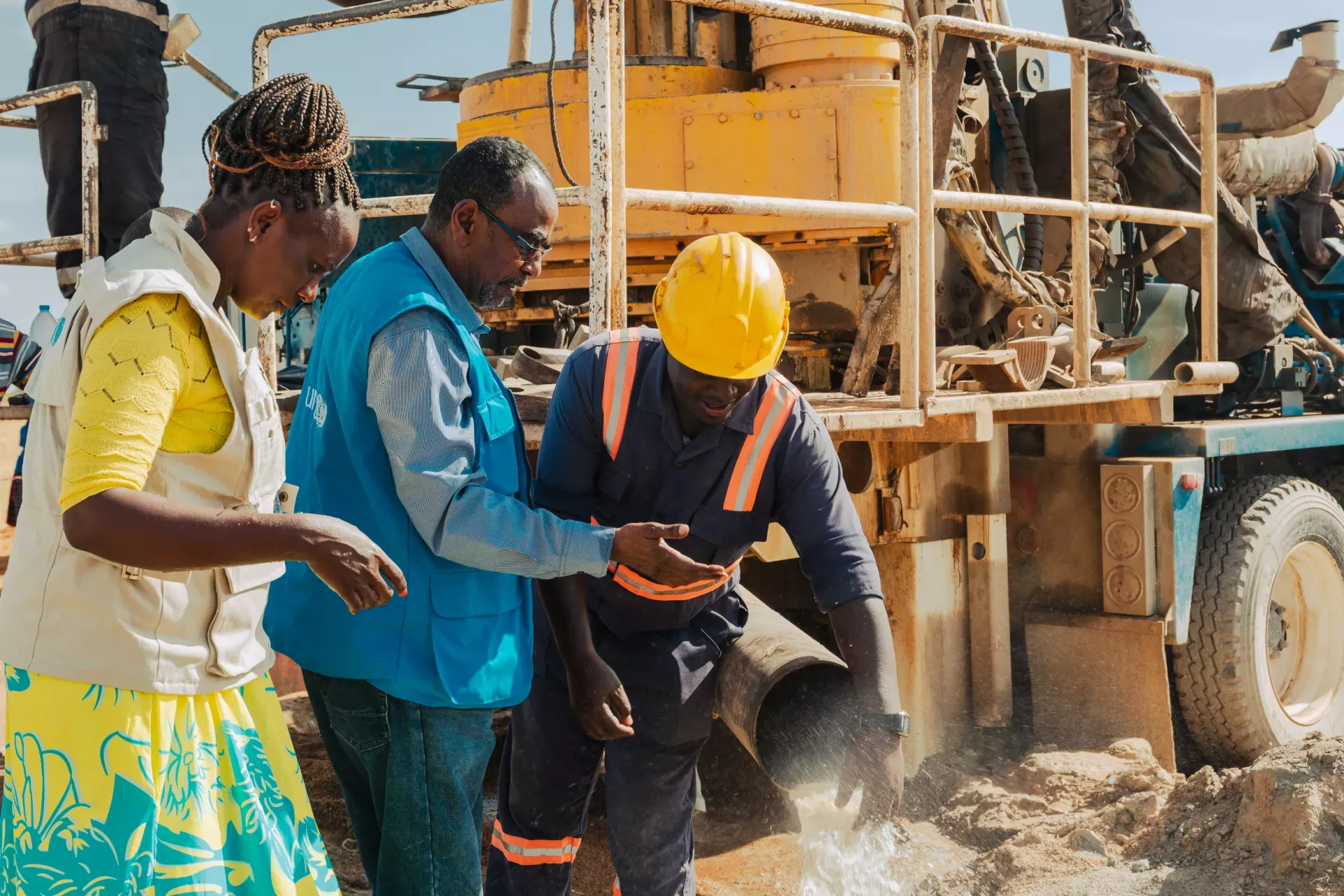
In many of the world’s driest and most climate‑fragile regions, water lies hidden underground. Known as groundwater, this precious yet under-utilized resource can provide reliable and drought‑resilient drinking water when surface supplies fail.
Yet accessing deep groundwater has historically involved high costs and uncertainty. Poor data and limited mapping increase the likelihood of drilling unsuccessful boreholes. Even when water is found, pumps can be costly to operate or water quality unsuitable for drinking.
The UNICEF Sustainable WASH Innovation Hub is working with governments, UNICEF country offices, academics and private sector partners to change this. Through innovative groundwater exploration, mapping and sustainable development, UNICEF is accelerating the use of advanced technologies, data-driven methods and sustainable financing models to unlock safe groundwater for the most vulnerable children and their families.
Groundwater mapping
UNICEF is leading an innovative groundwater mapping approach that combines satellite data, digital modelling, local knowledge and on-the-ground verification. Together, these elements support the creation of detailed groundwater suitability maps that help reduce risk and costs.
To date, mapping has covered more than 1,000,000 km² across the Horn of Africa and Angola, in areas home to around 35 million people. UNICEF is also exploring how AI and machine learning can unlock more value from this huge reservoir of data.
“If a lot of water is found here, it will help us in many ways. In farming crops, helping children study, it will be a joyful time.”
Groundwater exploration
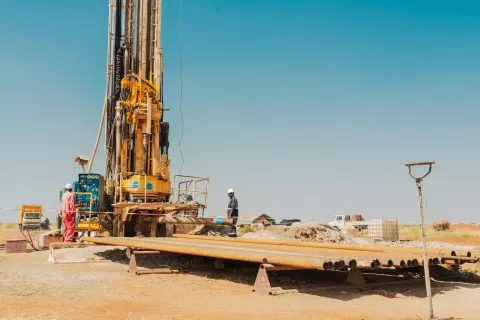
Mapping is followed by targeted exploration, which confirms groundwater availability and quality through systematic investigation and deep drilling.
Using these data‑driven methods, some of the deepest boreholes in the Horn of Africa have been drilled. In Somalia, one borehole reached depths of more than 700 metres, helping access water previously thought unreachable.
Where appropriate, exploration includes the use transient electromagnetics (TEM), a technique advanced in Denmark which sends electrical pulses into the ground to help calculate the depth, size and type of aquifers and the likely salinity. TEM enables faster, more accurate decision‑making before drilling, reducing costs and the risk of not finding water.

UNICEF's Role: Supporting rapid and sustainable scale-up
Once groundwater has been found, UNICEF is working to make sure it is managed sustainably and affordable to access. This includes the introduction of Managed Aquifer Recharge which redirects and stores water underground during high rainfall for drier times.
UNICEF is also exploring sustainable financing mechanisms that support long‑term operation and maintenance of water services, helping ensure reliable access to safe drinking water for vulnerable communities.
The results so far
UNICEF is scaling up innovative groundwater mapping, exploration and sustainable development across multiple countries including Angola, Djibouti, Ethiopia, Kenya and Somalia, with more countries in the pipeline.
As of October 2024, 29 deep wells have been drilled in Ethiopia and Kenya, all successfully reaching deep aquifers, with 15 already supplying safe drinking water to communities.
Next steps to accelerate scale
UNICEF is developing guidance, networks of partners and investors, and innovative financing mechanisms for increased mapping and drilling. The use of AI is being explored to improve data analysis. Over the coming years, mapped areas will expand, water sources will be developed, and additional wells will be drilled. Exploratory work will begin in Djibouti in 2025, with other countries in the pipeline.
Want to learn more?
- Read our field note on optimizing deep water supply drilling outcomes in Kenya and Somalia.
- Download our three-page briefing note on More Water More Life: Deep Groundwater Mapping in Africa.
- Access our three-part webinar series on innovative groundwater exploration, mapping and sustainable development.
- Participate in our four-part webinar series on groundwater suitability mapping.
About the UNICEF Sustainable WASH Innovation Hub
The UNICEF Sustainable WASH Innovation Hub helps accelerate the scale of proven, climate resilient innovations to transform access to safe and sustainable water, sanitation and hygiene for children and their families globally. We do this by collaborating with partners and UNICEF’s global network.
Keep abreast of learning opportunities and how to get involved with WASH innovation by joining our mailing list.