Health Innovation Portfolio
Innovating for a Healthy and Equitable Future for Children and Young People
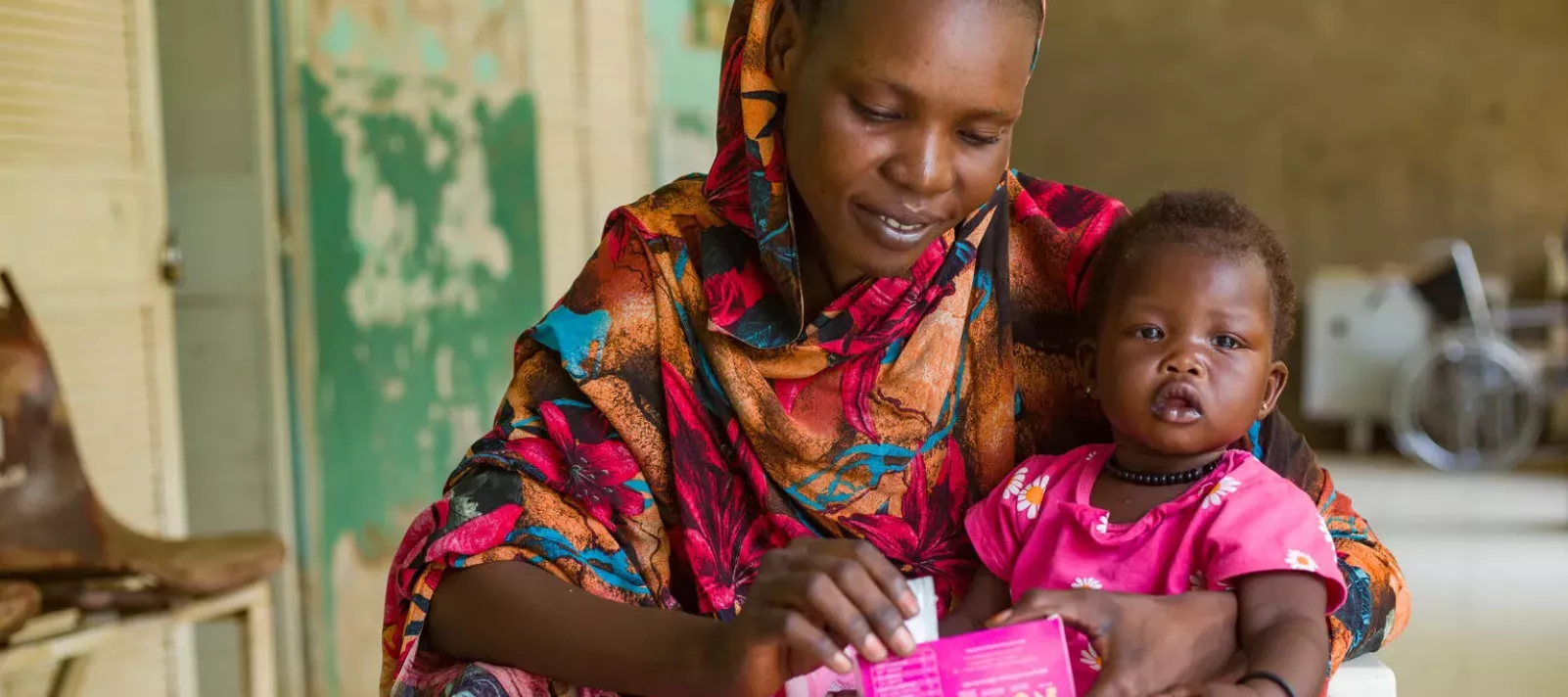
Global inequities in access to maternal and child health services affect pregnancy and childbirth outcomes, routine immunizations, and protection against sexually transmitted infections.
The UNICEF Health Innovation Portfolio addresses these challenges by equipping local health workers with high-resolution data and advanced analytics to better understand and meet health needs. It also supports providing health services that are tailored to the needs of adolescents, including sexual and reproductive health and rights.
The key focus areas of the portfolio are to:
- Develop and scale transformative health innovations tailored to the specific challenges faced by children and young people. This involves continuous exploration, iteration, and scaling to ensure these innovations effectively reach and impact those in need.
- Strengthen the innovation capacity of UNICEF health programs and partners within local health and innovation ecosystems. Our objective is to empower these systems to ideate and scale innovations that address specific, community and programme-driven needs, ensuring systematic and sustainable improvements for young people over time.
- Catalyze thought leadership and partnerships in health innovation by facilitating dynamic networks of innovators, academics, and industry leaders. Through pioneering research, leveraging market intelligence, and leading international forums, we position UNICEF and its partners at the forefront of health innovation. Our efforts in steering critical discussions align our solutions with the evolving needs of children and young people and guide global health innovation.
Enhancing Primary Health Care at the Community Level
The portfolio supports solutions that leverage frontier technologies like AI and advanced data analytics to enhance service delivery and improve health outcomes. These include:
- Data-Driven Health Service Planning and Delivery: Transforming how health data is collected, analyzed, and utilized to enable comprehensive visualization of health service needs. This aids optimized resource allocation and system-wide improvements.
- AI-Assisted Tools at Point-of-Care: AI-driven diagnostic and monitoring tools facilitate rapid and accurate health assessments, enabling quality care even in settings with limited resources, which is critical for timely and effective healthcare delivery. They can also strengthen health promotion and self-care by providing support directly to individuals through digital channels.
- Equipping Community Health Workers with 21st Century Skills: Community health workers (CHWs) are critical to the delivery of health care services, particularly in resource-limited settings. The portfolio works to equip CHWs with skills and training to leverage technological advancements. From trainings on virtual reality and automation technologies to implementing AI-driven language translation tools, our goal is to help CHWs adapt to the evolving healthcare landscape and enhance the coverage and effectiveness of their services.
Transforming the Health Landscape for Adolescent Girls
The portfolio discovers, co-creates and scales innovative solutions to overcome obstacles that obstruct access to crucial health services for adolescent girls in low and middle-income countries.
The Health Portfolio works across UNICEF’s global network to harness the power of systems-based innovation to champion innovative solutions that enhance coordinated care and accessibility of vital sexual and reproductive health and rights (SRHR) information and services. This focus extends not only to adolescent girls but also to young mothers. By identifying and implementing integrated services that are meticulously tailored to meet their unique needs, we aim to break down barriers and foster an environment where girls' health needs and rights are not just met but prioritized.
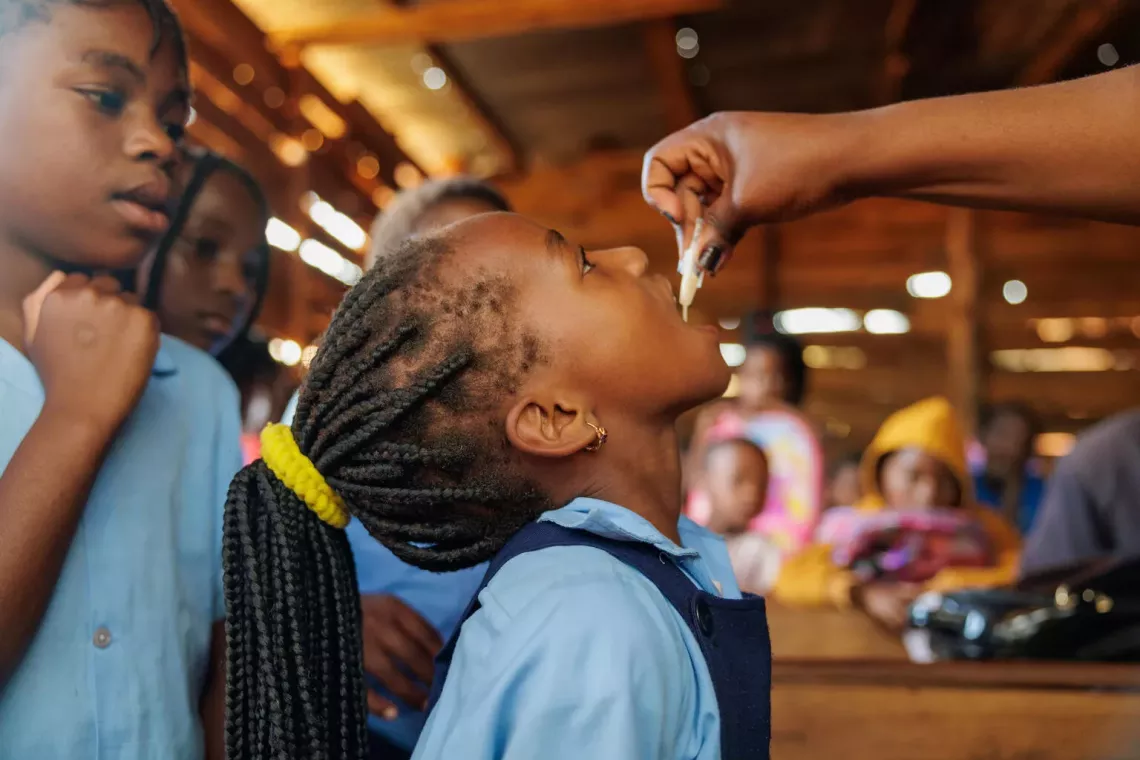
Worldwide, UNICEF is working with innovators to develop cutting-edge solutions to support health workers and patients alike through solutions that leverage high-resolution data and advanced analytics. Highlights include:
- RT-VAMA is a cutting-edge digital toolkit developed to enhance the efficiency and effectiveness of vaccination campaigns by leveraging real-time data monitoring and analysis.
- The Population for Data Action (POP4ACTION) Initiative enhances population data and empowers local health workers by integrating settlement data into routine information systems, ensuring that no child is left behind. Nearly 150 million children have been mapped through census and satellite data.
- The U-TEST initiative improves HIV prevention for at-risk adolescents aged 15 to 24 in Côte d'Ivoire, Nigeria, and Cameroon. It uses digital technology, social networking, and community outreach to promote HIV self-testing (HIVST) and pre-exposure prophylaxis (PrEP), engaging marginalized youth through platforms like U-Report, WhatsApp, and Facebook. More than 4.4 million young people have registered for U-TEST.
- The Project Maya: Pregnant and Parenting Adolescents (PPA) Co-Innovation is a key initiative under the Adolescent Girls' Health and Wellbeing Innovation Initiative. Piloted in Nepal, it develops solutions for the health and wellbeing needs of pregnant and parenting adolescents using design thinking and systems-based approaches, integrating strategies from child protection, social behaviour change, and gender teams.
Join us in discovering, co-creating and scaling solutions that have the power to transform maternal and child health around the world.