Innovate to Vaccinate
Immunization and vaccine equity, for every child
Around one in five children worldwide are not protected against vaccine-preventable diseases. Data from UNICEF’s new report on global immunization stress the need for urgent action – and innovation.
A total of 67 million children missed out on vaccinations between 2019 and 2021, with vaccination coverage down in 112 countries. The new and alarming data on global immunization is part of a slate of urgent issues highlighted in The State of the World’s Children 2023: For Every Child, Vaccination, released by UNICEF.
The report highlights the largest sustained backslide in childhood immunization coverage in 30 years – fuelled by the COVID-19 pandemic – and presents a clear agenda of concrete recommendations to ensure every child, everywhere is vaccinated and strengthen global primary health care systems for present and future challenges.
Innovation is central to the report’s comprehensive framework of recommendations, and underpins key priorities for each of its four main areas of action.
Innovating to vaccinate - for every child, everywhere
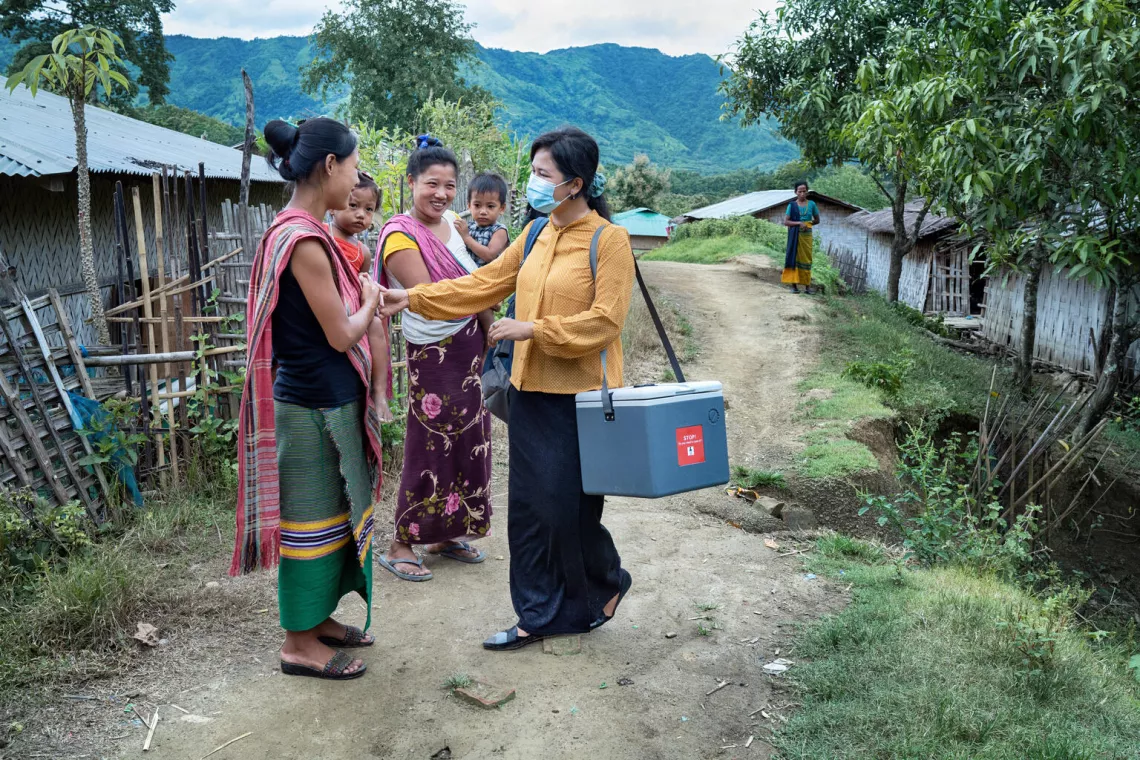
Achieving vaccine equity requires reaching zero-dose (unvaccinated) and under-vaccinated children in remote rural areas and informal urban settlements, as well as where barriers to vaccination may be less obvious. Identifying these children will require new technologies and approaches for timelier, more granular data, as well as a range of innovations in high-quality and fit-for-purpose data for targeted action.
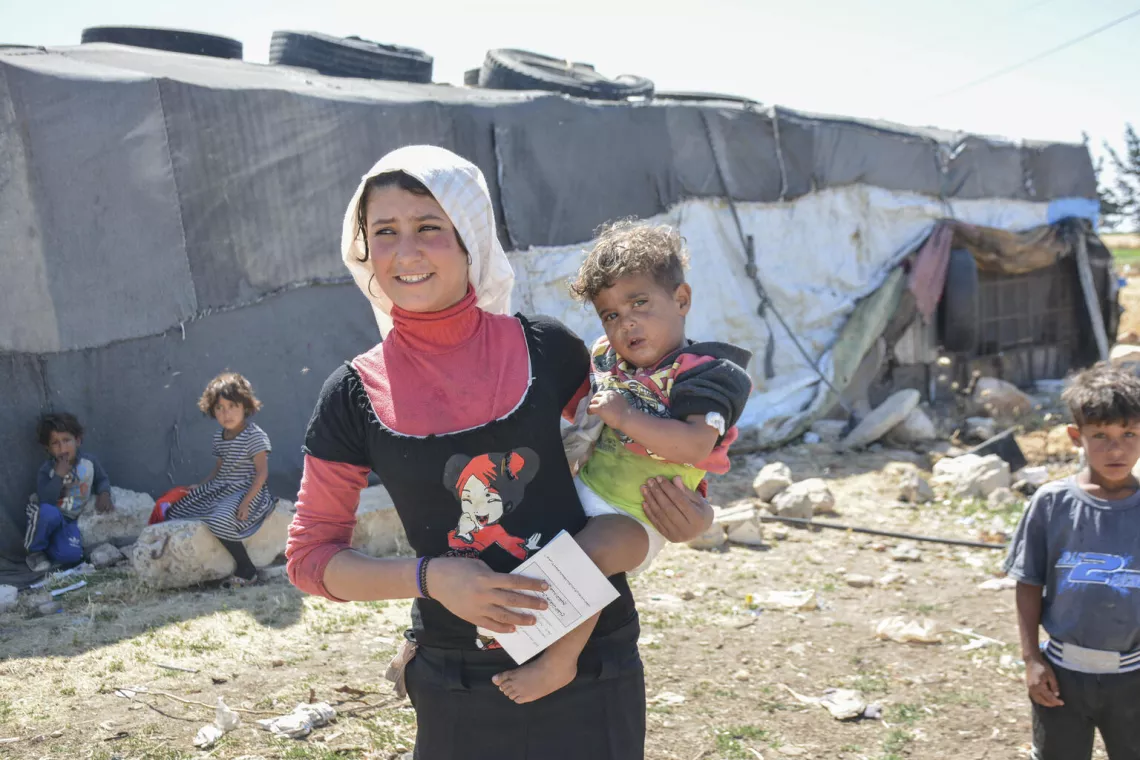
Likewise, meeting vaccination challenges in conflict, emergency and fragile settings requires focus and investment in innovative and inventive solutions – from vaccines with longer shelf-lives to logistical breakthroughs in drone deliveries, and digital and mobile money systems for supporting and paying health workers.
For the long term too, smart, sustainable innovations are key to systems that are both future-friendly and future-proof – ensuring resilience and responsiveness to new outbreaks, as well as the unfolding challenges of conflict, crisis and climate change. Novel technologies such as solar-powered cold chains, heat-resistant vaccines and micro-array patches can ensure vaccine access for communities in the toughest settings, and digitalization of data for stock management and supply chains can protect and strengthen supply chains at local, regional and global levels.
Creative solutions addressing vaccine hesitancy
The report also sounds the alarm on worrying trends in vaccine hesitancy, noting that public perception and confidence in the importance of vaccines for children declined during the pandemic. Innovative, people-centred approaches in social listening, community engagement and caregiver support – especially with a view to gender gaps, barriers and roles – are therefore fundamental to understanding and shaping attitudes on immunization and health services.
In this context, the Office of Innovation, together with UNICEF Innocenti and the Regional Office for Europe and Central Asia, is collaborating on the innovative use of behavioural insights (BI) to identify, understand and tackle vaccine hesitancy and immunization uptake for a range of preventable diseases, including human papillomavirus (HPV) and measles, mumps and rubella (MMR).
Grounded in experimentation and piloting, BI applies people-centred policymaking that draws on psychology, cognitive science and social science – along with empirically-tested results – to understand how and why people make the choices they do.
The initiative leverages BI findings– including identification of target population and behaviour (i.e., timely vaccination); evidence reviews and qualitative research; and participatory, human-centred design for identification, pre-testing and refinement of behaviour change interventions – to then address the data with innovative solutions to scale across each country context.
In Georgia, for instance, data showed the HPV vaccine has the lowest uptake of all government-supplied vaccines. Only 12% of eligible girls received two doses of the HPV vaccine in 2021.
Finding new ways to increase uptake of the first vaccine led to a co-designed innovation with caregivers of 10-12-year-old girls eligible for HPV vaccination. Four different SMS reminder messages were designed based on available behavioural science evidence. Now, the effectiveness of the digital solution is being assessed via a randomised controlled trial with more than 55,000 participants. Other examples include Bosnia and Herzegovina, Kyrgyzstan, Montenegro, North Macedonia and Uzbekistan.
Spending more, spending better - and spending smarter
Financing immunization requires far more than a historic investment in numbers alone. It calls for a complex combination of funding, partnerships and political will, and a step change across the work of governments, donors and partners for greater efficiency, effectiveness and speed. According to the report, vaccines deliver an unrivalled return on investment - every dollar spent on vaccination delivers a return on investment of US$26. Innovative financing solutions are a key catalyst for this step change and offer unmissable opportunities to maximize returns and unlock new sources of funding.