Blog post
What women in Tunisia taught us about building for them
Feel by Luna is an AI-powered diagnostic platform that supports women to receive fast, appropriate gynaecological care for endometriosis
By Luna for Health, Tunisia
16 September 2026
In 1955, Tawhida Ben Cheikh, Tunisia’s first woman doctor, took charge of the maternity unit at Charles-Nicolle Hospital in the capital Tunis. She went on to found Tunisia’s first family-planning service and its first school of midwives. Today, her face is on our 10 Dinar note.
Seventy years later, a new women’s health gap has opened. Endometriosis – a condition where cells like the womb lining grow elsewhere in the body – is barely known across the country, and globe. No one knows how long Tunisian women wait for a diagnosis. Nobody knows, because nobody has asked.
Luna for Health is a woman-led health tech company working across Paris and Marseille in France, and Tunis and Sousse in Tunisia. We started the company because women with endometriosis often wait years for a diagnosis as they are told time and time again that the pain they are feeling is normal. We are working to change that.
Finding the right solution
Every woman and girl in Tunisia deserves fast access to the right gynaecological care. That’s why, with UNICEF Venture Fund support, we’re building Luna for Health: an open-source women’s health platform that connects women with the right practitioner, fast.
Our original solution was a voice-journalling app where a woman could record her story in Tunisian Arabic, French or English, and our AI would turn it into a clinical timeline to support her diagnosis and access to care. We built our prototype, Feel by Luna, and tested it with women in Tunisia in May and June.
Three out of four completed the logging of their symptoms in under a minute, but only six percent chose to speak out loud using the voice-journalling function. The lesson was clear: taboos around women’s health and bodies run deep, and Tunisian women do not want to talk about their health out loud, even in private.
Testing taught us something else, too. The decision that matters most is which medical professional a woman sees, and how quickly she gets to the right one. That decision is often made at a clinic’s front desk, by a coordinator with years of experience but no proper tool to assess the woman’s needs and book the right appointment.
We listened to what women were telling us they needed, learned where the value really is, and iterated fast.
Our focus now is simple: helping women share their symptoms, get assessed and reach the right appointment as quickly as possible.
AI support for human decisions
When a woman books an appointment, she can share her story along with any medical documents, such as test results, scans or past prescriptions. Our AI reads these inputs and builds a clear, personalized case file highlighting key symptoms, flagging patterns linked to common gynaecological conditions, and suggesting which type of practitioner is best placed to see her.
The clinic’s coordinator can then review the file and make the final call, using triage rules set by the clinic itself. The AI prepares; a person decides. No diagnosis is ever made by a machine.
The platform is fully open source. Any clinic, including those still working on paper, can set up its own patient pathway without writing a line of code.
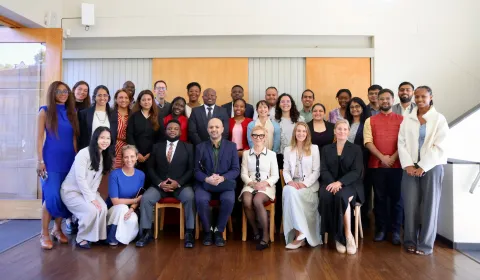
The Femtech Ventures kick-off in Pretoria, South Africa, put us in a room with founders from across Africa and Asia. Venture Fund mentors shaped our privacy, open-source and technical choices. And when our evidence said we should pivot, we did.
In the coming months, we plan to build our responsive, women-centered assessment platform and pilot it with our first partner clinic in Tunisia. What that means in practice is the first women routed to the right practitioner, and the start of the country’s first consented dataset on women’s gynaecological health.
Decades ago, Ben Cheikh showed that Tunisia could lead on women’s health. Today, we are breaking the silence around endometriosis, asking the questions nobody has asked before, and getting each woman to the right care faster.