Too many of the health tools built for West Africa arrive in French or English, assume a smartphone and a stable connection, and say nothing about the questions women actually whisper to a friend rather than type into a search bar: about their cycle, about a pregnancy, about which pharmacy is open and safe at this hour.
That gap is what HLlama exists to close. HLlama is a conversational AI assistant that lives inside WhatsApp – the app the vast majority of Togolese women use every day. A woman simply writes a message and HLlama answers in French or in one of the local languages we support, including Éwé, Kabyè and Mina.
It focuses deliberately on a narrow, high-stakes domain: sexual and reproductive health and rights, maternal health and women's general wellbeing – contraception, menstrual cycles, pregnancy, STI prevention – answered warmly, factually and without judgment. When a conversation signals something beyond general information – an emergency, violence or distress – HLlama routes the user directly to the right resource: a helpline, or the nearest pharmacy or clinic through our partnership with Togolese non-governmental organisation, OSV.
Our UNICEF Venture Fund investment is deepening HLlama's local-language AI and data pipeline, extending access beyond smartphones through offline voice-call and SMS channels for women with no internet connection, and building a women-led network of local sales and outreach agents who can bring HLlama into communities in person, not just through an app store.
Going where the system doesn't reach
Our vision is that no Togolese woman should be cut off from trustworthy health information because of the language she speaks, the phone she owns or how comfortable she feels asking a stranger a question about her body. Over the next twelve months, we're aiming to grow HLlama from an early pilot to a service actively used by over 1,500 women, with speech recognition and translation accuracy above 95 percent across our supported local languages, and a trained network of more than 250 women and community volunteers helping others discover and trust it.
Success means fewer women delaying care because they didn't know where to turn, and more women making informed decisions about their own health, on their own terms.
HLlama runs on an open-source, Llama-based multilingual architecture, but the technology is only half the story. The harder, slower work is how we build the data that teaches HLlama to understand Togolese women. Our language models are trained on data collected and validated locally, with native speakers, rather than machine-translated from French or English after the fact.
It's a slower path, but it's the only one that lets HLlama capture the real nuance and cultural context that a subject like sexual and reproductive health demands.
That's why Umbaji doesn't do this work alone. We partner directly with women's organizations who are already trusted inside the communities we want to serve – not only to collect training data, but to get early, honest feedback on every feature we deploy.
Being Part of the Femtech Ventures Cohort
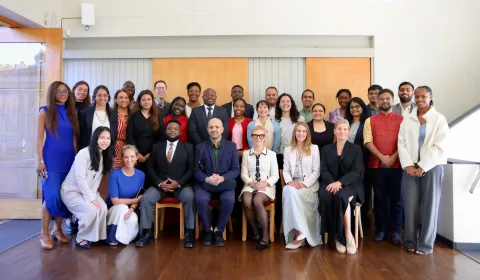
Joining UNICEF Femtech Ventures cohort has been a turning point for Umbaji. In the months since, we've grown HLlama from a concept to a service with more than 300 active users testing it via WhatsApp. We’ve, launched dedicated AI agents for maternal and pre-maternal healthcare advice, and – through our partnership with OSV – made it possible for users to find the nearest pharmacy or doctor directly through the chatbot.
Beyond the funding itself, the cohort has given us something just as valuable: a peer network of founders solving parallel problems across the continent, structured mentoring, and learning sessions that have sharpened how we think about scaling responsibly rather than just quickly.
Looking ahead, our priorities are clear: launch our offline voice-call channel so women without smartphones or reliable internet can reach HLlama by a simple phone call, onboard at least eight new local partners, and keep pushing the accuracy of our local-language speech recognition. We also want to keep growing that community of trained women ambassadors – because the women who introduce their neighbours to HLlama are as important as any model we train.