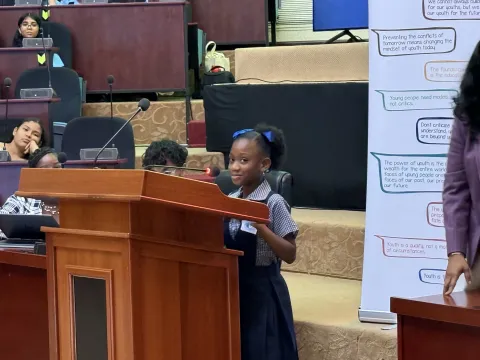
Suriname’s National Education Policy 2024- 2031 adopted
A Path to a Brighter Future for Every Child

UNICEF marks an important milestone in Suriname’s educational journey with the successful organization of the Education Congress in October 2023 and the adoption of the National Education Policy 2030, in September 2024. This policy is set to guide the nation’s efforts toward achieving inclusive and high-quality education for all children, a key component of Suriname’s progress toward the Sustainable Development Goals.
A Crucial Moment for Education Reform
The National Education Policy 2024- 2031 arrives at a time of great importance. As Suriname emerges from the COVID-19 pandemic, the need to rebuild resilient education systems has never been clearer. The policy aims to ensure that all students in Suriname acquire the competencies, skills, and knowledge needed to thrive in a rapidly changing world.
“Prioritizing education is essential for accelerating progress toward the SDGs," said UNICEF Manager, Javier Cordoba in his remarks. "This policy arrives at a crucial time, as the world faces the task of rebuilding education systems to be more resilient and inclusive.”


Addressing Challenges and Seizing Opportunities
The Ministry of Education in Suriname is uniquely positioned to make a profound impact on children’s lives. Schools remain the most accessible and consistent way to reach and engage children, even in remote communities, and they play a vital role in ensuring children’s right to education. Despite current challenges affecting some children and educational institutions, the National Education Policy aims to overcome these hurdles. It emphasizes reforms in several key areas:
- System and curriculum reform
- Innovative teaching methods
- Creating safe and inclusive learning environments
The policy calls for a united approach from educators, policymakers, parents, and students to create a system that meets today’s needs while preparing society for tomorrow’s challenges.

Collective Effort for Transformative Change
Building a robust education system requires not only political commitment but also the active engagement of all stakeholders. This collective effort is central to ensuring the policy's success. “
This policy represents a step in the right direction," noted Cordoba, "and UNICEF is dedicated to supporting the Ministry of Education throughout the planning and implementation phases to ensure its continuous improvement.
UNICEF is optimistic about the future of education in Suriname and is committed to working alongside the Ministry of Education to achieve the policy’s goals. The National Education Policy 2030 is a roadmap to creating an education system that empowers students to succeed and contributes to the nation's growth and development.