

What is RUTF? Five Things to Know About Ready-to-Use Therapeutic Food
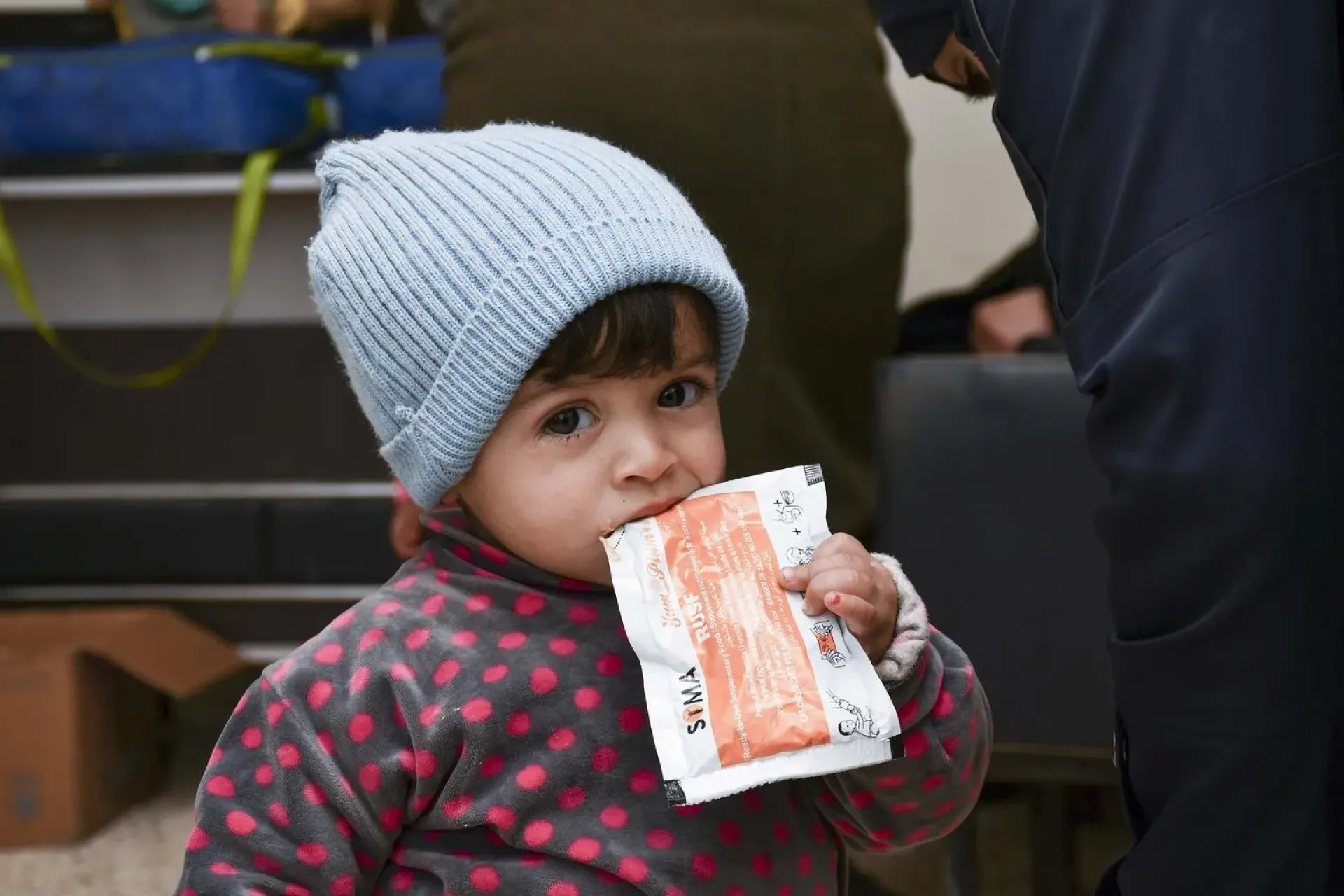
With just one sachet at a time, this wonder food can pull a child back from the brink of acute malnutrition
- English
- العربية
Crisis is never just a word. It has a devastating impact on the lives of millions of children around the world. From food insecurity to poverty and preventable disease, children living through crises face constant risks, including malnutrition and its life-threatening consequences.
To respond to this, UNICEF is the world’s largest buyer and supplier of Ready-to-Use Therapeutic Food (RUTF), a life-saving treatment for acute malnutrition in children under the age of five.
But what exactly is RUTF, and why does it matter so much? Here are five key things you need to know.
1. What RUTF stands for
RUTF stands for Ready-to-Use Therapeutic Food. It is a nutrient-rich paste made from peanuts, skimmed milk powder, oil, sugar and a precise mix of vitamins and minerals. It is used to treat children aged 6 months to 5 years who suffer from severe wasting, the most dangerous form of acute malnutrition.
2. A life-saving food that needs no preparation
RUTF is often called the “wonder food” because it requires no cooking and no added water. This makes it safe to use even in places where clean water is not available, reducing the risk of contamination.
It also has a shelf life of up to two years and does not require refrigeration. These features make it ideal for emergency settings such as displacement camps, conflict zones, and remote areas with limited infrastructure.
3. A global response led by UNICEF
UNICEF procures nearly 80 per cent of the world’s RUTF supply. In 2023 and 2024, UNICEF delivered an average of 955 million sachets per year, enough to treat more than 6 million children suffering from severe acute malnutrition annually.
4. Produced closer to the children who need it
UNICEF sources RUTF from more than 20 suppliers worldwide, many of them located in or near countries with high levels of severe wasting.
These include Burkina Faso, Egypt, Ethiopia, France, Haiti, India, Kenya, Madagascar, Nigeria, South Africa, the United States and Pakistan. Local production allows faster response to emergencies, reduces dependence on long international shipping routes, creates jobs, and strengthens local economies.
5. A highly cost-effective treatment
A carton of RUTF, which contains 150 sachets, costs around US$50 on average. It is enough to treat one child for 6 to 8 weeks, leading to full recovery in most cases. When including programming and logistics costs, the total treatment per child is approximately US$150 dollars, depending on the context.
Despite its life-saving impact, RUTF remains one of the most cost-effective treatments in global health.