An important step for the protection of unaccompanied minors in Greece
Presentation of Feedback Results for the National Guardianship System

- Ελληνικά
- English
ATHENS, 17 MARCH 2025-After years of efforts to establish a holistic framework of support for unaccompanied children, the implementation of the National Guardianship System for Unaccompanied Minors, which was a major breakthrough in the field of child protection in Greece, started on 1 January 2024.
The new system was designed to ensure that each unaccompanied child will have a designated guardianship professional appointed to meet their protection and representation needs, and ensure that they receive care tailored to their needs. Its implementation, under the coordination of the General Secretariat for Vulnerable Persons and Institutional Protection of the Ministry of Migration and Asylum, by two entities with significant experience in child protection issues, such as METAdrasi and Praksis, ensures that this project, despite challenges, will meet the needs of minors and the field.
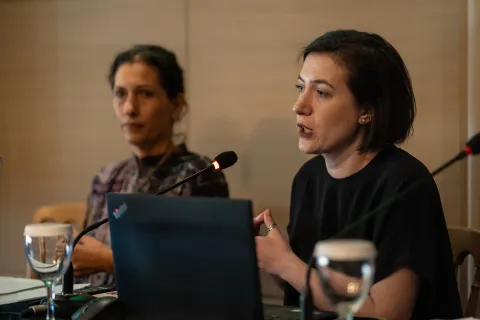
Last Friday, one year after its launch, the first feedback results regarding the implementation of the National System were presented, supported by seconded staff from UNICEF and the European Union Asylum Agency (EUAA). The event, co-organized by the General Secretariat and UNICEF, was attended by representatives of public institutions, civil society organizations and experts in the field of child protection.
The event was addressed by the Secretary General for Vulnerable Persons and Institutional Protection, Iraklis Moskov, who stated that the first year of implementation of the National Guardianship System for Unaccompanied Minors is a milestone for Greece in the effort to strengthen the protection of the most vulnerable children, having contributed to the creation of a comprehensive framework for the support of minors, providing them with the support needed to ensure their rights, with emphasis on their integration perspective focusing on education, skills and access to the labour market.
UNICEF Deputy Representative in Greece, Aspa Plakantonaki, stressed the importance of the Guardianship as a key mechanism for the protection and defence of the rights of unaccompanied minors. She specifically referred to the United Nations Convention on the Rights of the Child, which Greece has ratified since 1992, highlighting three main articles:
- Article 3 - The best interests of the child must be a primary consideration in any decision affecting the child.
- Article 12 - Children have the right to express their opinion and to have their views taken seriously.
- Article 20 - Children deprived of a family environment should receive appropriate care and protection from the State.
UNICEF has actively supported the effort to implement the National Guardianship System for Unaccompanied Minors in Greece by providing technical support to the General Secretariat. The support focused on monitoring and evaluation of the operation of the National System, with the aim of ensuring the quality and effectiveness of the guardianship services. The feedback presented highlighted the first positive steps in the operation of the system, but also the challenges that emerged during its implementation.
The presentation concluded with an open discussion, where suggestions were made for improving and further strengthening the system. The conclusions of the event will be used to develop the next steps towards the creation of a coherent, effective and child-centred National Guardianship System.
The General Secretariat for Vulnerable Persons and Institutional Protection, UNICEF and implementing agencies remain committed to ensuring that every unaccompanied child in Greece has access to the protection, support and representation they deserve.
Media contacts
Αbout UNICEF
The United Nations Children's Fund (UNICEF) promotes the rights and wellbeing of every child around the world. Together with our partners, we work in 190 countries and territories to translate that commitment into practical action, focusing special effort on reaching the most vulnerable and excluded children, and all children, everywhere.
UNICEF is financed exclusively by voluntary contributions from individuals, the private sector, foundations and UN member states, including the EU. Donor support is crucial as we create a global alliance for reaching every child without any exception.
For more information about UNICEF and its work for children in Greece, visit the UNICEF Greece website here.
Follow UNICEF Greece on Facebook, Instagram, Twitter and YouTube.