Building Stronger UNICEF-Korea Alliance in Seoul
UNICEF Public Partnerships Director Strengthens Partnership with Korea During Seoul Visit

Mandeep O'Brien, Director of UNICEF's Public Partnerships Division, visited Seoul for two days (19-20 June) to reinforce the strategic partnership between UNICEF and the Republic of Korea: a relationship that is helping millions of children worldwide.
Korea has emerged as one of UNICEF's most important partners with contributions reaching a record $142 million in 2024, more than double the previous year. This makes UNICEF one of the top recipients of Korean Government funding to the UN system and demonstrates the country's growing leadership in global development.
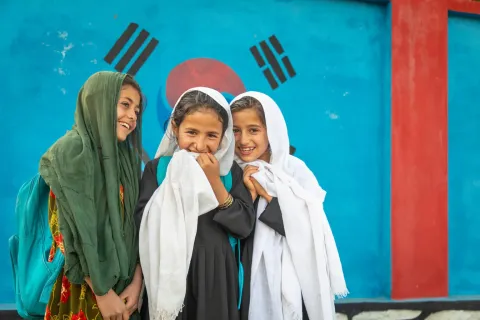
"Korea's journey from aid recipient to major donor is remarkable," said Mandeep during her visit. "The country that once received UNICEF support is now helping us vaccinate children in Somalia and educate girls in Afghanistan."

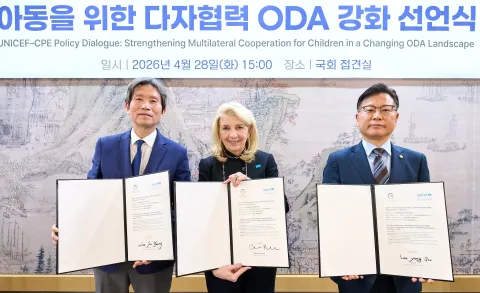
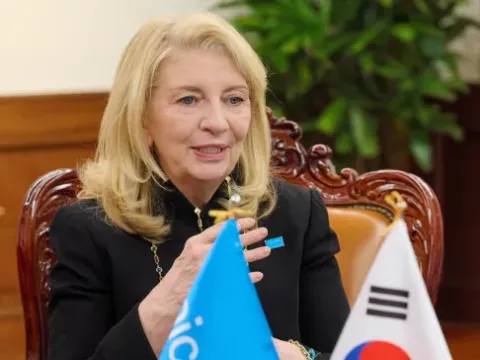
During her visit, Mandeep met with various senior officials. Discussions with the Ministry of Foreign Affairs centered on Korea's humanitarian partnership, which has expanded over the past year, with a strong focus on supporting vulnerable children in Africa, the Middle East, and Southeast Asia. She also met with KOICA leadership to explore an expansion of our successful $42 million Climate partnership, which was launched in 2024.
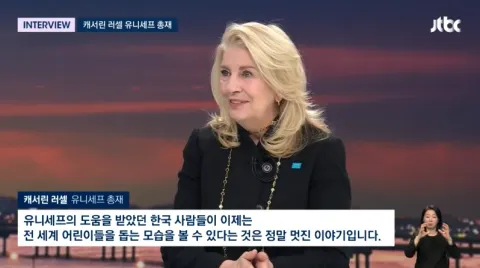
Mandeep met with two members of the Korean Parliamentary Friends of UNICEF, one from the ruling Democratic Party and one from the opposition People Power Party. Discussions focused on how to ensure that Korea’s recent ODA growth can be maintained (ODA increased 31% in 2024 and 4% in 2025). Korea has a unique opportunity to expand its influence globally as many traditional donors reduce their aid budgets. In a radio interview with the Korean Broadcasting System, Mandeep noted that "when Korea leads on children's issues, the world listens because it speaks from experience."

UNICEF’s partnership with Korea comes at a critical time. With more than 183 million children requiring humanitarian assistance globally and traditional aid budgets under pressure, Korea's continued support is vital.
"Korea proves that investing in multilateral systems delivers lasting progress," Mandeep noted. "By scaling what works, Korea can catalyze a broader shift in international development."

The visit also strengthened ties with the Korean Committee for UNICEF, which ranks among UNICEF's top contributors globally, with over 450,000 monthly donors supporting children's rights both in Korea and overseas.
Korea’s journey from aid recipient to major donor serves as an example to developing countries how they too can drive meaningful change for vulnerable children elsewhere.