
Resilience for Children+ Partnership
Innovating Humanitarian Action for a Resilient Generation
About the Partnership
Partnership Overview
The Resilience for Children+ Partnership represents a landmark collaboration between the Republic of Korea (ROK) and UNICEF, launched as part of Korea's Humanitarian Flagship Framework. Announced by the Ministry of Foreign Affairs at the 20th Annual Consultation in December 2024, this partnership channels large-scale, multi-country investments into high-impact humanitarian responses for children affected by conflict, displacement, climate change, and economic instability.
Strategic Context
Hundreds of millions of children currently require humanitarian assistance globally. Today's crises are not only growing in scale but increasingly overlapping and compounding — placing unprecedented strain on essential services. The challenge is no longer the scale of response alone, but the sustained capacity of systems to deliver life-saving services over time.
The Resilience for Children+ Partnership directly addresses this gap by prioritizing system-focused, community-level investments designed to produce both immediate humanitarian outcomes and long-term improvements in child survival and well-being.

"Korea’s significant support reflects a deepening commitment to children's rights and well-being. As we face unprecedented global challenges, partnerships such as ours are essential to mobilize resources and to ensure that every child has the opportunity to thrive."
Partnership Scope & Funding
Year 1 — $55 Million
Korea’s largest-ever annual humanitarian contribution to UNICEF. A total of $55 million was strategically allocated across six high-priority contexts, with Ethiopia, Myanmar, and the State of Palestine each receiving $10 million, Syria receiving $15 million, and the Democratic Republic of the Congo and South Sudan each receiving $5 million. This allocation reflects a targeted and risk-informed investment approach to address urgent humanitarian needs while maximizing impact for children across diverse crisis settings.
Year 2 — $40 Million
Building on the first year, the partnership expanded its geographic reach to include Afghanistan and Chad, while maintaining sustained support to Myanmar, the State of Palestine, and Syria. The $40 million investment was evenly distributed, with each country receiving $7.95 million, reinforcing a deliberate commitment to equitable, predictable, and high-impact financing across all five humanitarian contexts.
Key Priority Areas & Expected Outcomes
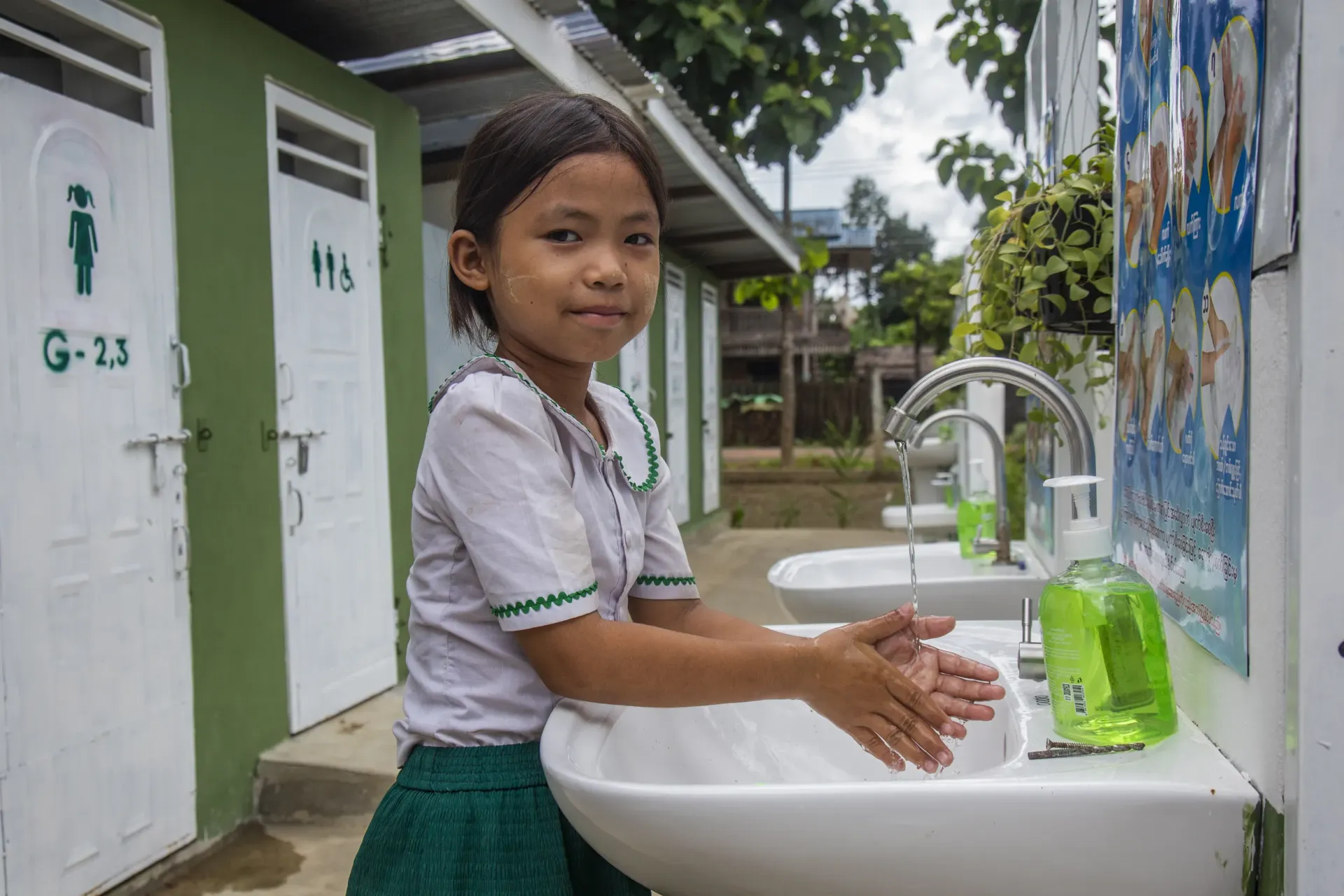
Investments are delivered through an integrated, multisectoral approach centered on community-based primary health care. Complementary investments in nutrition, WASH (water, sanitation, and hygiene), education, and child protection ensure comprehensive coverage across the most critical dimensions of child well-being.
By strengthening frontline service delivery systems — through trained personnel, integrated services, and effective referral pathways — the partnership aims to reduce preventable child mortality, build community-level resilience in fragile and hard-to-reach environments, and bridge relief, recovery, and peacebuilding in a coherent, sustainable framework. All investments are designed to ensure full transparency and measurable, results-based accountability.