
ACT-A Results (Y3)
2025 - 2026
About Year 3
The 2025–2026 UNICEF-Korea Global Health Collaboration represents the third year of a landmark partnership between UNICEF and the Government of the Republic of Korea, reflecting Korea's sustained leadership and commitment to global health equity. Building on the achievements of previous years under the ACT-Accelerator (ACT-A) framework, this phase advances two flagship priorities: Strengthening Immunization Systems and Reaching Zero-Dose Children across six high-need countries in sub-Saharan Africa, and Sustaining Essential Health Services through ACT-A close-out support in countries across Eastern and Southern Africa, West and Central Africa, South Asia, and East Asia and the Pacific. With a combined investment of $20 million, this collaboration deepens UNICEF's impact in the world's most vulnerable communities by strengthening primary health-care facilities, expanding immunization coverage, and building resilient health systems capable of withstanding future shocks. Through this partnership, the Republic of Korea reaffirms its role as a champion for children's health and a leading voice in the global effort to leave no child behind.
Year 3 Programmatic Priorities
Building on two years of collaboration, the 2025–2026 UNICEF-Korea Global Health Collaboration focuses on two strategic priorities
Priority 1: Strengthening Health Emergency Preparedness and Response
UNICEF will build stronger leadership, health-care facilities, and communities to better prepare for and respond to future health emergencies — particularly in countries with fragile health systems.
Focus Area | Key Activities |
|---|---|
Global Leadership | Strengthening pandemic preparedness, global health emergency architecture, and supply chains for vaccines and diagnostics |
National Health Systems | Strengthening primary health care, immunization, and local outbreak response |
Community Preparedness | Supporting community-based surveillance, early warning systems, and risk communication |
Priority 2: Strengthening Resilient Health-Care Facilities
Addressing critical gaps in health facility infrastructure — particularly in communities where zero-dose children live.
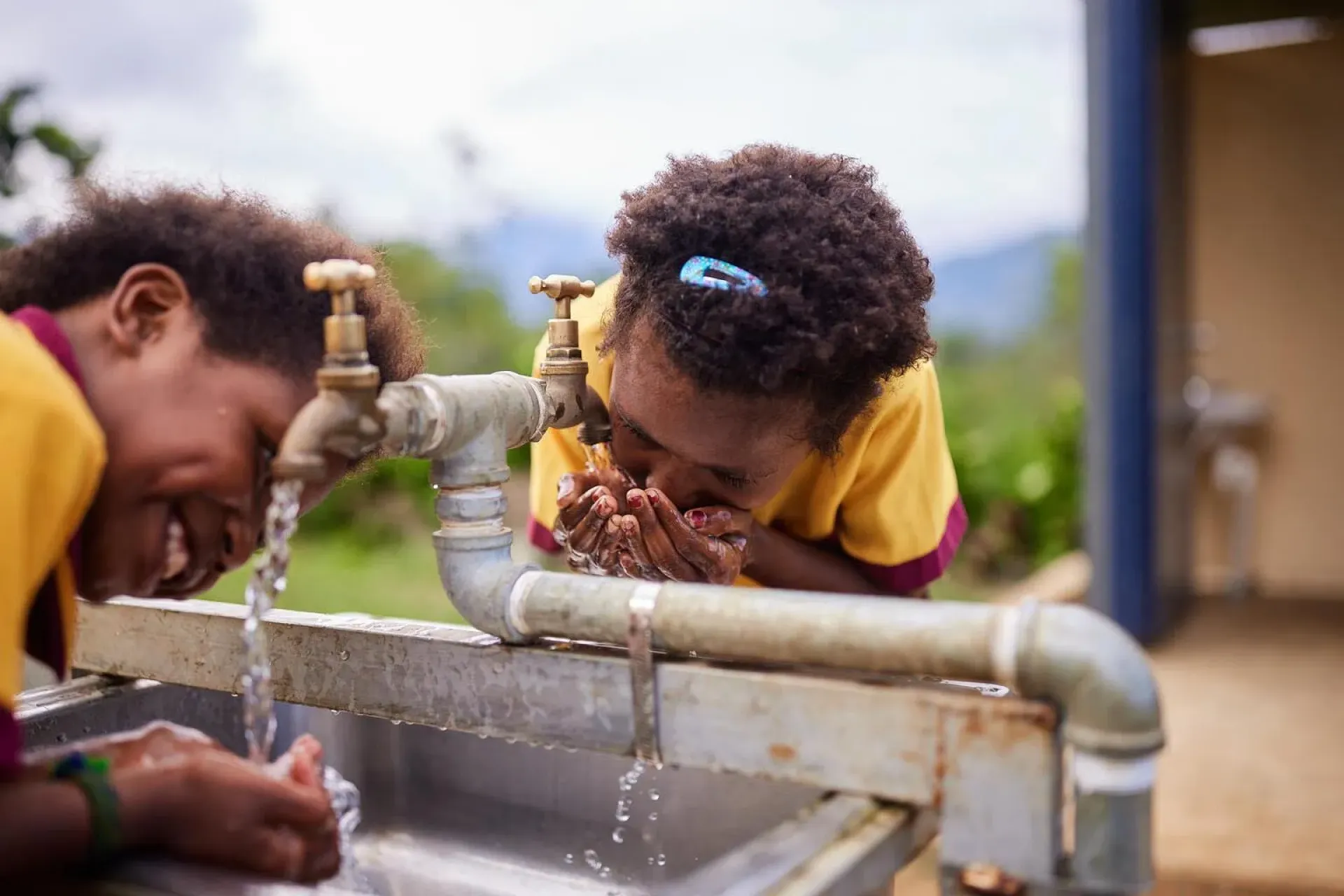
A. WASH and Infection Prevention & Control (IPC)
Focus Area | Key Activities |
|---|---|
Systems & Policy | Integrating WASH into national health plans, budgets, and monitoring systems |
Infrastructure | Providing climate-resilient WASH infrastructure including water sources, toilets, and waste management |
Health Worker Protection | Delivering personal protective equipment and IPC supplies |
B. Oxygen Systems and Services
UNICEF is supporting over 140 oxygen plants across 40 countries with the capacity to save the lives of over 350,000 newborns and children every year.
Focus Area | Key Activities |
|---|---|
Planning & Procurement | Needs assessments, national oxygen strategies, and addressing procurement gaps |
Maintenance & Training | Building capacity of biomedical engineers and technicians |
Clinical Integration | Expanding oxygen access to primary health-care facilities for women, newborns, and children |
Supported Countries
View details
Strengthening Immunization Systems & Reaching Zero-Dose Children ($16M)
Country | Region | Contribution |
|---|---|---|
Angola | ESARO | $3,016,785 |
Mozambique | ESARO | $797,408 |
Somalia | ESARO | $2,725,154 |
Zambia | ESARO | $736,971 |
Cote d’lvoire | WCARO | $1,089,216 |
Nigeria | WCARO | $5,604,466 |
Sustaining Essential Health Services Through ACT-A Close-Out ($4M)
Country | Region | Contribution |
|---|---|---|
Cambodia | EAPRO | $450,463 |
Nepal | ROSA | $450,463 |
Benin, Niger, Sierra Leone | WCARO | $1,351,389 |
Rwanda, Tanzania, Zambia | ESARO | $1,351,389 |