The Missing Element towards Sustainable Development Goal:
Disability-inclusive across the continuum of the programme cycle

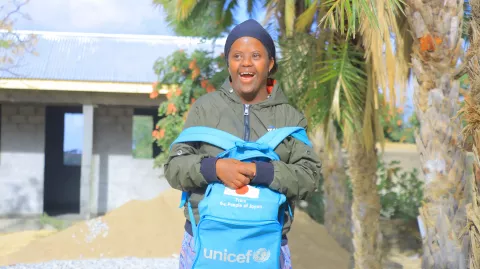
People with disabilities are not a homogenous group. They face multiple and compounding forms of discrimination, based on disability but also on other grounds, which may lead to situations of exclusion. Disability is a multidimensional development and human rights issue. A vast majority of people with disabilities live in rural areas where access to basic services is limited. In Ethiopia, 95 per cent of all persons with disabilities are estimated to live in poverty[1]. Many depend on family support and beg for their livelihoods. People with disabilities represent 17.6% of the population in Ethiopia[2]. It is impossible to reach any of the goals in the Growth and Transformation Plan (GTP II) or the Sustainable Development Goals (SDGs) without addressing the needs of this group. It is fitting, when Social Behavior Change (SBC) - WASH programmes ensures that people with disability actively participate and benefit from the SBC -WASH interventions
In Ethiopia, the one WASH National Program (OWNP), a coordination office under the Ministry of Water and Energy, has established a task force where UNICEF is a co-chair. For the past few years, the Task force has been actively working to ensure the gender and disability inclusive Wash and SBC programing since 2018.
In collaboration with government sectors, UNICEF has been trying to address the issue of disability-inclusive programming for the past few years. This year in August 2022, UNICEF organised a national advocacy workshop focusing on the disability-inclusive SBC and WASH programming with pertinent actors. The advocacy workshop was organised in collaboration with the Ministry of Health, Education, Water and Federation of disability. The advocacy workshop aimed at bringing different stakeholders and people with different disabilities together to discuss the key actions that must be considered in SBC and WASH programme design and implementation.
The advocacy workshop provided an opportunity to present what has been achieved in WASH and SBC programmes and what can be done differently. Mrs Etsegenet Asibe, Gender and Inclusion Expert from the Federation of Ethiopian Associations of persons with disabilities, said, “Comprehensive Health interventions such as nutrition, safe water and sanitation, Health promotion and education can all help to reduce the prevalence of health conditions that cause disability. Most importantly, social and behavioural change is vital to break the discrimination and stereotypes against disability perpetuated in communities” at the workshop's opening ceremony. She also underlined that this advocacy workshop is a unique opportunity that brings the main actors and the targeted groups face to face to work together and ensure that what we do is the right way to address disability.
Rachana Sharma, SBC Manager in UNICEF Ethiopia, highlighted, “Social and behaviour change plays a major role in identifying, understanding and addressing the complex socio-cultural practices and social norms that influence negative attitudes and discriminatory behaviours” Rachana also highlighted the need for government and partners to work in a coordinated manner and ensure disability is included and considered at all the programme life cycle of assessment, analysis, planning, implementation, monitoring and evaluation.
Mr Haimanot Assefa, WASH Specialist in UNICEF, described the advocacy workshop as well planned and an eye opener for the WASH sector and disability associations. According to him, few efforts have been made in the past in the WASH sector, particularly in solid waste management, menstrual hygiene and health and WASH infrastructure development across rural and urban contexts. Mr Haimanot also addressed the need to strengthen the task force under the OWNP (One WASH national program) and expand disability-inclusive programming in humanitarian response considering the country has been in a recurrent emergency.
The advocacy workshop drew conclusions, lessons and key action that needs to be done in the SBC and WASH sectors. Some of the key action points are:
- For the federation of disability to chair the task force together with the ministry of water,
- The need to revise the task force disability inclusive, integrated annual plan
- To ensure the participation of disability association whenever there is a development of national guide, strategy or working documents in the sector of WASH and SBC,
- The development of disability-inclusive WASH and SBC guide both humanitarian and development interventions
- The participants also agreed to have a regular meeting mechanism under the OWNP task force to ensure the WASH and SBC interventions are disability-inclusive across the continuum of the programme cycle.
[1] Ministry of Labour and Social Affairs (MOLSA) 2010
[2] World Bank and World Health Organization: World Report on Disability, Washington, D. C., 2011