Handwashing stations at school keep children healthy
Multi-lingual primary schools in remote provinces are being fitted with essential WASH facilities to help children protect their health, stay in school, and focus on their futures
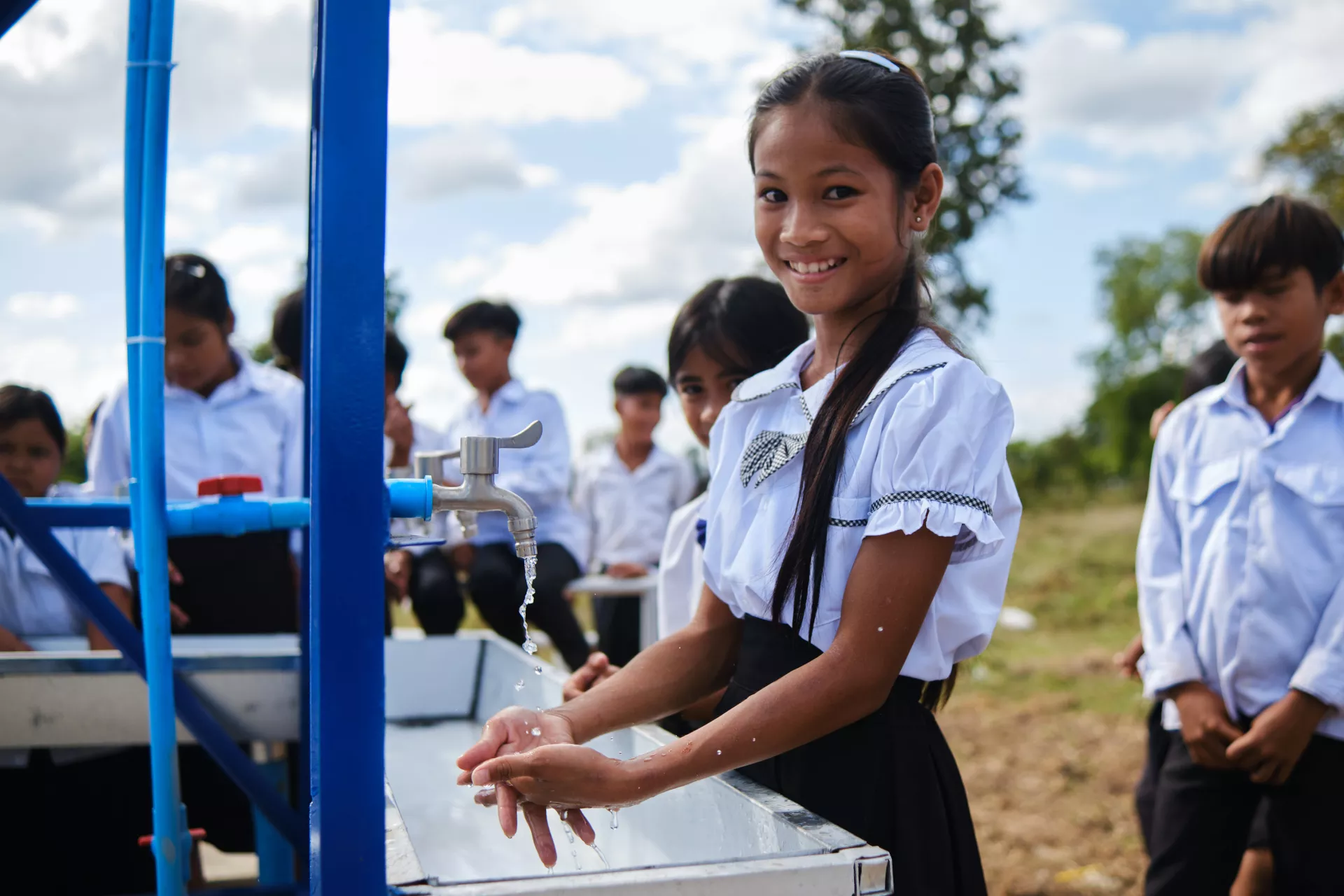
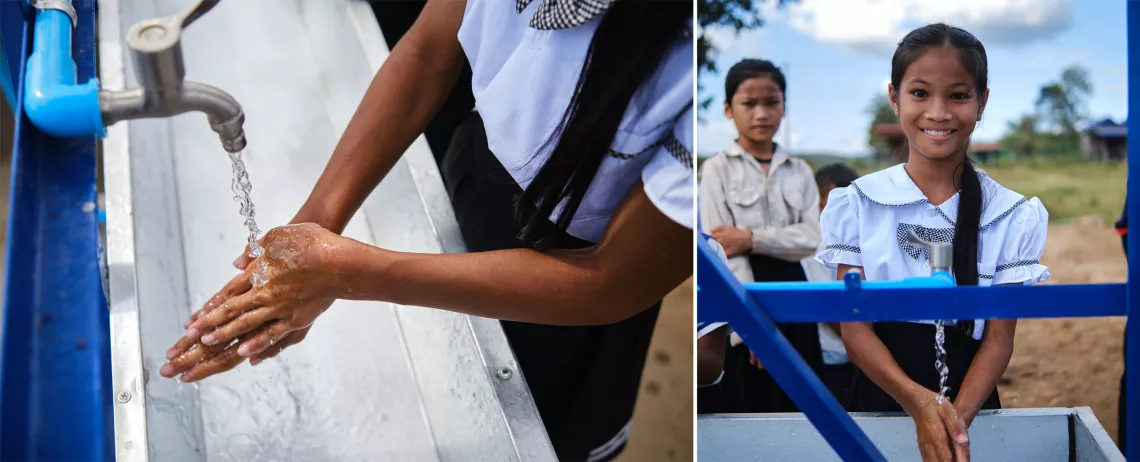
5 December 2023, Ratanakiri – For 11-year-old Srey Nov, washing her hands has never been easier. Until recently, she and her friends had to manually pump water from the school’s well, fill a water bucket, and carry it to their classroom. Now, all they have to do is turn on a tap.
She knows how important it is for her health, so she makes sure to use it two or three times a day. “I wash my hands to make them clean and get rid of viruses,” she says.
Nov is a Grade 4 student from a Ratanakiri primary school, a remote northeastern province where until recently only 41 per cent of multi-lingual education (MLE) schools, where the majority of students are from ethnic minorities, had appropriate facilities for students to wash their hands.
With funding from the Capacity Development Partnership Fund (CDPF), her school has been fitted with a new handwashing facility, a structure that stores water pumped from a rehabilitated well nearby. The well has also been fitted with an automatic pumping system, meaning there’s no need to manually pump the water to fill the tank. The CDPF is a partnership between the EU, USAID, Global Partnership for Education (GPE), the Swedish International Development Cooperation Agency (Sida), UNICEF , and the Ministry of Education, Youth and Sport (MoEYS).
The previous system they had for handwashing was time-consuming and inconvenient, with students taking up to ten minutes during peak hours to fill a water container from the well’s single tap, which is shared between the whole school. Now, students wash their hands more often, protecting them from infectious but preventable illnesses like diarrhea, which can cause stunting and impaired brain development and is still a leading cause of child mortality for children under five in Cambodia. According to the Cambodia Demographic Health Survey 2022, 22 percent of children under five are stunted.
“What I'm trying to do as school director is to improve the quality of learning,” says the school’s director, Bunha Kuy, who received an orientation from the MoEYS’ School Health Department on how to use and maintain the new facilities. “When children clean their hands, they don't have any disease, they don’t have any viruses, so they come to school regularly. They will learn well if they don’t get sick.”
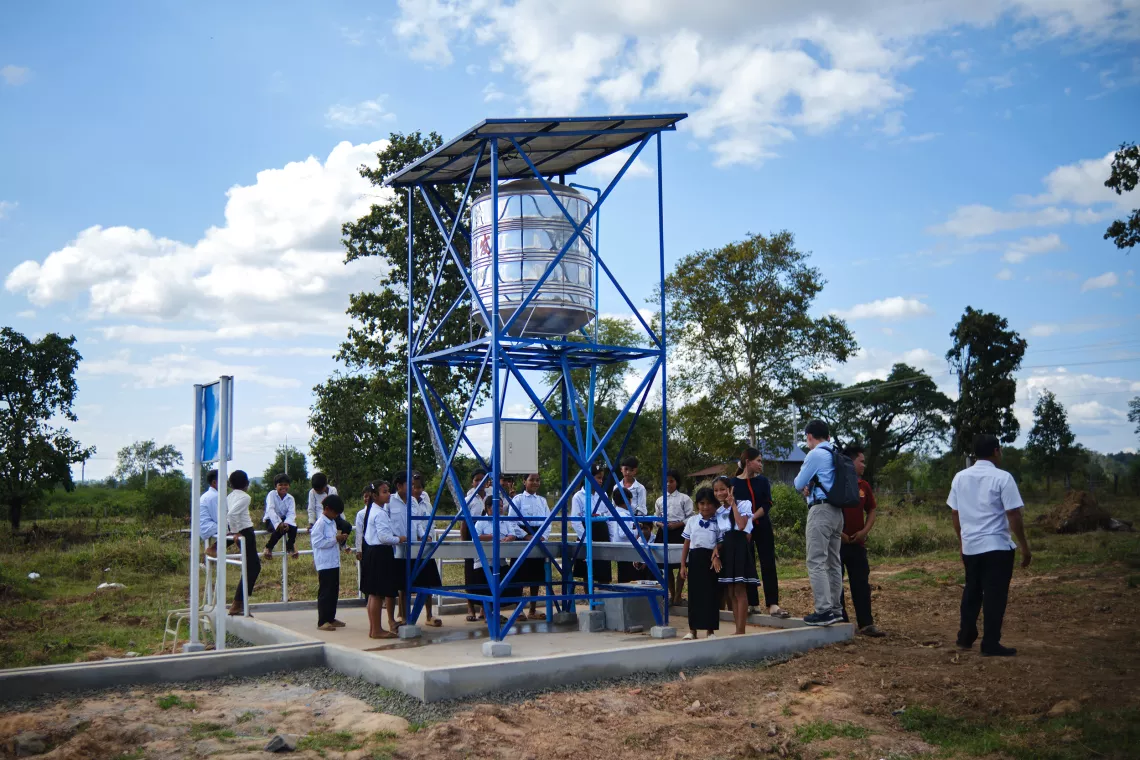
The handwashing station has helped the school in its hopes to upgrade from a one-star to a three-star WASH rating, part of a ranking system that the MoEYS uses to measure a school’s WASH standards, taking into account its handwashing facilities, availability of and access to drinking water, quality of latrines, and cleanliness and safety of the school’s environment.
In 2023, only 6 percent of schools across the country had reached three stars, meaning they fully comply with the Minimum Requirement Guidelines on Water, Sanitation, and Hygiene in Schools (WinS). In the northeastern provinces, this number drops to zero percent. Only 41 percent of Ratanakiri’s MLE primary schools have an improved water source available at all hours.
The CDPF-supported SEEWASH project is being implemented by Plan International across Cambodia's remote northeastern region, where many children are falling behind their peers in other provinces. The region is home to a large share of ethnic minorities, who historically show lower educational outcomes, attendance rates, and completion rates than children in non-MLE schools. Poor sanitation, hygiene behaviour, and inferior water quality are common causes of children being absent from school.
Adolescent girls and children with disabilities are particularly impacted when they do not have adequate access to toilets and handwashing facilities, menstrual hygiene supplies, or to discreet facilities to dispose of sanitary products.
The project aims to improve the health, attendance, and welfare of students and teachers – and particularly girls – across 30 MLE primary schools by ensuring equitable access to improved and hygienic WASH facilities. The support includes constructing group handwashing stations, providing treated drinking water facilities, and constructing and upgrading latrines. Toilets are built with separate rooms for boys, girls, and students with disabilities and fitted with a dedicated menstrual health and hygiene (MHH) trash bin.
The School Health Department also provides school leaders and teachers with capacity building on the operation and maintenance of the facilities.
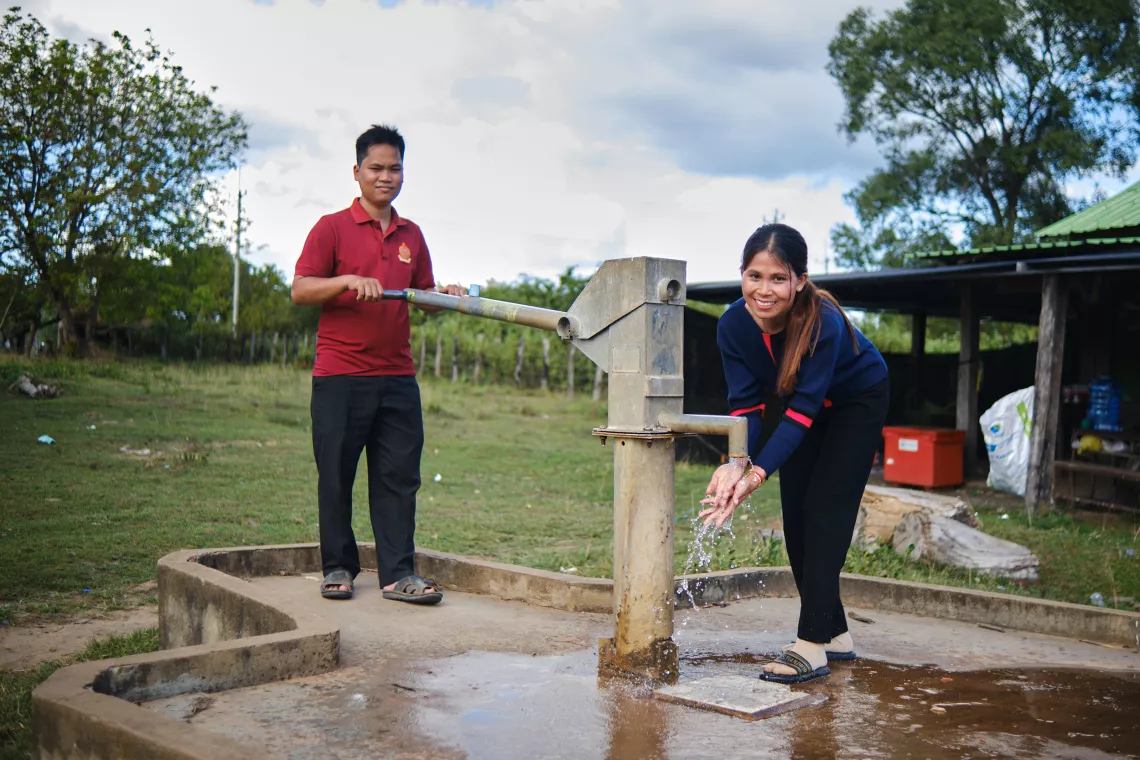
Keo Phearum, MLE Primary Education Official at Ratanakiri’s Provincial Office for Education, says that the schools that still struggle to meet water and sanitation standards in the province are those in particularly remote areas.
“Some schools have a toilet, but they don't have water. And some schools have a well, but they don't have a proper toilet. That can cause a problem for girls especially,” he says, adding that Srey Nov's primary school was once considered one of the area’s most challenged schools in terms of sanitation.
With some students unable to access the facilities they need to support their health and hygiene at home, making sure they could do so at school was all the more important.
“Only recently that this facility was constructed does the school feel more well off than before. Now they will not have any more problems.”
School director Bunha Kuy is full of ideas to improve the school’s environment. He plans to build a piped connection to the classrooms, making handwashing even easier, as well as to the latrines, so they no longer need to store water in a bucket carried by hand from the well. He also wants to build a fence around the premises and plant more trees in the schoolyard.
All of his efforts are for one simple aim.
“Learning,” he says. “Everything is to support learning.”