UNICEF and the Government of Burundi take stock of results achieved and plan next steps.
On 21 May 2024, UNICEF and the Ministry of Foreign Affairs and Development Cooperation organized an annual review of the work plan for July 2023-June 2024 and planning for the period July 2024-June 2026, in accordance with the new country programme

- English
- Français
‘’We are here to assess together what has been achieved between July 2023 and June 2024 so that, on this basis, we can better plan for the future’’, said Ambassador Gaudence Sindayigaya, Director General in charge of Multilateral Relations at the Ministry of Foreign Affairs and Development Cooperation, in his opening speech at the annual review. He addressed the participants, who were mainly government partners, United Nations agencies, civil society organizations and implementing partners. They had all come to learn about and discuss the work and results achieved by UNICEF in implementing its 2023-2024 work plan, and the new rolling annual work plan proposed for the period from July 2024 to June 2026, in line with the new country programme. It was also an opportunity to learn more about the situation of children in Burundi and the priorities of the new UNICEF/Government of Burundi 2024-2027 programme document.
Between July 2023 and June 2024, UNICEF achieved tangible results in its various areas of intervention. In the area of health, these include access to healthcare for 3.4 million children aged 0-7, including vaccination against poliomyelitis; treatment for 98% of children under the age of 5 who have suffered from diarrhea; and the supply of a medical oxygen production plant to 4 provincial hospitals.
In the area of nutrition, 60,000 children suffering from severe acute malnutrition were treated, with 91% recovering; 1.5 million children aged between 6 and 59 months received 2 doses of vitamin A and 1.4 million received 2 doses of albendazole.
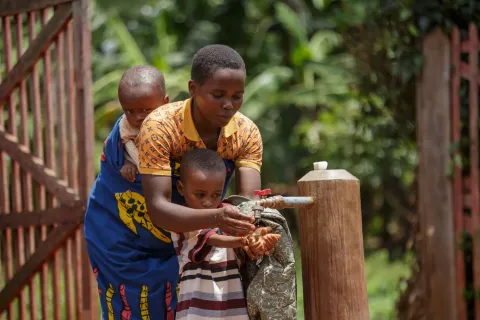
Thanks to interventions in the area of Water, Hygiene and Sanitation (WASH), 462,924 people have gained access to basic sanitation services in 403 communities in 5 communes; while 34 schools and 6 health centres have benefited from improved WASH services, among others.
Interventions in the field of child protection have enabled 145,710 children to be registered at birth and to have their birth certificates, while 499 children in conflict with the law have benefited from legal assistance, with 228 children being released. In addition, 45,599 children and adolescents affected by humanitarian situations received assistance and care.
In the field of education, UNICEF has helped to build 48 pre-school classrooms and 152 primary school classrooms, and to provide more than 100,000 of the poorest pupils affected by emergencies with school supplies and materials. In addition, 135,070 adolescents and young people in more than 4,500 Solidarity groups were able to strengthen their skills development.
In the area of social policy and advocacy, a dialogue has been conducted with government partners to improve funding for social sectors, resulting in a 39.6% increase in the budget for immunization in 2023/24. There has also been capacity-building for local authorities at commune level in public finance management and in planning and budgeting for early childhood development.


"We appreciate the results achieved. We are witnesses to this, having been in the field and having seen the impact of UNICEF projects on the population. Of course, there are challenges that need to be analysed and addressed, hence this review’’, said Ambassador Gaudence Sindayigaya, Director General in charge of Multilateral Relations at the Ministry of Foreign Affairs and Development Cooperation.
UNICEF and its partners are committed to continuing to work together to overcome the challenges and build a better future for all children in Burundi. Joint efforts and strengthened coordination will ensure that every Burundian child can enjoy their rights and reach their full potential in the years to come.