Strengthening competences of Child Protection & School Management Committees to prevent child abuse
As part of the Multi-Year Resilience Programme for the Education System in Burundi, funded by Education Cannot Wait, UNICEF & his partner JRS organize a series of trainings in Makamba to improve the skills of community actors involved in child protection.

- English
- Français
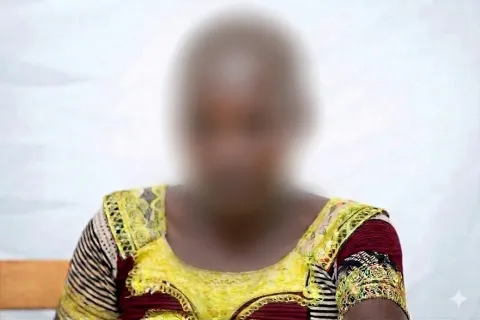
On the Buhema hill, Mugeni area, Kayogoro commune of Makamba province, Mariette NDAYISHIMIYE, 28, welcomes us with her 6-month-old son, Eddy Best Light IZERE.
Mariette is the President of the Child Protection Committee (CPE) in Buhema Hill. She is one of the 302 beneficiaries of trainings organized by UNICEF's partner, Jesuit Refugee Service (JRS), in addition to 302 others who will be trained on the same theme by World Vision International and its partners, with funding from the Education Cannot Wait (ECW) fund. “I learned a lot about the right to education and the causes of dropping out of school, which are, in most cases, related to the living conditions of the family and how the child has been raised”, Mariette told us.
The first 3-day trainings on child protection from abuse and violence, including gender-based violence (GBV), took place from February 13–18 in Dunga, Bigina, Mugeni, Nyanza-Lac and Mukungu areas of Makamba province. The main objective of these trainings is to strengthen the intervention capacities of Child Protection Committees (CPE) and School Management Committees (CGE), at the community and family level.
At Mugeni Basic School, in the same commune of Kayogoro, we meet Pancrace NTEZAHORIGWA, 50, President of the School Management Committee (CGE), teacher and father of 4 children in this same school. He also benefited from the training.

According to Pancrace, in Mugeni, a border area with Tanzania, there is a very alarming phenomenon of children leaving school to go to Tanzania in search of a better life. “In this case, we mobilize to raise parents’ awareness, because they are primarily responsible for bringing them back”, he said.
One of the expected outcomes of the training was to propose, in groups, an action plan to strengthen child protection at hill level by the end of 2023.
Mariette's group has developed an action plan that focuses on 3 main actions: The first is to ensure the construction of separate latrines for boys and girls in schools at hill level. "We have found that sharing latrines between girls and boys poses risks to girls", says Mariette.
A second quantitative action was fixed, "64 cases of school dropouts were identified on Buhema hill. We have already managed to get 10 children back to school. We will continue to raise awareness among children and their parents to return the rest", she said.
Their third action focuses on children who go to harmful places where they may engage in dangerous behaviors, such as substance abuse or violence. “It was agreed that by the end of the action plan in December 2023, at least 24 children will be reintegrated into the community”, Mariette said.
In order to ensure that these action plans are successful, the partner will follow up and support the CPE and CGE in collaboration with the communal administrative and educational authorities.

As President of the Child Protection Committee, Mariette says she is motivated to work with School headmasters on the hill to facilitate enrolment of children with special needs, especially, orphan children or girls who drop out of school as a result of early pregnancy.
Pancrace, as President of the School Management Committee, was pleased to have met with members of the Child Protection Committee and the local administration. “In synergy, we will better coordinate our actions to better protect our children, both in and out of school. We must not forget that in the end, the real beneficiaries of this training are children", he added.
This series of trainings is part of the implementation of the Multi-Year Resilience Programme for the Education System in Burundi (PPR), developed by the education sector under the leadership of the Ministry of Education with the facilitation of UNICEF and World Vision International (WVI).