Adolescent empowerment and community resilience
Every adolescent has the right to achieve their full potential

Challenges
Adolescents in Burundi:
- Adolescents are about 23 per cent of the population (2.6 million)
- 1 in 5 women aged 15-24 are illiterate
- Only 1 in 5 adolescent girls (1 in 4 adolescent boys) is enrolled in secondary school
- Only 10 per cent of students complete secondary school
- 30 per cent of adolescents are out of school
- 8 per cent of 15-19 years old girls have started having children
- High rates of HIV/AIDS, malaria, tuberculosis, stunting, road injuries
------
With 49 per cent of its population aged 18 years old or younger, 23 per cent of whom are between 10 to 19 years old, Burundi has one of the world’s youngest, poorest (65 per cent of Burundians live below the national poverty line), as well as most rural-based population (90 per cent). While the majority of adolescents understand the importance of higher education as key to their own progress, they are also aware that this path might not be open to everyone. The Burundian education system is characterized by high repetition rates. The percentage of repetition is almost 20 per cent in basic education, and the phenomenon is more accurate in the lower education sub-sector (first year of the cycle) where it displays nearly 22 per cent. Dropout is at 8 per cent in basic education with pic at 12 per cent in the first year.
Another issue affecting negatively adolescent girls’ access to education is early pregnancy. Report shows that 8 per cent of adolescents aged 15-19 years old have started their procreative life. Family responsibilities and expectations weigh heavily on adolescent girls and boys. While adolescent boys may be pressured to provide food for their families in a context of limited employment opportunities, adolescent girls often have to carry the burden of domestic chores. High levels of unemployment or underemployment are due, on the one hand to the lack of employment opportunities, and, on the other hand, the lack of relevant skills and competencies of the Burundian youth that limits their ability to live up to their full productivity potential and contribute to national development.
Solutions
In the 2019-2023 country programme, UNICEF Burundi will further shift its focus to the second decade of life to ensure that adolescent girls and boys are better prepared and equipped to successfully transition to adulthood. UNICEF Burundi’s new programme “Adolescent Empowerment and Community Resilience” is anchored in the realization of the National youth policy 2016-2026 that will increase the scope and scale of life skills, access to basic social services geared to needs of adolescent girls and boys, and peace-building competencies with focus on adolescents’ participation, agency and resilience. With more investments, UNICEF plans to position Burundi’s youth as change agents capable of creating and adopting positive new social norms.
By 2023, UNICEF Burundi will ensure that:
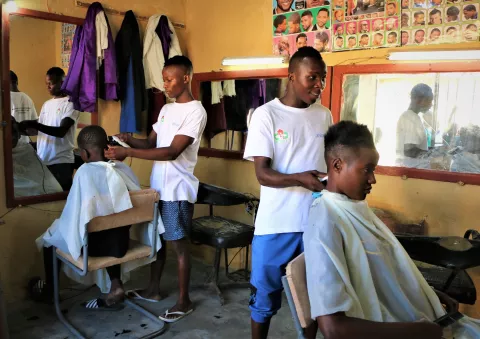
- Skills building and education: 500,000 adolescent girls and boys benefit from an equitable, inclusive, quality education and acquire the necessary skills to continue their education or integrate into the labour market.
- Protective environment: 50,000 vulnerable adolescent girls and boys enjoy living and learning in a violence-free, protective and supportive environment.
- Empowerment and resilience: 1,000,000 adolescent girls and boys, especially the most vulnerable, are more resilient, participate in their communities, practice healthy behaviours and utilize services adapted to their needs while the resilience of their communities is strengthened.
Resources
Available publications, surveys, reports will be added in this section