Stronger Systems, Safer Futures
Stronger systems, compassionate services and collective action to ensure that every child in Botswana can grow up safe, protected and able to reach their full potential.

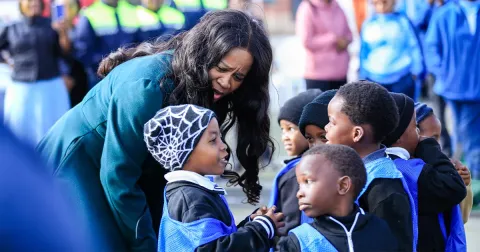
This was the powerful message emerging from the 2026 Mascom Batanani Walk in Francistown, where the First Lady of the Republic of Botswana, Mrs Kaone Tumalano Boko, joined partners, parents, communities and children in reaffirming the country’s commitment to ending violence against children.
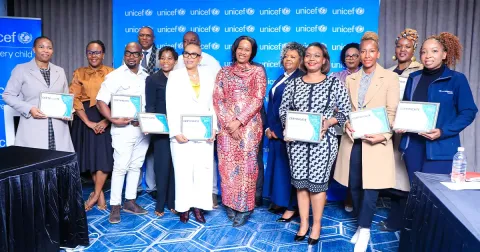
The event also underscored the growing partnership between UNICEF Botswana and the Botswana Police Service, which is focused on strengthening child protection and advancing child-friendly justice across the country.
“Protecting a child is not the responsibility of one institution, it is the responsibility of us all.”
For eight years, the Mascom Batanani Walk has brought communities and partners together around issues affecting children. This year, its contribution goes beyond raising awareness: proceeds from the walk will support the refurbishment and enhancement of child-friendly police facilities, creating safer and more welcoming environments for children who need to report abuse or seek protection.
For the First Lady, these spaces are an important part of a justice system that places children’s dignity and wellbeing at its centre.
“A welcoming room can reduce fear. A compassionate setting can encourage a child to speak. A child-centred environment can affirm to a young victim that they will be listened to, believed and treated with dignity. Justice must also be accessible, responsive and humane. A child who is fearful of the system is a child whose voice may never be heard.”

The message comes at a critical time. Children face risks both offline and online, including violence, abuse, exploitation and emerging threats in digital spaces. Responding effectively requires institutions to work together, strengthen frontline services and ensure that children are at the centre of every intervention.
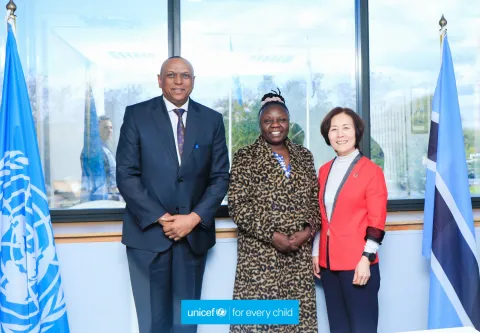
UNICEF Botswana Acting Representative Dr Kimanzi Muthengi has similarly emphasised the need to move from isolated interventions towards stronger, coordinated child protection systems.
Every child has the right to grow up safe, protected and free from violence. Protecting children requires more than good intentions - it requires systems that work, institutions that collaborate and communities that refuse to look away.
The partnership between UNICEF and the Botswana Police Service is advancing several key priorities, including the establishment and strengthening of child-friendly centres, enhanced training for police officers on child-friendly and survivor-centred approaches, and stronger measures to protect children from online sexual exploitation and other digital threats.
Botswana has also reached an important milestone in the fight against online child sexual exploitation, becoming the first country in the Southern African Development Community (SADC) to connect to the INTERPOL International Child Sexual Exploitation Database. The connection strengthens national capacity to identify, investigate and respond to cases of online child sexual exploitation while supporting international cooperation in protecting children.

“The threats children face are evolving, particularly in digital spaces. Our systems must evolve with them. Strong partnerships with law enforcement are essential to ensuring that children are protected not only in their homes, schools and communities, but also online.”
The First Lady’s Mpepu Programme is also contributing to this broader national agenda by placing Early Childhood Development and Child Protection at the centre of efforts to improve children’s wellbeing. Through collaboration with government, traditional leaders, development partners, civil society and the private sector, the programme seeks to strengthen the environments in which children grow, learn and develop.
From maternal and infant health, nutrition and early learning to positive parenting, family strengthening and support for children with developmental and learning challenges, the approach recognises that protection begins long before a crisis occurs.
As the First Lady noted, the journey of protecting a child involves many actors. Families provide care. Communities create protective environments. Government establishes systems and policy. Police protect, investigate and facilitate access to justice. Development partners such as UNICEF bring global expertise and technical support. The private sector can mobilise resources, innovation and public engagement.
Together, these efforts form a stronger protective network around every child.
The Batanani Walk demonstrated what is possible when these different sectors unite behind a common purpose. Every person who walked, registered, volunteered, donated or partnered became part of a collective statement: Botswana’s children matter.
For UNICEF and the Botswana Police Service, the commitment is clear: to continue strengthening systems, investing in people and partnerships, and ensuring that children who experience violence are met with protection, dignity and justice.
Because protecting every child is not simply about responding when harm occurs. It is about building a Botswana where every child is safe before harm happens, supported when they need help, and empowered to thrive.
For Every Child. Protected. Today and Tomorrow.