A place where everyone belongs
Building inclusive communities in Bhutan
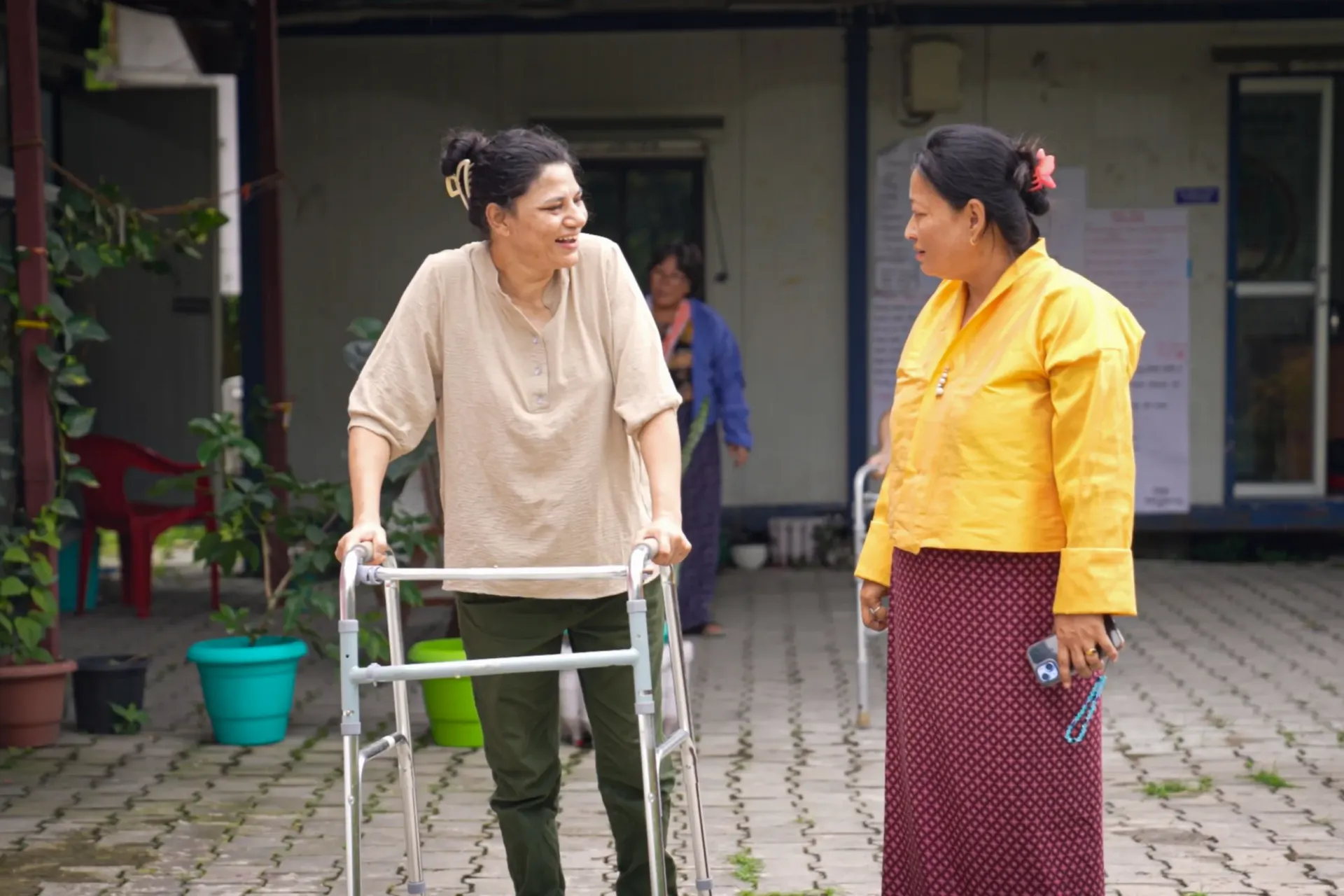
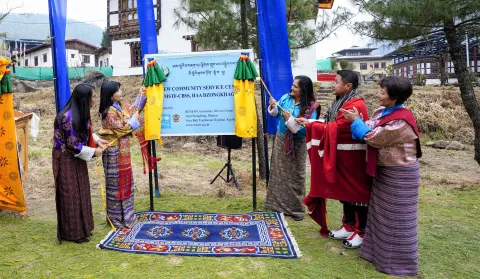
The premises of RENEW Community Service Centre in Phuentsholing, in the south of Bhutan, are humble; the ambition therein is anything but. That’s down to the Manager, Pem Choki, a force of nature who’s lifting the lives of the most vulnerable in her community, one woman, one young person, one child at a time.
Originally intended to support survivors of gender based violence - today, the center is a sanctuary for those who are isolated, by disability or identity, by violence or by relentless caring duties. That’s because for Pem, this isn’t a job; it’s a vocation. With her ear to the ground and her vast network primed to let her know about anyone who needs support and, critically, anyone who can provide it, the center has expanded under Pem and her team’s compassionate leadership. She is supported by case managers and a network of volunteers.

Two years ago, this center was a first-of-its-kind. Today, RENEW has expanded to 14 districts. The range of services Pem provides is impressive. In addition to case management and psychological support, Pem helps everyone to stay safe online and also makes sure they have educational opportunities.
At first, Pem says, the members arrive somewhat shy, beaten down by life’s circumstances. Many lack confidence because of what they’ve endured. But Pem and her community of kindness embraces them. There’s no judgement, just acceptance. There’s space and time and a listening ear.
Members say the center provides them with safety and security, indicating how vulnerable many of them feel outside the walls of the center.
Jimmy, 22, greets us with a huge smile. He arrived an hour early at the center. Jimmy says, “Before I came to the center, children and young people with a disability stayed at home. There was nothing to do. Now, we all meet up once a month.”
At the center, Jimmy with his friends feel accepted, at ease; there’s no judgement here – just a space that welcomes and enables.

That space is simple. It’s bright, clean, and functional. Some tables have a jumble of wire, beads and pliers from a basket-weaving session; others are heaped with paper and pens from an earlier brainstorming session with young people. Members can do as little or as much as they like. On some days, it’s enough to sit, listen and enjoy the company of old and new friends; but on others, there is a sense of industry as they learn skills and make craft products which they market and sell several times a year.
Despite their individual challenges, the members support each other. One is great at threading beads; the other is strong and can move tables; another has good hand/eye coordination, so can twist the wires well with pliers. It’s a team effort – and they appreciate each other.

That becomes ever more clear with Rupa, 31. A graduate in Business Administration and a star student, Rupa was moments away from sitting Bhutan’s prestigious Civil Service exams, which she was expected to ace, when she fell on a staircase. Her life changed forever. And yet, despite her challenges, Rupa is Pem’s right hand. Not only is she a motivational speaker, she’s a powerful advocate for disability rights and mobilises people in the town to join the center.
“Feeling sad is not in my blood,” she says. “There are people worse off than me. Some people can’t talk or see. I can express my feelings.”
Her message to those reading this, “I want able-bodied people to understand what it’s like to live with a disability. And to know, really know, that we have talents and ability. We might look different. And it might take time to see our skills but they are there. Please create opportunities for us.”

In a slightly exasperated tone she says, “I’ve had so many rejections based on my medical certificate not what's in my head.”
In fact, it was Rupa who suggested the skills-building session to Pem. As a result, members make decorative Bonsai trees and yoga poses out of wire and beads to sell.
Just as the Center lifted Rupa up, so Rupa is lifting others up. It’s a virtuous circle.
“I wanted the center to serve the community, and I wanted the community to serve the center,’ says Pem. “I’m proud of how far we’ve come in two years but there’s still so much to do.”
Pem would love to renovate the center further. Her gaze falls on broken slabs. “These are dangerous for members who walk with frames,” she says. “It would be safer if we could fix the slabs and make the ground smooth.”
She notes the walkway would benefit from a handrail, and the toilets need an overhaul to make them more disability-friendly.
She would also love to support more community members. Venturing further out of Phuentsholing, up to remote mountain villages, her ambition is to expand these services to those in need.
“Looking around, I feel the difference,” she says. “I see the difference. As a mother, as a social worker, it makes me happy that I have been able to make a difference in people’s lives.”
Judging by the smiles and laughter, the warmth and productivity, Pem has done all of that, and more.

To expand access to critical protection services for survivors of violence, UNICEF partners with RENEW to, among others, establish safe spaces in Bhutan. Also known as RENEW Community Centres, these Centres provide a physically and emotionally safe environment where survivors can access professional psychosocial support, legal aid, and economic empowerment services. The Centres also serve as entry points to access information, protection services and livelihood training as well as community engagement to prevent violence against women and children.
Sam Mort is the Chief of Communication and Advocacy for UNICEF South Asia