Kinley learns to cope and grow
A student finds resilience and support through Helping Adolescents Thrive programme in Bhutan

Haa: Kinley Damchen Wangchuk, 13, knows that exam scores can rise and fall, but emotions don’t have to.
The grade VIII student of Katsho Lower Secondary School in Haa district, western Bhutan, topped his annual exams last year. “It was the happiest day in recent years,” he says. His favourite subject is History.
But there was a time when stress felt much heavier. About five years ago, he lost his cat. He felt devastated. His parents helped him get through it. “They told me life is a journey and death is always near,” he says. “After that, I could move on.”
As the only child, Kinley receives great care, but he also carries a heavy burden of expectations. “Sometimes it feels like I have to do more,” he admits. Over time, he has learnt to manage that pressure better. He takes deep breaths when stress builds, speaks to his parents and grandmother, and listens to his teachers.
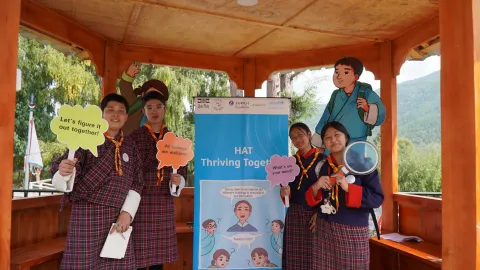
That change is closely tied to the Helping Adolescents Thrive (HAT) programme, introduced at his school with UNICEF’s support. The mentor-mentee sessions have widened his circle of support and with it, his resilience. Earlier, he relied only on his parents. Now, he turns to his teachers and uses what he has learnt in the sessions. “It helps struggling students become better and creates a safe environment,” he says.


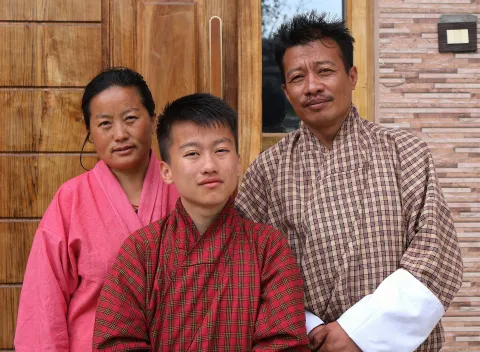
The change is not limited to students. Parents are part of the programme. Kinley’s mother, a homemaker, attended a HAT workshop at the school. Since then, small changes have appeared at home. His parents are stricter about screen time. He now uses his phone for about two hours a day. For Kinley, HAT has changed how he sees his parents. “I show more respect now,” he says. “Parents are everything to me.”
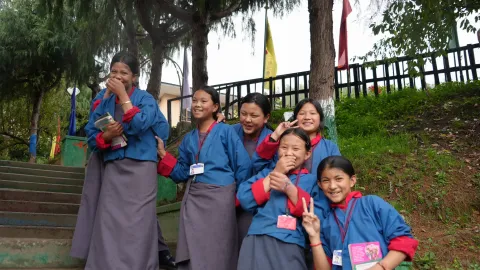
For many children in the school, home is not always stable. Some live with grandparents while their parents work abroad. That absence deepens stress. The HAT programme tries to fill that gap by building stronger connections at school and at home.
Behind this transformation is the Ministry of Education and Skills Development, the PEMA Secretariat and UNICEF and the support of Z Zurich Fund. This partnership holds the programme together. It supports training, materials, and facilitation. It provides structured tools, session guides, and learning materials. It builds the skills of teachers and facilitators, and it supports monitoring to ensure the programme works.
At Kinley’s school, this support has helped turn a set of sessions into a system of care.

Kinley now speaks more about life choices. He listens more to his friends. He pays attention to their problems. “If I see a friend struggling, I let them talk,” he says. “Then I try to help or tell a teacher.”
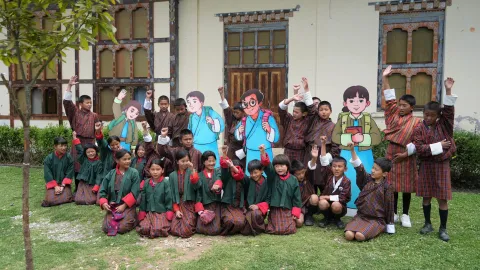
Kinley’s world remains the same. Examinations still come, and expectations remain high. But he has learnt to navigate them. Where once he and his friends drew worried faces, today they sketch calm and happy ones. With the tools he has learned, Kinley pauses, thinks, and moves forward, showing that with the right support, adolescents can thrive even in the most demanding moments of growing up.