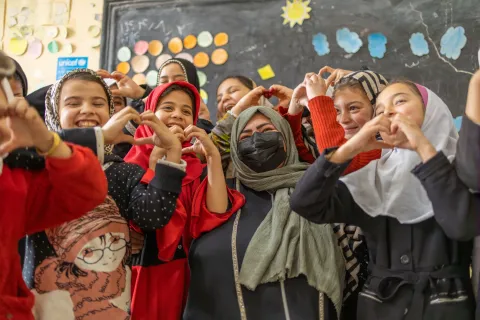
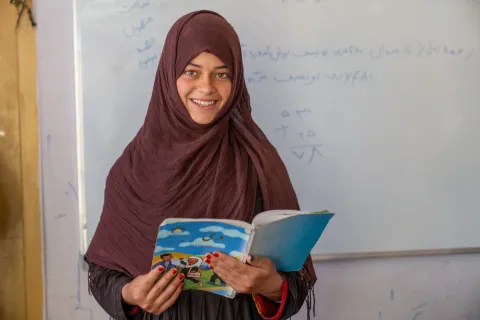
The price of a future
To facilitate girls’ education in rural Afghanistan, UNICEF provides cash assistance to low-income families, so they can afford books, school supplies and more
"I told my mother: 'Please, do not use this money to buy food for us, just keep the money for our education.'"
15-year-old Nahila is the eldest of six girls. Her mother, Saeed Khanum, was already married by the time she was Nahila’s age, but wants a better life for her daughters than she had for herself.
"My husband works a few days a week doing odd jobs, making 300 or 400 Afghani per day (around US$ 5.00)," says Saeed Khanum. "With that money, we can barely afford our rent, plus a bit extra for cooking oil and soap."
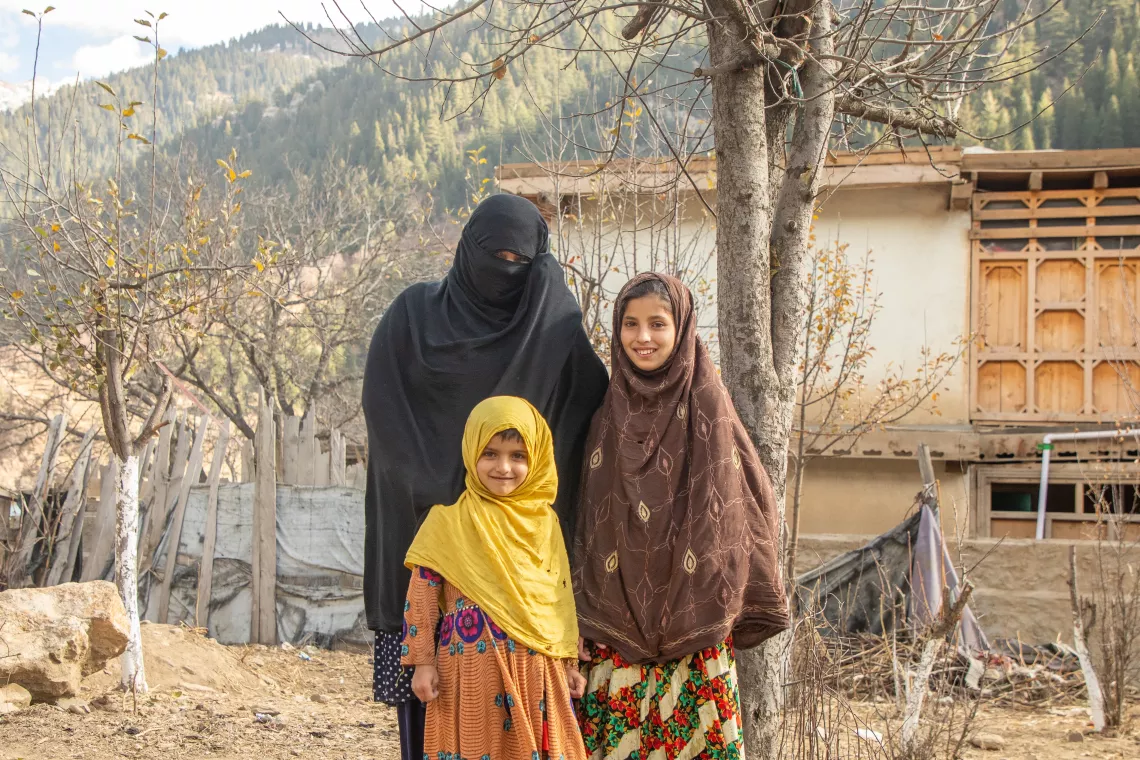
One girl in Nuristan and one million others
“I want my daughters to have careers,” says Saeed Khanum wistfully. “Maybe one could be a doctor, and the other an engineer.”
But without an education, for 15-year-old Nahila and 1 million other girls in Afghanistan barred from secondary school, there is little hope for this dream to come true.
Just 40 per cent of children in Nuristan attend primary school, and after the age of 12, attendance drops to an alarming 14 per cent.
There are many reasons school attendance is low. Often the nearest school is simply not near enough, or it is already full. For some families, they simply cannot afford the costs surrounding an education.
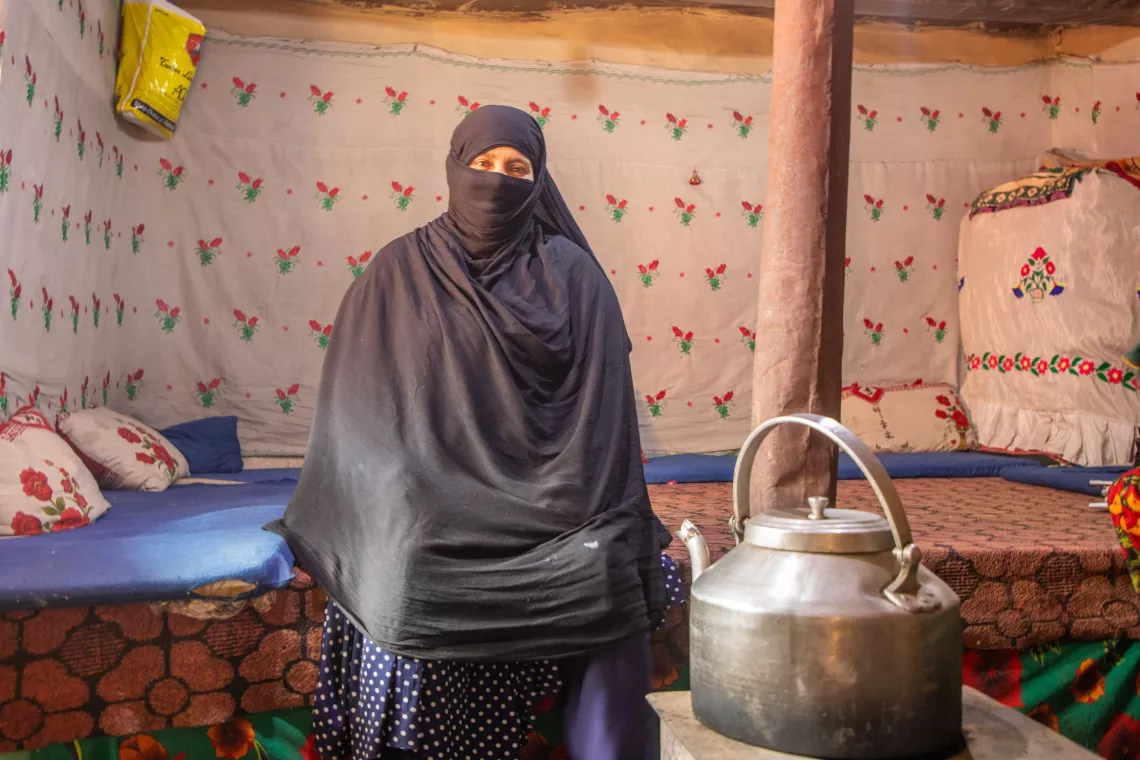
"I want my daughters to have careers... Otherwise, they would be like me, just working in the fields. That is why I used this cash for their education, nothing else."
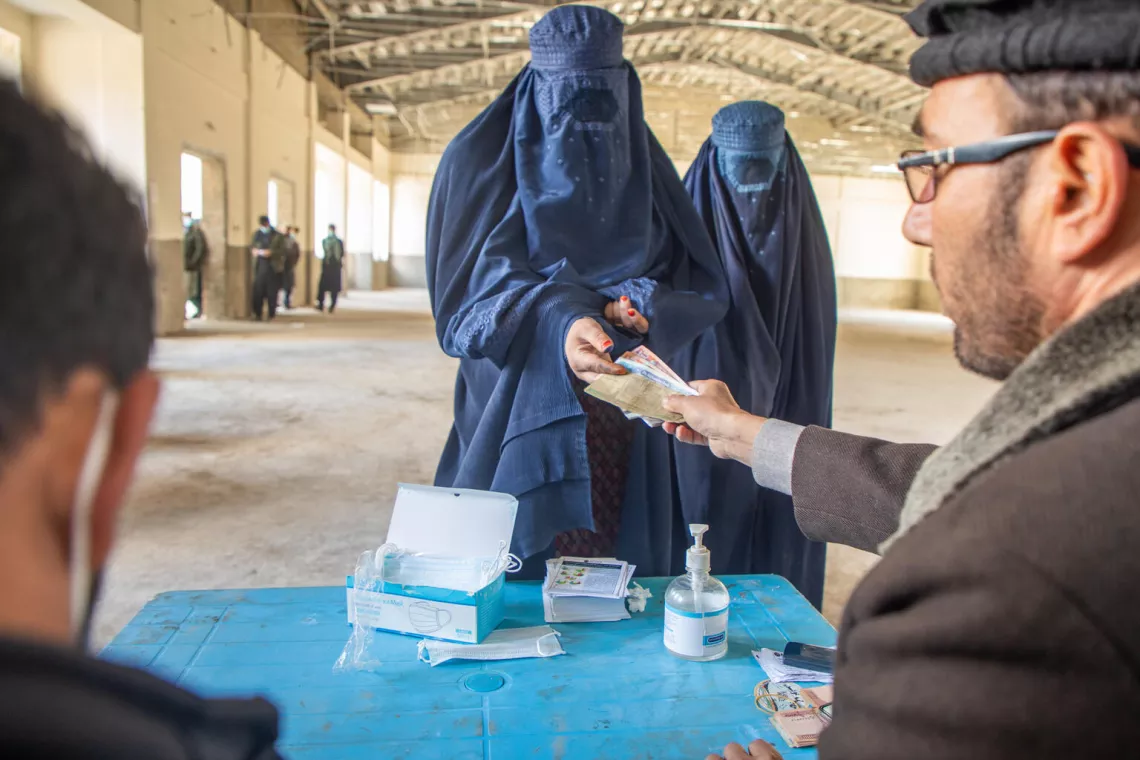
To support girls’ education in Nuristan, UNICEF provided cash assistance to some of the most economically challenged families, distributed through partner ACTED. Each family received 10,600 Afghani in each of three rounds, about US$ 120.00, to help them afford their daughters’ education.
Some families use the cash to buy books or pens, while some use it for transportation, school uniforms, or backpacks. Cash assistance, rather than in-kind material support, gives parents this flexibility and dignity; their purchasing choices are their own.
Daring to dream
For Sayeed Khanum, who just received her third round of cash assistance, the choice is clear.
“I used the previous two rounds of cash assistance to buy books and notebooks for my youngest daughters in primary school, and to enroll my older daughters in private courses. I will use this cash to continue paying for these private courses.”
Saeed Khanum is resolute, because she knows what is at stake.
“If my daughters could not go to school, they would be like me, just working in the fields, or they would be jobless like their father.”
Families in Nuristan believe that educating girls is a catalyst for empowerment
Communities coming together
Cash assistance is unconditional, meaning families can use the cash in the ways they feel are best. So, why would Saeed Khanum and other parents choose to use this cash for education?
UNICEF interviewed 440 parents in Nuristan, plus 84 girls and 300 teachers, to understand how these communities perceive the importance of girls’ education. Focus group discussions discovered that most families believe educating girls is a catalyst for empowerment; it can uplift families, reduce poverty, and help communities prosper.
Despite many challenges to getting an education – arduous journeys to the nearest school, restrictions on girls’ education, and poverty – parents in Nuristan firmly believe that educating their daughters is paramount.
UNICEF is also addressing some of these underlying barriers, establishing more community-based education classes and helping train teachers – especially women – through the Girls' Access to Teacher Education (GATE) programme.
Nothing but education
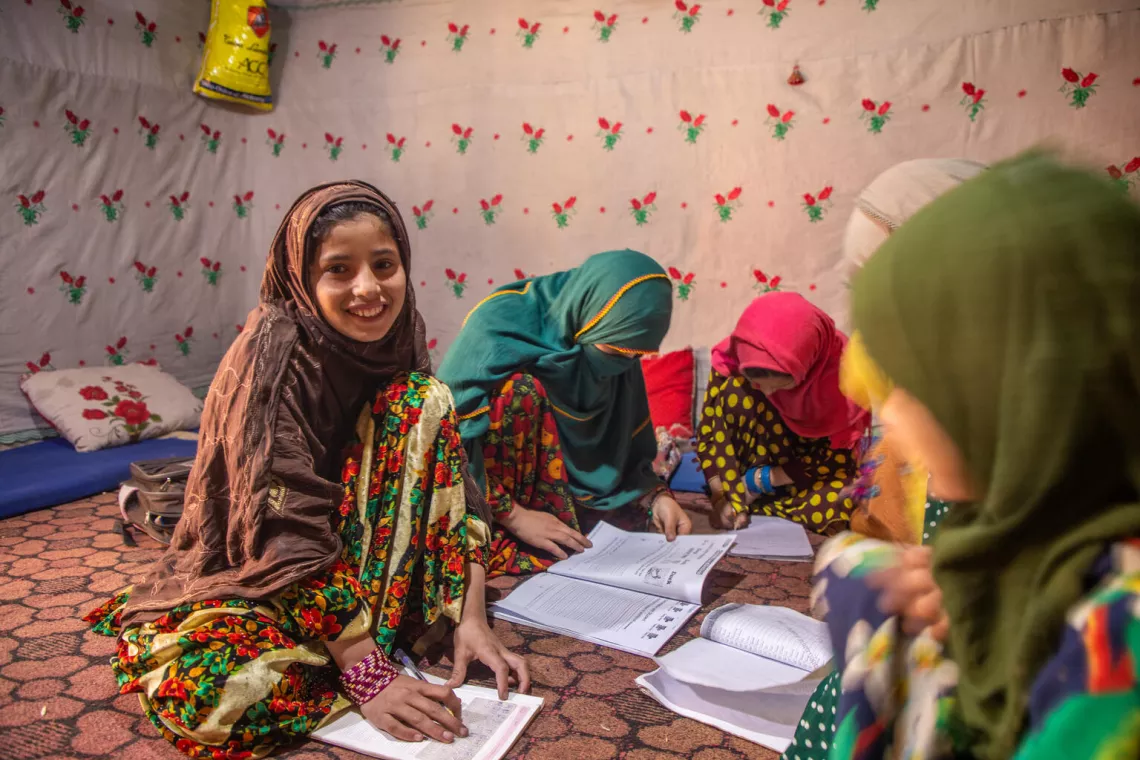
In their tiny, one-room house, warmed by a wood burning stove in the centre of the room, Nahila and her sisters bend over their schoolbooks. In the dim light, they whisper lines to themselves from their lessons, tracing the text on the page with a finger. The youngest, 5-year-old Fariha, not yet old enough for school, scribbles some doodles in a notebook next to her sisters. But perhaps she has already begun to dream big.
Nahila is well on her way to becoming a doctor or engineer. “In my private classes, we study biology, physics, and math. But I love learning English the most.” She recites a few English words she has learned.
“If I did not have these private classes, I would have nothing to do,” she says. “I would just be at home, or cultivating with my mother.”
“This is why I used this cash for their education,” says Saeed Khanum. “Just books, clothes, and fees for their classes. Nothing else.”