Learning to read, daring to dream
In her new community-based classroom in central Afghanistan, Khadija finds hope and inspiration through her blossoming education

DAIKUNDI, AFGHANISTAN – “I am happy that I can help my father to read phone numbers.”
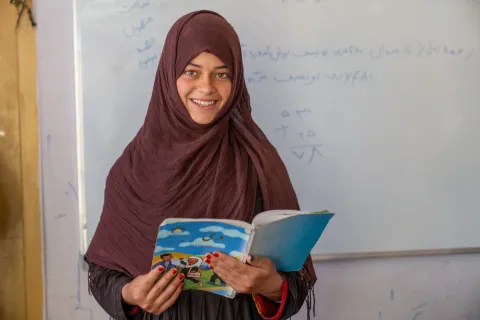
9-year-old Khadija lives in Afghanistan’s remote central highlands with her parents and three siblings. Until recently, she was one of millions of children not in school, as around half of children in Afghanistan do not attend primary school.
But Khadija’s dreams are alive.
Before she started school for the first time, Khadija would listen to stories from her mother who worked and cleaned at home. That is all Khadija could fill her day with, too, but now she does her homework, goes to school, and she can read every single word and help her family.
Havens of learning and safety
Khadija had not been able to attend school for years. Her village lacked schools and classrooms, and Khadija had never been able to read or write even simple text.
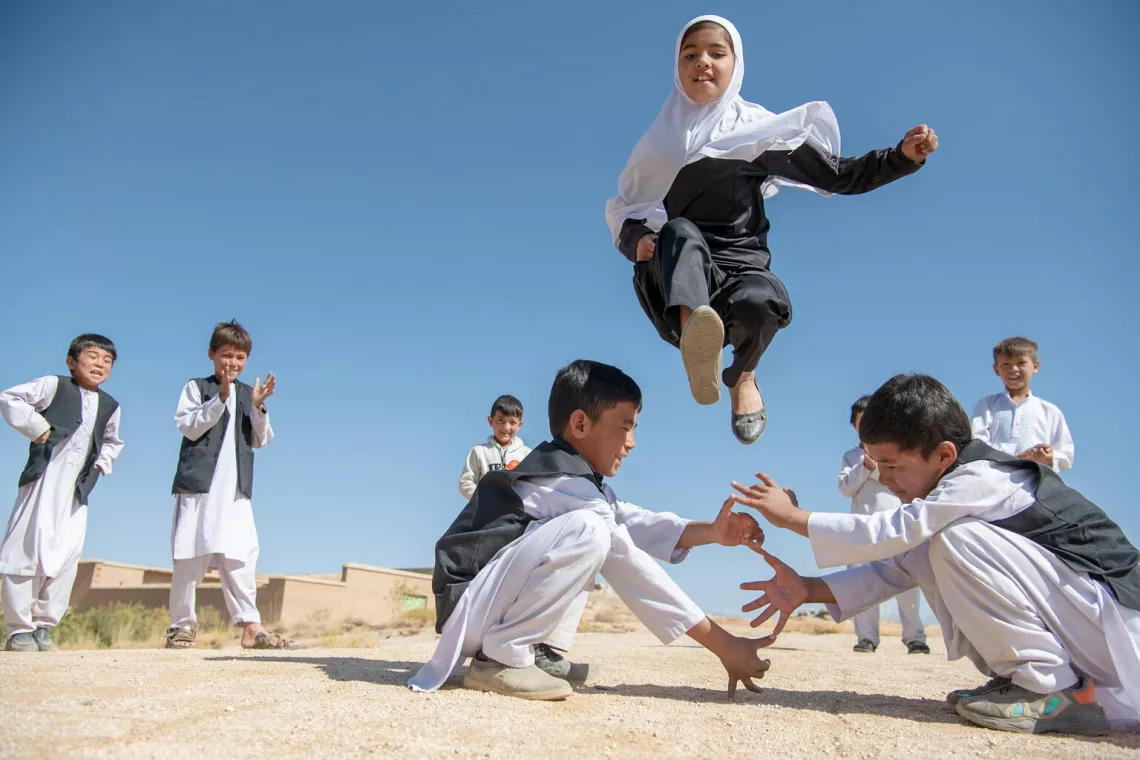
For many children like her, schools are more than places of learning. They offer safety, a chance to meet and play with other children. They help deter child labour and shelter children from violence or abuse. When girls are in school, they are also less likely to be married when they are still children themselves.
“Before coming to school, we used to play in the streets and in the dirt all day long,” Khadija recalls. “Not only me, but all my friends did this.”

A friendly and fun new classroom
To Khadija’s delight, UNICEF established a new community-based classroom in her village in Daikundi. UNICEF helped select and train the teacher and continues to pay her salary, and provided materials like textbooks, backpacks, exercise books and pens for the students.
In 2023, UNICEF supported over 21,000 community-based education classes across Afghanistan. These classes helped educate around 686,000 children, 60 per cent of whom are girls like Khadija.
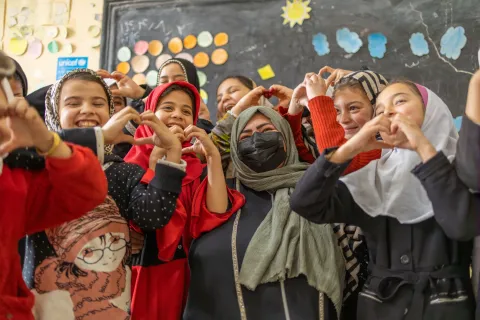
In her new classroom, Khadija embraces her lessons with a smile. She is one of the first to raise her hand, volunteering to test her knowledge on the blackboard in front of her classmates.
Her teacher, Ruqiya, believes collaboration is the key to learning.
“Before the lesson, I divide the students into groups and ask them to write their opinions on the blackboard about the topic of the day,” she says. “The sense of teamwork and participation helps them grow more.”
Khadija separates her hands and says excitedly, “If my classmates don't understand the lesson, I will help them,” her voice rising, “and I will read the lessons to them again.”


Parents supporting education in the community
Community-based classes like this one provide children in rural, hard-to-reach, or economically disadvantaged areas a pathway to quality education – at no cost.
And when UNICEF establishes one of these classes, the entire community is mobilized. UNICEF and partners raise awareness about the importance of education, encouraging parents to send their children to school.
“Families in this village have always cooperated to educate their children,” says Ruqiya. “They participate actively in monthly parent meetings. These meetings help contribute to their children’s learning process.”
Khadija’s parents needed little convincing. They noticed her blossom into an energetic, curious little girl. She helps them read documents and phone numbers at home.
“Besides studying, we also play games,” says Khadija. “I am so happy that now we have this classroom.”