Faces of the floods
As climate change brings more frequent extreme weather events, children in Afghanistan are among the most vulnerable with their lives and futures threatened
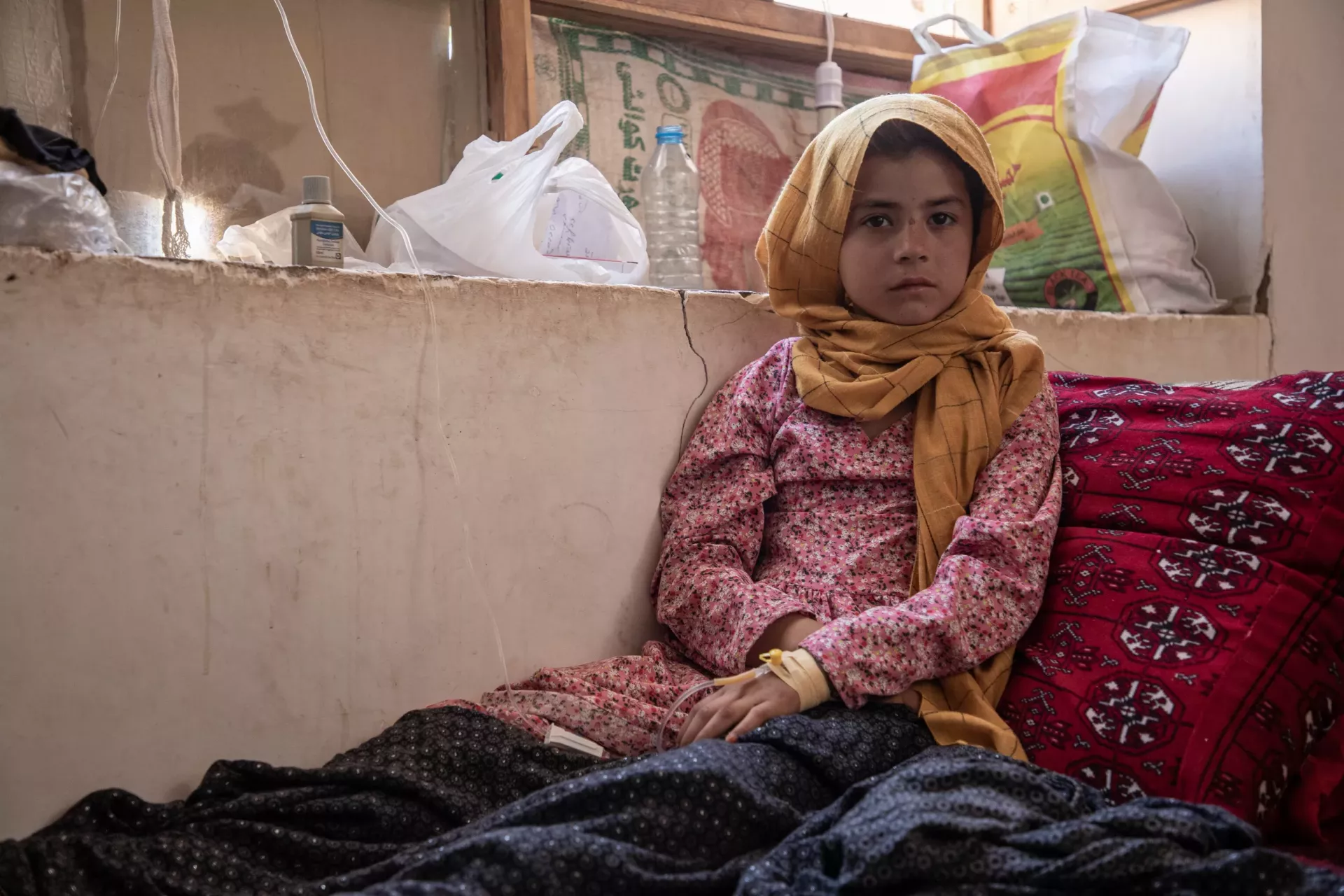
Hajera sits propped against a pillow on the floor of her neighbour’s house. An intravenous drip rehydrates through a vein in her hand; a bottle of water sits nearby. Every few minutes, Hajera coughs violently.
“We lost everything in the floods,” says the 11-year-old, solemn. “Our house was destroyed, even the health centre was damaged. That is why I have to get treatment here at my neighbour’s house.”
Earlier this month, heavy rainfall caused violent flash floods in northern Afghanistan, claiming the lives of 180 people, including children. Hundreds more were injured, like Hajera, who inhaled dirty water filled with sediment while escaping the flood with her family.
Fortunately, no one in her family was killed, but their home was destroyed, along with 3,000 others in the region.
“We lost all our money, clothes, and food,” Hajera recounts. “The water took away my books. I don’t know how I will go to school without them.”
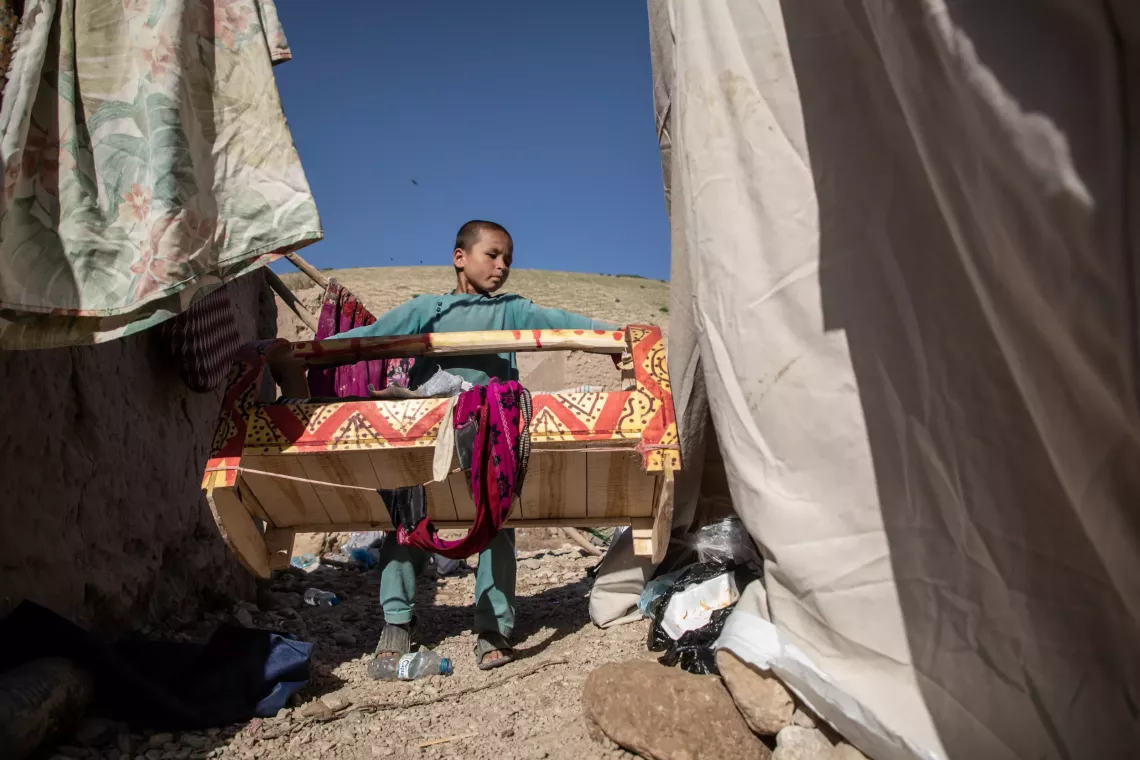
“It was daytime, and we were sitting at home when it started.”
When the darkening sky turned to rain and then a river where it shouldn’t be, 8-year-old Deen Mohammed was struck with terror. One moment he was sitting with his family, his younger brother playing happily outside, and the next he was struggling to breathe as water rushed over his head.
“The water came and our family rushed to use the ladder and get on the roof. We were holding the Holy Quran and praying as we cried for our lives.”
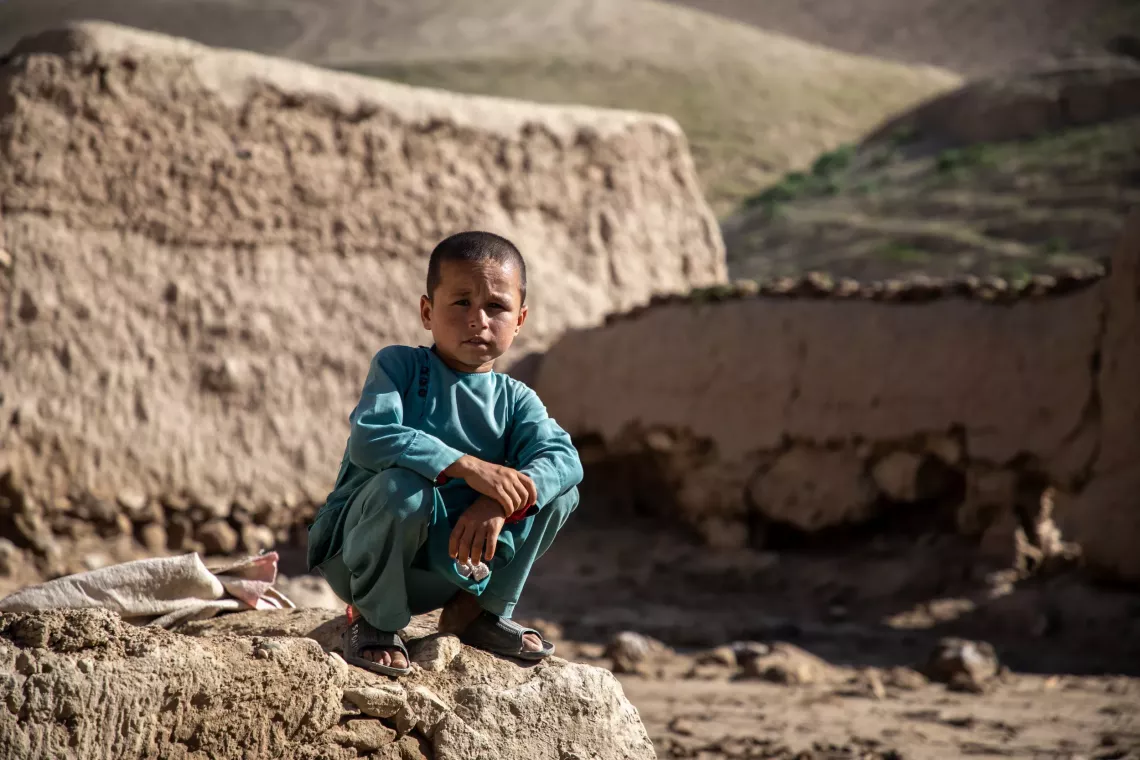
"We cried for our lives... The flood took our whole home and everything we had."
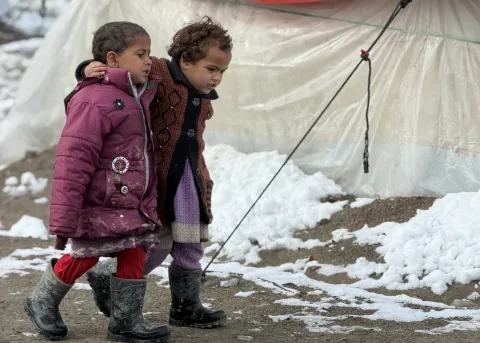
Like thousands of others, Deen Mohammed now lives in a tent, his home lost to the flood.
"The flood swept away my father and younger brother. I thought I would never see them again, but they survived on the other side of our house with the help of our neighbours.”
"But the flood took our whole home and everything we had to eat: Our rice, beans and bread."
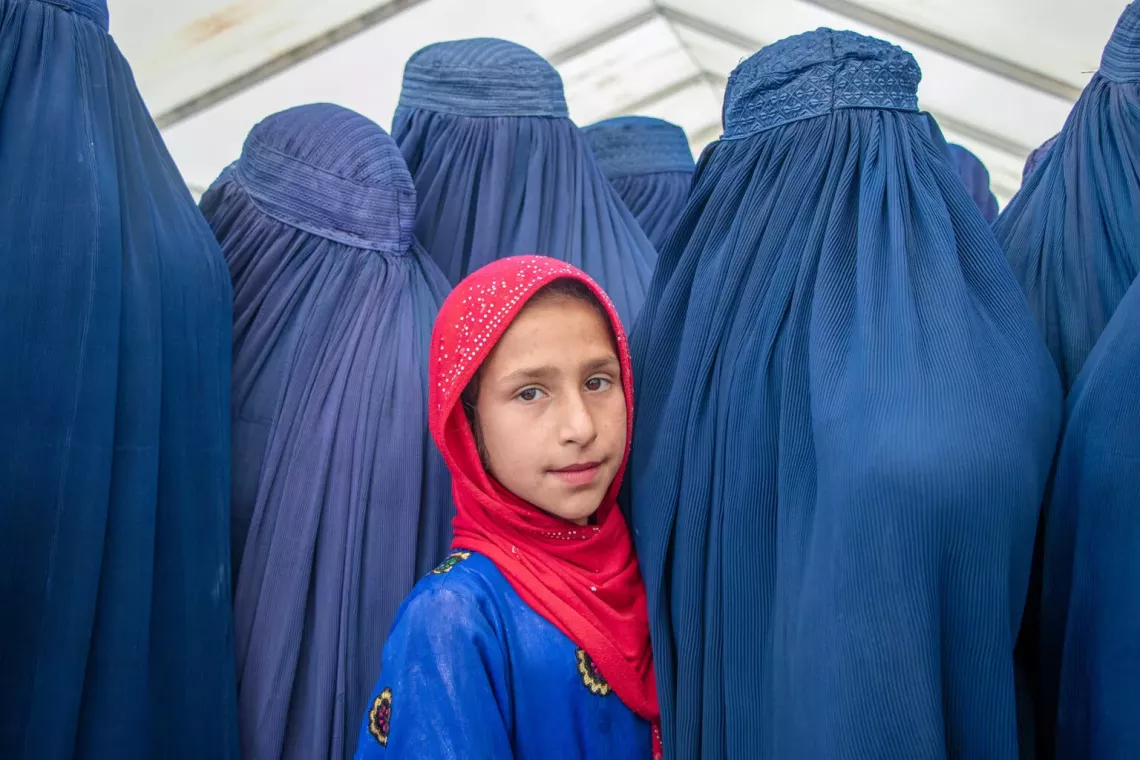
Rana survived the flood, but some of her friends did not. As she stands somber with her mother and other women receiving cash assistance, she recalls what the flood took from her.
“The flood has brought loss to my family because we lost all our possessions," says Rana, 10. “I also lost my favourite books, notebooks, and my toys. Some of my friends did not survive.”
Afghanistan ranks 15 of 163 nations on the Children’s Climate Risk Index. This means that not only are climate and environmental shocks and stresses predominant across the country, but children here are particularly vulnerable to their effects compared with elsewhere in the world because basic services in many areas are still lacking. While 12.6 million children in Afghanistan need humanitarian assistance this year, one-third of the population does not have access to clean water or health facilities, and 850,000 children under five are expected to need treatment for severe acute malnutrition this year.
Children already susceptible to disease and malnutrition are becoming even more exposed to health threats from climate change, while recurrent drought, worsening water scarcity and rising temperatures push them further from help.
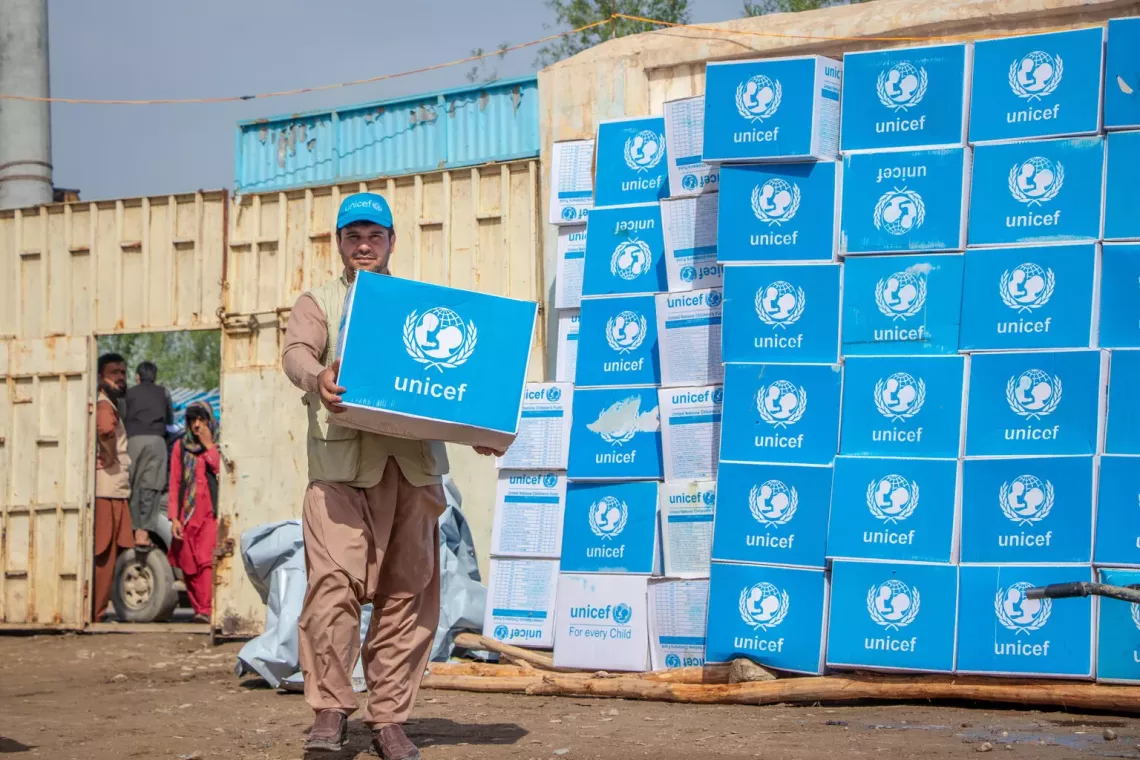
To support families in the aftermath of the flood, UNICEF provided immediate cash assistance to 3,000 households most affected, including to Rana’s family. Each family received US$ 312.00, facilitating them to provide for their own basic needs with dignity and flexibility.
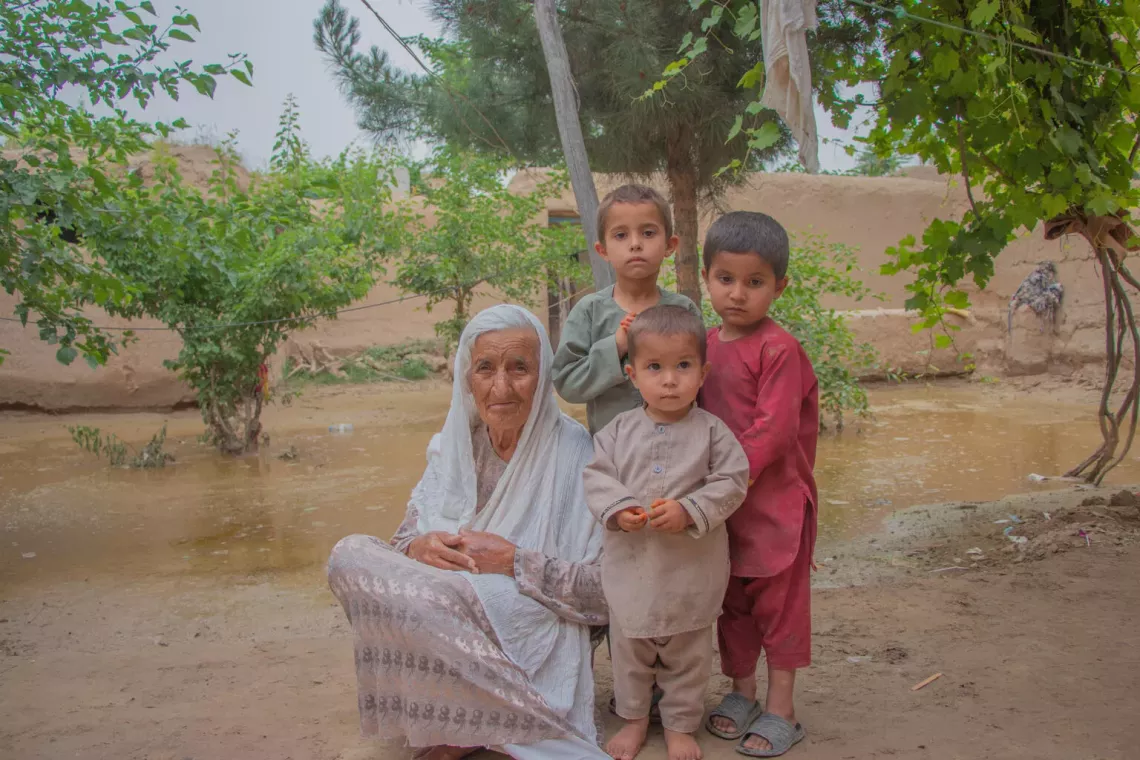
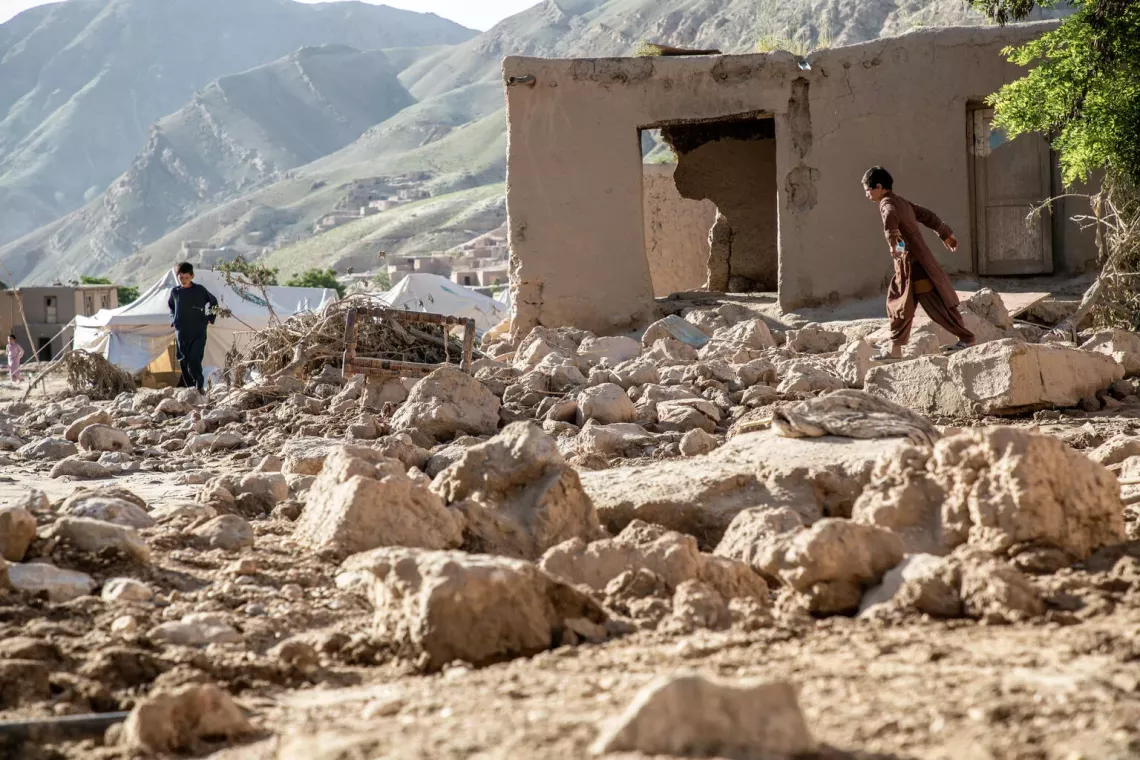
80-year-old Bigom was with her grandchildren when the walls of their home were battered by flood waters. In the chaos to find higher ground, her grandsons were minorly injured, but luckily everyone survived.
Unfortunately, Bigom lost her primary source of income and wealth – her livestock.
“My sheep were swept away in the floods and killed,” says Bigom.
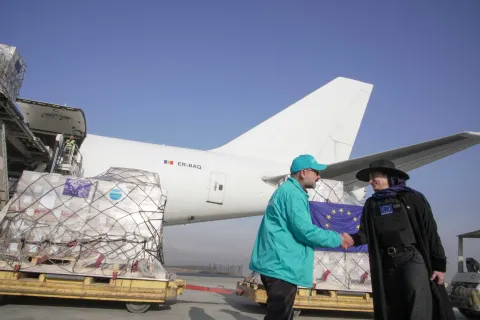
With families like Bigom’s unable to provide for their basic needs, UNICEF stepped in with water trucks immediately delivering safe drinking water to over 22,000 people, essential hygiene supplies like soap and buckets for water storage, warm clothes and blankets, plus kits full of household supplies like cooking equipment.
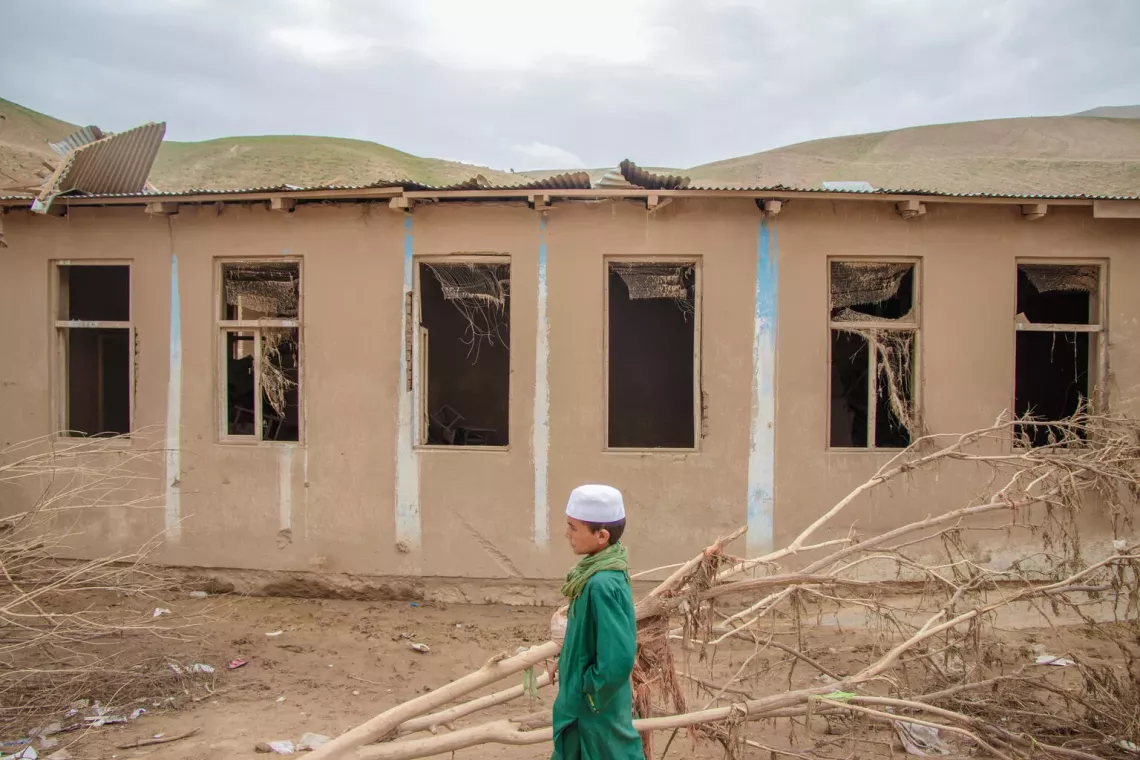
Extreme weather events are becoming the norm in Afghanistan. This season’s floods indicate that the climate crisis in Afghanistan is only intensifying.
UNICEF will always be there for children in an emergency, but children deserve long-term solutions to the climate crisis. In Afghanistan, this means further investment in basic services like the healthcare system, education and water supply networks, so communities can recover and strengthen themselves after a disaster.