Devastated and dispirited: Barred from continuing their education, girls in Afghanistan lose hope
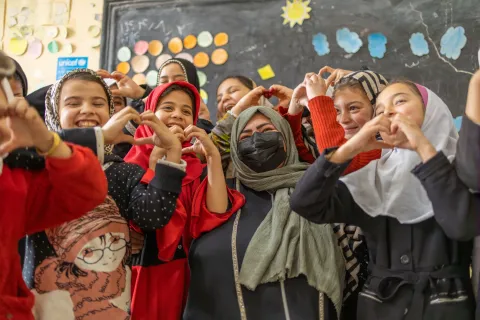
As the academic year began in March, girls hoped to return to class with their brothers. But for the second year in a row, secondary schools remained closed for girls in Afghanistan.

"I began to feel a deep voice in my heart. It wants to scream out – so loud – and I feel like something inside of me needs to escape."
Children around Afghanistan grabbed their backpacks, uniforms and pencils, rejoicing as schools reopened in March after the long winter break.
But for 1 million girls, the year only promises crushed hopes and dreams, as once again they are prevented from attending secondary school.
This decision by the de facto authorities, which the UNICEF Executive Director has called "unjustified and shortsighted", marks another grim milestone in the steady erosion of girls' rights in the country.
UNICEF spoke with girls around the country to hear how their lives have been impacted, how they occupy their days now, and if they still have hope for the future of their education.

Arezo
"It has been more than 540 days since I have been in a classroom. I’ve been counting. If schools do not open, I will have to keep counting and this depression will keep going."
Arezo would have been in grade 11 this year - her penultimate year of secondary school. But now her heart is heavy with the rubble of her crushed dreams. She wanted to become a dentist, but now...
"From morning to evening, I just do household chores. The only thing I have are the books and chapters from previous years of school, which I try to study sometimes at home."
Depressed, Arezo sought treatment medical treatment for her mental health. Her doctor prescribed antidepressants, but Arezo is still confined to her house and experiences anxiety attacks.
"I began to feel a deep voice in my heart. It wants to scream out – so loud – and I feel like something inside of me needs to escape."


Mursal
"After the schools closed, I continued learning at home. I started learning guitar by watching videos online."
"The initial weeks were gruesome and very tiresome. I did not have any hope at first. But then I told myself, 'Mursal, you cannot just stay still.' So I started studying from some of the books I have at home. I wanted to keep myself busy, mentally, so I practice music and art."
Mursal would have been in 11th grade this year. She dreams of pursuing a degree in fine arts, and using her talent to show "the good parts" of Afghanistan.
"I want to use my art to share about people’s lives here. I would show the courage of Afghan women, their resilience and continued hope. I would talk about the beautiful scenery. I would show that there is a beautiful side to Afghanistan, that it is not just bombed buildings and destroyed walls."
Sobbing, she tries to describe how it would feel if secondary schools remain closed to her forever.
"If the schools do not open again…"
"To think about what I will go through..."
"I do not have any way of looking into the future…"
"Every second and every minute breaks me down gradually..."

Rabia
"For every year of my studies, I have been first in my class."
At 16, Rabia should be attending high school and looking towards university. She would be in grade 11 this year, but her opportunities are now murky as the classroom remains off limits for her.
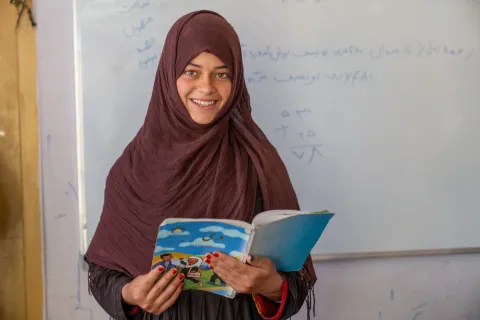
But Rabia is determined to keep learning, in any way can.
"I have been trying to study on my own. I collect books. I try to find textbooks for grade 11 since that is the class I should be in."
One of Rabia's brothers even tutors her in mathematics when he comes home from school. Despite intermittent electricity and unreliable internet, Rabia also enrolls in free classes online when possible.
She passes all this knowledge to other girls, teaching them through chat groups on her mobile phone. With her friends, Rabia completes practice assignments, and one of her former teachers marks the assignments remotely.
"We know these learning groups might be a little bit effective, although not as effective as going to school. We have a lot of dreams, and we are not sure if we will be able to achieve them."
"But we are trying to be hopeful. We will help each other learn."