Shelter and structure bring safety to Zimbabwe’s fragile schools
With School Improvement Grant and UNICEF support, schools like Choukudza are building sturdy, weatherproof classrooms that enhance student welfare

CHIKOMBA, Zimbabwe - Mid-term examinations are just two weeks away, but for 11-year-old Taominah Muchadeushe, the wait feels endless. Every day, she eagerly prepares to put pen to paper, knowing that passing Grade 6 is more than just a test—it’s a crucial step toward her dream of becoming a pilot.
“I always see the planes in the sky, and one day I’m going to fly them,” she said, slipping into her seat in the newly constructed classroom at Choukudza Primary School, ready for the morning’s lesson.
Only a few years ago, Taominah couldn’t afford to dream that far ahead. Learning in crowded makeshift classrooms built from poles and mud, dilapidated brick structures, or even out in the open with little protection from harsh weather, simply surviving the school day felt like a victory. Completing lessons without being forced home by illness or rain was a mission accomplished.
“The classrooms were cold and dim, making it hard to focus, and often left me falling sick,” Taominah recalled.
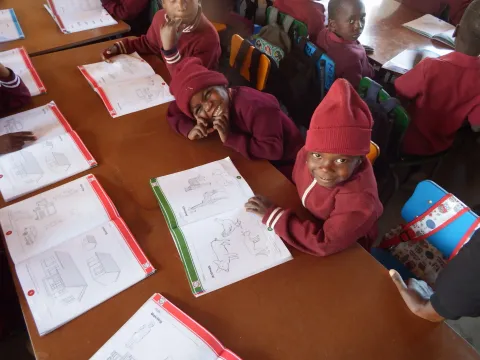
Inside the sturdy new classroom block, she and her classmates eagerly ignored the cold drizzle tapping against the windows to participate in a science lesson. Previously, such weather meant the end of schooling for the day, and a high risk of catching flu or injuries from slippery grounds.
This new building was completed with complementary funding from the School Improvement Grant (SIG) programme. Constructed of bricks under iron sheets, with secure windows and doors, the block shields Taominah and her 125 schoolmates from the elements, allowing them to focus on learning in a safer, more comfortable environment.
“It doesn’t leak anymore, the walls don’t shake, and livestock like goats and cattle don’t wander in to disturb our classes,” she said with a smile.
The Ministry of Primary and Secondary Education leads the SIG programme, which is funded by the Global Partnership for Education (GPE). UNICEF manages the funds and provides technical support. This funding targets Zimbabwe’s most fragile schools, particularly in rural and farming areas, to help improve infrastructure critical for quality education.
Before this intervention, parents and staff at schools like Choukudza described their learning institution as a risky environment.
“In 2020, when I arrived here as a teacher, the situation was dire,” said Cain Mutupo, acting headmaster at Choukudza Primary School. Founded in 2017 to serve dozens of new farming families resettled nearby, the school’s rudimentary classrooms offered little protection.
Winter winds sneaked through cracks in the poles and mud, stiffening children’s fingers and making it difficult for them to write correctly.
“Some children fell ill with a cold and persistent coughs despite wearing jerseys,” Mutupo explained. “When rain came, we had no choice but to dismiss them early. We gave up on sticking to timetables or completing the curriculum. Water soaked the classrooms and ruined books.”

Teachers felt defeated by the harsh conditions. Some transferred to better schools, as they were unable to manage classes in cramped, crumbling spaces. They couldn’t even put up charts or materials to aid learning, despite seeing great potential in their pupils.
Desperate for safer conditions, community members pooled whatever resources they could: moulding bricks, providing sand, stones, and water to start building a more solid classroom. Without much cash, they negotiated with local builders to accept maize and livestock as partial payment.
But then drought struck, induced by climate change, devastating crops and leaving families struggling to feed themselves. Funds to buy cement, roofing sheets, and pay builders dried up, and the project came to a halt.
“Our income depends on maize and sunflower harvests, which are seasonal, so we usually get money once a year,” said Julia Muchovu, secretary of the School Development Committee. “During the drought, even feeding our families was hard, so building the school became a luxury some of us couldn’t afford.” Many parents sent their children to schools more than 10 kilometres away.
Today, however, thanks to a US$10,000 injection via Complementary Funding in 2022 and 2024, the school finally finished the classroom block. Enrolment has since increased from just over 100 learners in 2023 to the current 125.
Mothers report fewer illnesses linked to exposure to cold and damp, and children are more eager to attend school.
A 2021 study commissioned by UNICEF on the impact of the SIG programme in Zimbabwe found that schools using their funds to fix or build classrooms experienced fewer safety problems, such as broken walls, leaking roofs, and poor ventilation. The study also noted an average increase of 23 per cent in Grade 7 pass rates, a 15-20 per cent rise in attendance, especially among girls, a 10 per cent drop in absenteeism, and improved morale and retention among teachers.
At Choukudza, pass rates rose from 16 per cent in 2023 to 33 per cent in 2024, narrowing the gap with the national average of 49 per cent.
On a recent morning, children in crisp blue uniforms clutching books in plastic bags emerged from dusty bush paths. They gathered on the assembly point, standing still to sing the national anthem as two pupils hoisted the flag on a tall wooden pole. Then Mutupo, the acting head, asked them to name the constitutional rights children enjoy.

“The right to food!” shouted one.
“The right to education!” called another.
“Don’t forget the right to shelter and safety,” added a third.
They then filed into their classrooms cheerfully and in an orderly manner, ready to face the day.
“Now, I come to work with a sense of purpose,” said Caroline Chinyoka, a teacher. “The children are invigorated and enthusiastic about learning and achieving. We no longer work in precarious, unsafe huts. We have buildings where we can store materials and manage lessons properly.”
For Taominah, school—and the future—have become something to look forward to.
“I can see the blackboard clearly, and our teachers can teach without worrying if the classroom will fall apart,” she beamed, her voice filled with determination.