A Dose of Good News
Zambia Commemorates 50 Years of Immunizing Children Against Vaccine-Preventable Diseases and Shows What is Humanly Possible During Africa Vaccination Week

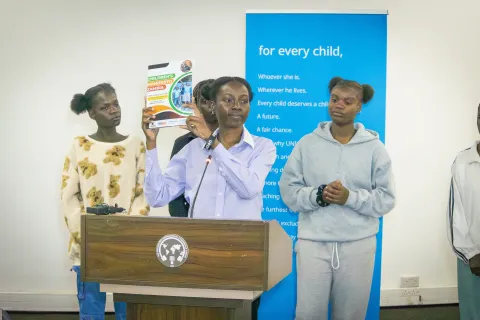
LUSAKA, Zambia, 14 May 2025 - The Government of the Republic of Zambia (GRZ), in collaboration with the World Health Organization (WHO), the United Nations Children’s Fund (UNICEF), and other partners in Zambia officially launched the 2025 Africa Vaccination Week (AVW) today at Matero’s Katambalala Market in Lusaka. The event marked a dual milestone: the celebration of this year’s AVW under the theme “Immunization for All is Humanly Possible”, and the 50th anniversary of Zambia’s Expanded Programme on Immunization (EPI).
The high-level event was officiated by the Honourable Minister of Health, Dr Elijah J. Muchima (MP), represented by the Permanent Secretary responsible for Donor Coordination, Dr. George Sinyangwe, as Guest of Honour, the WHO Country Representative, UNICEF Zambia Country Representative and other key stakeholders.
“This year’s commemoration is especially meaningful. For 50 years, Zambia’s immunization programme has protected generations of children from vaccine-preventable diseases. Today, we celebrate that legacy while committing to reach every child, everywhere,” said Hon. Minister of Health.
Immunization is undergrowing threats as misinformation, population growth, humanitarian crises and funding cuts jeopardise progress and leave millions of children, adolescents and adults at risk. This is a key moment to raise awareness about the power of vaccines in protecting children from deadly diseases like polio and measles. It is also an opportunity to contribute to trust building in life-saving vaccines.
While we have made incredible progress in reducing polio cases by 99.9%, outbreaks persist in some regions. Until polio is completely eradicated, no child is truly safe. While many pieces of our content are aimed at calling for urgent action to eradicate polio, we are also highlighting strides made to protect children from diseases like measles and highlighting the good work across the region.
Since 1975, Zambia’s EPI has played a pivotal role in reducing child mortality, eliminating diseases like polio and introducing life-saving vaccines such as those for measles, pneumonia and Human Papillomavirus (HPV). Through sustained collaboration with international partners and community engagement, Zambia has made significant strides in protecting the health of its children.
“We congratulate Zambia on this incredible 50-year journey. Immunization remains one of the most cost-effective health interventions. This Africa Vaccination Week and beyond, let us re-energise our collective efforts to achieve equitable access to lifesaving vaccines for every child, especially those in hard-to-reach communities. Now is the time to accelerate progress, expand coverage, and close immunity gaps,” said Dr Clement Peter Lasuba, WHO Country Representative.
In 2025, AVW serves as a regional rallying call to reduce the number of zero-dose children, increase vaccine coverage and strengthen health systems across Africa. Over 32 districts in Zambia with high numbers of unvaccinated children will conduct outreach and social mobilisation activities throughout the week. These include health education at health facilities, community radio broadcasts, door-to-door mobilisation and public campaigns led by community leaders and health workers.
“UNICEF celebrates Zambia’s unwavering commitment to child health. Every vaccine delivered is a promise of a healthier future. According to the 2024 Demographic Health Survey, only 65% of children (aged 12-23 months) were fully vaccinated. So, together, let us build resilient health systems where no child is left behind,” said Dr Penelope Campbell, UNICEF Zambia Country Representative.
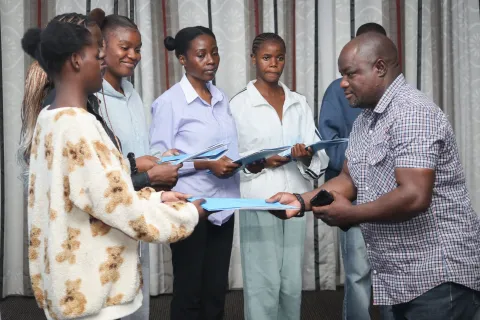
As part of efforts to expand routine immunization coverage in Zambia, the Ministry of Health is working closely with the Ministry of Education (MoE) to ensure that all girls aged 9 receive the HPV vaccine, a proven game-changer in the prevention of cervical cancer and a critical step in advancing women’s health. The launch event saw an encouraging turnout of adolescent girls coming forward to receive their doses, reflecting growing awareness and community support.
HPV vaccines are available year-round at all public health facilities and, through collaboration with the MoE, are also offered periodically in schools through the School Health and Nutrition (SHN) Programme. UNICEF Zambia joins the MOH in urging all parents and caregivers to ensure that children under-five receive all routine vaccinations, and that girls aged 9 are protected through timely HPV vaccination—because every child deserves a healthy start in life.
As Zambia looks to the future, the government and its partners reaffirm their commitment to equity, innovation and inclusion in immunization. This AVW and beyond is a reminder that vaccines do not just protect individuals - they protect communities, and they secure the nation's development.
###
Media Contacts:
Ministry of Health (GRZ): Georgia Mutale, [email protected] +260-976179942
WHO Zambia: Kafusha Kapema, [email protected] +260-973825803
UNICEF Zambia: Betty Chella Nalungwe, [email protected] +260-966767770
Media contacts
About UNICEF
UNICEF promotes the rights and wellbeing of every child, in everything we do. Together with our partners, we work in 190 countries and territories to translate that commitment into practical action, focusing special effort on reaching the most vulnerable and excluded children, to the benefit of all children, everywhere.
For more information about UNICEF and its work for children in Zambia, visit www.unicef.org/zambia.
Follow UNICEF Zambia on Twitter, Facebook and Instagram