Developing and implementing your WASH peacebuilding M&E Plan – How to measure
Once a sound WASH for Peace ToC and Results Framework has been developed, the next step is to identify relevant indicators as well as supporting means of verification and data-collection methodologies
Purpose
Once a sound WASH for Peace ToC and Results Framework has been developed, the next step is to identify relevant indicators as well as supporting means of verification and data-collection methodologies – namely HOW to measure the changes captured in the results framework.
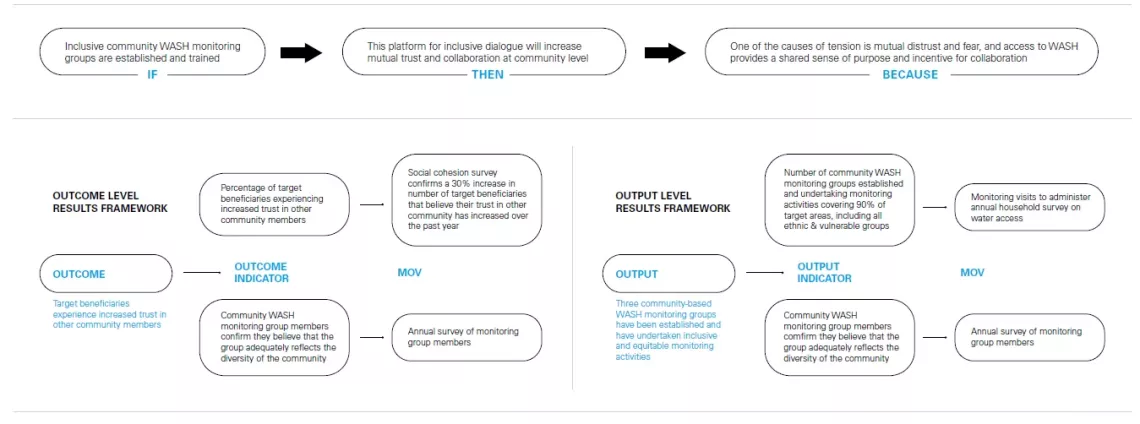
Figure illustrates this step using a simple WASH for peace ToC. It considers how inclusive community-level WASH programming can help generate social cohesion to address a key finding of a conflict analysis, namely that ‘mutual distrust and fear between two communities negatively affects access to a shared water resource and leads to violent conflict’. The figure shows Outcome and Output level results and supporting indicators and means of verification (MoVs).
WASH for Peace illustrative ToC and Results Framework