Five things you may not know about UNICEF’s humanitarian response
This is how UNICEF’s vital work helps vulnerable children and families in Ukraine.
- Українська
- English
UNICEF and its partners work even in the most dangerous, hard-to-reach places, delivering lifesaving assistance and protecting children. In Ukraine, we have been on the ground for more than eleven years, responding to children and families and helping to lay the foundation for the country’s recovery. Humanitarian workers, especially the country’s brave local responders, are regularly exposed to risks and potential harm when trying to reach children and families in need.
On World Humanitarian Day, we reiterate the global call for the protection of children and humanitarian workers, accountability for attacks against them, and action to end these violations of international humanitarian law.
Despite the dangers, UNICEF will not give up. We will continue to speak out and work tirelessly to support every child in need. Here are five things that you may not know we do to improve the protection and wellbeing of children and families.
1. Keep water clean
Water systems in many communities have been damaged by attacks. UNICEF teams work with water utilities companies to keep clean water running, delivering purification chemicals, repair infrastructure, and, when all else fails, trucking in safe water to families.

"We do our best to ensure a round-the-clock water supply," says Oleksandr Khaliava, the head of the emergency department at the Kramatorsk Water Utility. “If there’s an accident, no one leaves work until the water supply is restored. UNICEF and other donors provide significant assistance to our water utility – materials, generators, equipment. This is crucial during wartime.”
2. Help families through winter
Ahead of the cold season, UNICEF is helping families and communities prepare for freezing temperatures. UNICEF supports heating networks, repairs district boilers, provide backup power for maternity wards and shelters, and distributes cash assistance so families can purchase what they need most: warm clothes, solid fuel or school supplies.
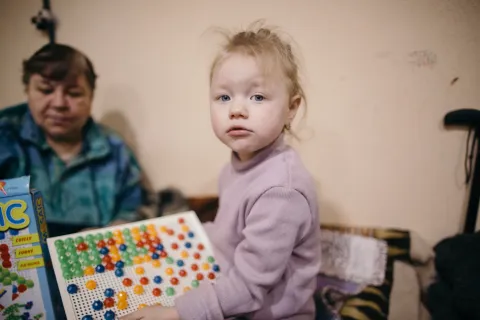
Daria and her family, who were displaced from Myrnohrad in the Donetsk region, received winterization cash assistance from UNICEF. They used it to buy household necessities and repair the house to make it more suitable for children.

Daria and her family, who were displaced from Myrnohrad in the Donetsk region, received winterization cash assistance from UNICEF. They used it to buy household necessities and repair the house to make it more suitable for children.
“We bought some coal and a large five hundred litre tank,” says Daria. “There is no water here, and we need to bathe the children and wash the dishes. The tank will give us the opportunity to have at least some water supply. Because I don’t know what this winter will be like.”
3.Protect children on the move
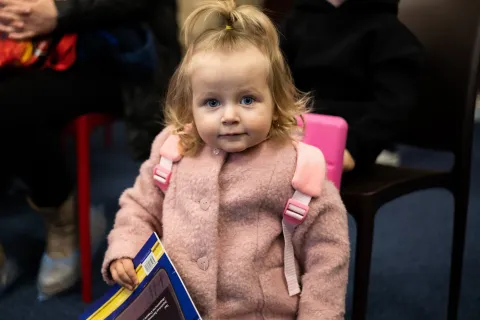
War displaces families fast and chaotically. At evacuation points, transit hubs and community centres, child protection teams offer psychological first aid, help reunite families, and create child-friendly spaces, even in basements and train stations. These safe spaces offer a chance to play and learn in safety, as air raid alarms sound overhead.
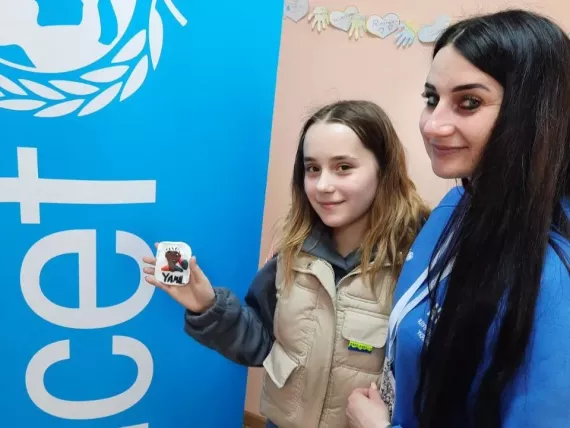
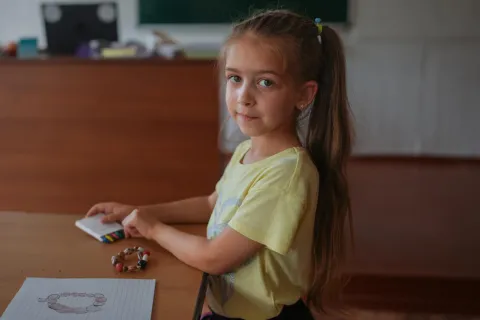
Fifteen-year-old Varvara was forced to leave her hometown of Vorozhba, and is now staying in a temporary shelter in the Sumy region. After leaving her home, she hardly spoke, avoided other children and didn’t respond to questions from adults. A UNICEF-supported mobile team invited Varvara to join art therapy classes and she eventually began to open up, sharing stories about her hometown and her passion for football.
4. Prevent and respond to gender-based violence
Across Ukraine, specialised staff run confidential services through fixed and mobile safe spaces, offering survivor-centred case management, mental health and psychosocial support, as well as referrals to health, legal and social services. Digital safe spaces, such as the Laaha platform, also give girls and women quick access to information and resources to improve their safety and wellbeing when distance, stigma or insecurity make in-person help harder to reach.
Fifteen-year-old Veronika from Poltava attended workshops to learn how to protect herself from potential risks.
“This is a taboo subject, - says the teenager - “But it needs to be brought out into the open.Even if girls haven’t experienced such situations, that doesn’t mean it won’t happen in their lives. They need to know that there is nothing to be ashamed of, that they can talk about it and get help.”
5. Build Ukraine’s next generation of social workers
Responding to crises is not just about the now – it is also about strengthening systems for tomorrow. Together with national and local authorities, UNICEF helps communities train, supervise and support qualified social workers, expand social services, and align with national standards. That means the emergency gains we make now are laying the foundation for long-term recovery.
More than 20 UNICEF-supported child-friendly spaces are currently operating across the frontline Dnipropetrovsk region, offering psychosocial support provided by psychologists, social workers, and speech therapists. Among the children attending is Roman from Tsarychanka, who has received help for his speech difficulties.
«My little one literally jumps for joy on the way. He loves it here,” says Khrystyna, Roman’s mother. “We visit not only the speech therapist but also the psychologist.”
Children’s lives in Ukraine continue to be devastated because of the war.
UNICEF remains on the ground to provide urgent humanitarian assistance. With our partners, we stay and deliver.
Children and humanitarians must always be protected.
#WorldHumanitarianDay #ActForHumanity