Art sessions give Ukrainian children space to heal
Art therapy classes in Lviv are helping children to deal with the trauma of war

- Українська
- English
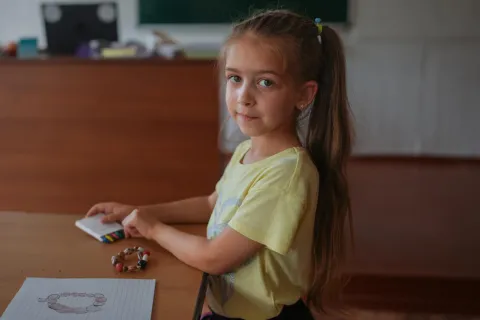
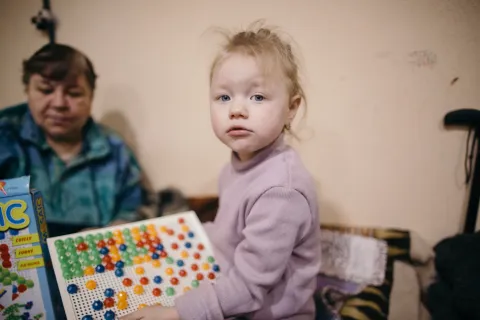
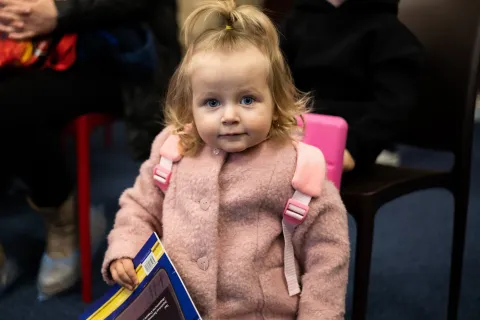
The two floors of Lviv’s Smart Library are full of children. As the war in Ukraine continues, this has become a safe space for them to draw, play, craft and make new friends. It is also a place for them to share emotions and worries, and master new skills.
The project, which uses art therapy to work with children of all ages, was launched by specialists with the support of UNICEF.


Today, the children are tracing the outline of their own hands. "This exercise is one of my favourites," says Natalia, a psychologist who works with young children.
"When a kid puts a handprint on paper, they announce their existence to the whole world. When a child draws the silhouette of their palm, they seem to define their boundaries. During the war, our space is greatly disturbed, and children understand this on a subconscious level. This exercise helps children to express themselves and talk about their mood."
The specialists give children tasks to help them share their worries, calm down and feel positive. For example, they sometimes ask children to draw their fears and throw the drawings into a box labelled ‘Anxiety Bank’. They also ask them to draw things that make them happy or a place where they feel protected and safe.
Ten-year-old Ksenia has drawn a mushroom, because she likes its white and red colouring. Eight-year-old Markian has drawn Batman because he admires his strength.
"I drew my bedroom because it's the cosiest place for me,” says 14-year-old Oleksandra, who has come to the class for the second time. “There was a bed and other furniture. I like these classes. I learned to work in a team, got to know the girls.”
Oleksandra rode her bike and practised gymnastics at home to distract herself from worrying about the war. Now she, like the other children at the library, is learning how to ease her worries with the help of therapy classes.

Pretty often, teens don't want to share their fears. But when they are drawing or playing, they calm down and trust the process and, therefore, us," says Halyna, a psychologist who works mostly with adolescents.
"Many children don't actually know what their talents and uniqueness are. When children draw or sculpt, they not only feel relaxed but also often create very beautiful things, like real masterpieces.”
Art therapy stabilises the psychological state,” adds psychologist Natalia. “Children with different experiences come here. During classes, we look for their support, both internally and externally – those things that help them survive the terrible time of war. When children face difficulties, they already know that they can rely on themselves or the environment.”

Her colleague Ilona says that children need to feel supported and know their feelings are important.
"Sadness, anger and fear are normal reactions to a non-normal situation, which the war is,” says Ilona.
“There are no wrong emotions or worries. During the lessons, the internally displaced children draw their pets that for some reason or another were left back home, and also their favourite places. These children experienced tough times and the art therapy helps them to find themselves while talking about it.”
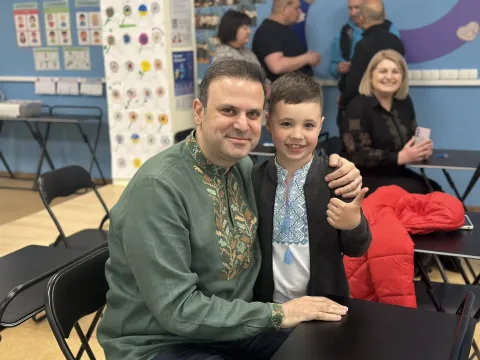
Parents can also watch their children during art therapy classes in the Smart Library. Dmytro comes here with his three children – Matviy, Dmytro and Eva. He says that, since the war started, he and his wife have spent more time with their children and hug them often. During classes, he is happy to see his children socialise, play and draw.
"They get out of negative events and get into the normal world of childhood, as it should be when there is no war," says Dmytro.
Olya also visits with her six-year-old daughter Zlata. She says that, since the start of the war, Zlata has aged beyond her years. When the air raid sirens sound, she goes to the bomb shelter with her older brother, no questions asked.
"Drawing for her is the most exciting activity,” says Olya. “We try to visit every art therapy class in the library. It calms my daughter down and helps her to master her skills.”
Liudmyla brings her eldest granddaughter, first-grader Anastasia, to the class.


"We will definitely attend such classes again,” says Liudmyla. “Children here are distracted from studies, serious matters, events and information about the war. They enjoy tasks and the results received. Here, they can be themselves.”
When the two-hour classes finish, the library grows very quiet as children and their parents head for the exit. As they wave goodbye to the specialists, the children ask them: "Will you come to us again?"