From Education to Empowerment: Refugee Mothers Gain Confidence to Protect Their Children
Through practical tools and information, refugee mothers are empowered to track vaccinations and promote immunization within their communities.

- Türkçe
- English
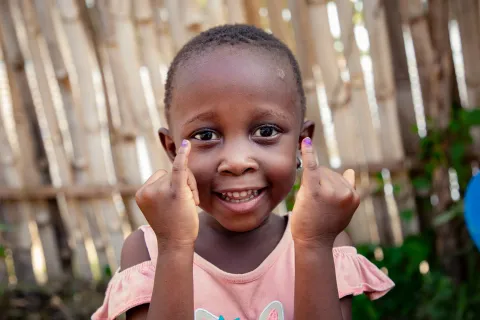
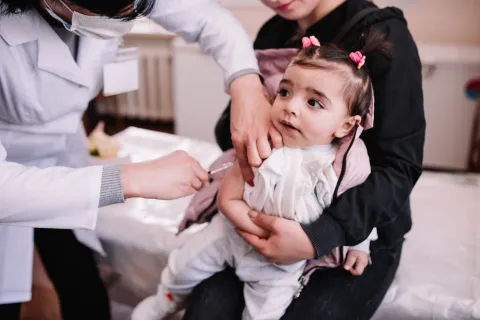
Vaccines are among the greatest advances in health and development globally. For over two centuries, vaccines have reduced the scourge of diseases, and saved children’s lives. Thanks to immunization efforts worldwide, children are able to walk, play, dance and learn. Vaccinated children do better at school, with economic benefits that ripple across their communities. Today, vaccines are estimated to be one of the most cost-effective means of advancing national welfare.
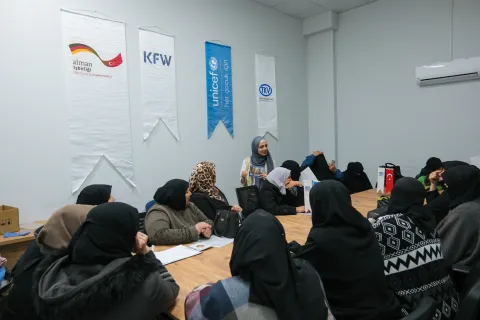
On a sunny October day in Gaziantep, as part of UNICEF’s ongoing efforts to protect vulnerable communities, Syrian and other refugee mothers came to the SGDD - ASAM (Association for Social Development and Aid Mobilization) Al-Farah Center with their children to learn about the importance of age-appropriate routine vaccinations in preventing diseases that threaten their children's health. Joyful chatter of these mothers, young children, and center workers created a welcoming atmosphere, promising not just learning, but a sense of community and connection.

Türkiye has achieved significant success in immunization, supported by strong vaccination policies and public vaccine production. This journey began with the establishment of the Refik Saydam Hygiene Institute in 1928 and the General Hygiene Law of 1930, which made smallpox vaccination compulsory. These early efforts accelerated immunization services. In 1985, a key milestone was reached with the signing of an agreement between UNICEF, WHO, and the Turkish Government to enhance the Expanded Programme on Immunization (EPI), demonstrating Türkiye's commitment to children's health through comprehensive vaccination initiatives.
As a result of these ongoing efforts, Türkiye provides routine vaccination against 13 diseases in the childhood vaccination calendar free of charge, ensuring broad protection for its young population. These diseases include diphtheria, pertussis, tetanus, polio, hepatitis B, hepatitis A, H. influenzae type b, tuberculosis, measles, mumps, rubella, chickenpox, and pneumococcus (pneumonia).
However, Türkiye’s vaccination framework, while historically robust, has faced challenges in recent years due to the growing refugee population and the aftermath of the 2023 earthquake, which severely impacted health infrastructure, particularly in the 11 affected provinces.
To address these challenges, UNICEF, in collaboration with partners like ASAM and generous funding from the United States Government, is conducting social and behaviour change sessions and community engagement interventions on child immunization across six provinces with low uptake of vaccination for refugee children: Gaziantep, İzmir, Ankara, İstanbul, Adana, and Kayseri.
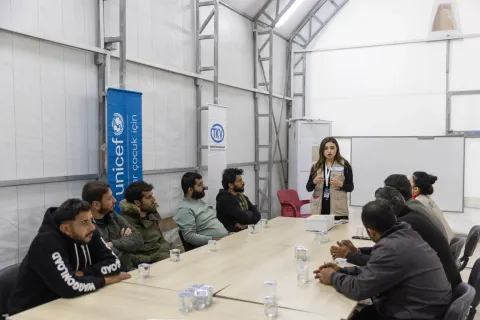
The sessions provide an opportunity to engage mothers and caregivers in a meaningful dialogue, addressing their questions and concerns about immunization. Many of these caregivers and children had missed out on healthcare opportunities during their displacement, and these sessions aim to provide them with a chance to catch up on essential knowledge.

On that day, Hatice from ASAM leads the informative session about behavioural and social norms related to health. She gathers mother’s feedback while explaining how timely vaccinations can prevent the resurgence of diseases. Through this interactive approach, she provides reassurance and practical advice on how to access health services effectively, fostering a supportive environment for positive health behaviours.

“First, we scan our systems to identify parents and caregivers with children aged 0 to 4 years. Then, we inform these families about routine immunization by calling them and explaining the additional services we provide at our center. After that, we invite them to these additional services and information sessions, where we engage in a question-and-answer format to address any queries or concerns they may have. Meanwhile, the participants' children play and socialize with their peers together with our child development specialist, while the parents find answers to their questions." Says Hatice.
For many refugee mothers, these sessions offer more than just educational insights—they serve as powerful moments of empowerment. Participants gain knowledge and build confidence, enabling them to advocate for their children’s health and share important information within their communities. This collective engagement helps shift behavioural and social norms around health, fostering a culture of support and awareness. Also, while the mothers and caregivers participate in the social and behaviour change sessions, their children engage in playful activities and socialize with their peers in designated playrooms.

The friendly environment fostered opens exchanges of ideas, allowing mothers to share their experiences and learn from one another. This collective learning not only highlights the community's strength in supporting child health, but also emphasizes the crucial role these mothers play in promoting the benefits of immunization.
At the end of these sessions, mothers receive a vaccination card printed in both Arabic and Turkish, enabling them to track their children's immunization schedules and identify any discrepancies. This practical tool empowers them to follow up on vaccinations confidently and encourages proactive engagement with health services.
“These vaccination cards distributed are going to be very helpful. We have the official vaccination card issued in Türkiye, but due to the language barrier, it can sometimes be difficult to understand which vaccine it refers to at first glance. Now, by comparing them this way, we can more easily track the vaccinations.” says Zainab a 34-year-old attendee who has a 4-year-old child.
"I was really surprised to learn how similar the contents of the vaccination cards in Syria and Türkiye are. It seems that these vaccination cards are quite similar across almost all countries around the world. I’ll definitely share this new and interesting information with my friends." Says another attendee, Amina.


The trust established during these sessions is vital for ensuring that every child is fully protected against preventable diseases. These mothers serve as essential advocates, helping to bridge the immunization gap within their communities.
UNICEF has already reached 8,862 parents and caregivers, with a goal of engaging 10,500 individuals. These sessions provide families with knowledge and tools needed to effectively advocate for their children's health, promoting routine vaccinations and reinforcing positive behavioural and social norms around immunization within their communities.
The mothers are instrumental in closing the immunization gap, ensuring that every child, regardless of background or circumstances, is protected against preventable diseases. Through these collaborative efforts, the ultimate goal is to enhance immunization coverage and foster trust in vaccines.