Reaching every child with life-saving vaccines
UNICEF concludes its 2025 nationwide immunization campaigns across Syria with the launch of the final campaign of the year in December
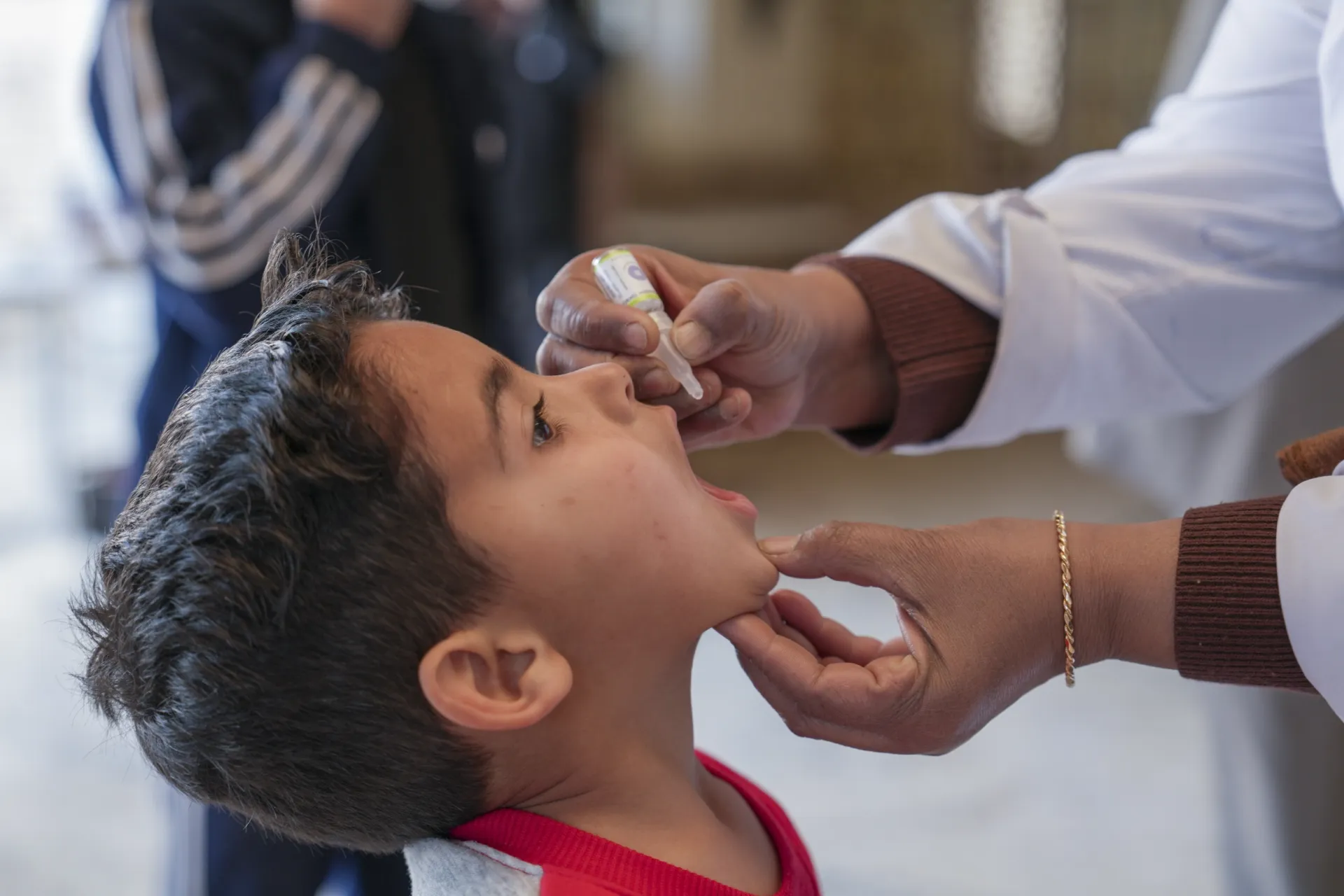
Kiswah and Sayyeda Zeinab, Rural Damascus - Between 14 and 18 December 2025, the Ministry of Health in Syria, in partnership with UNICEF and the World Health Organization (WHO), launched the final subnational vaccination campaign of the year. The campaign aimed to reach more than 900,000 children under five in priority areas across Syria, particularly those who may have missed routine vaccinations.

UNICEF/UNI953711/Johnny Shahan
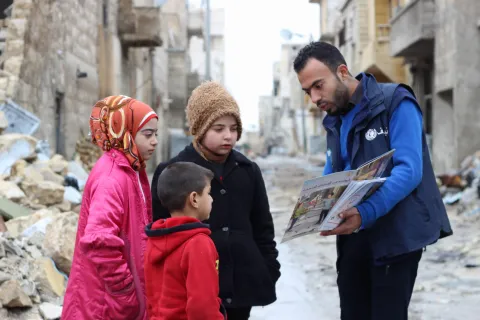
Mohammed, a health worker, announces the arrival of a mobile vaccination team in a neighbourhood in Kisweh, encouraging families to bring their children for immunization, in Rural Damascus.
“We work hard before and during the campaign to raise awareness in the community about the importance of vaccination.”
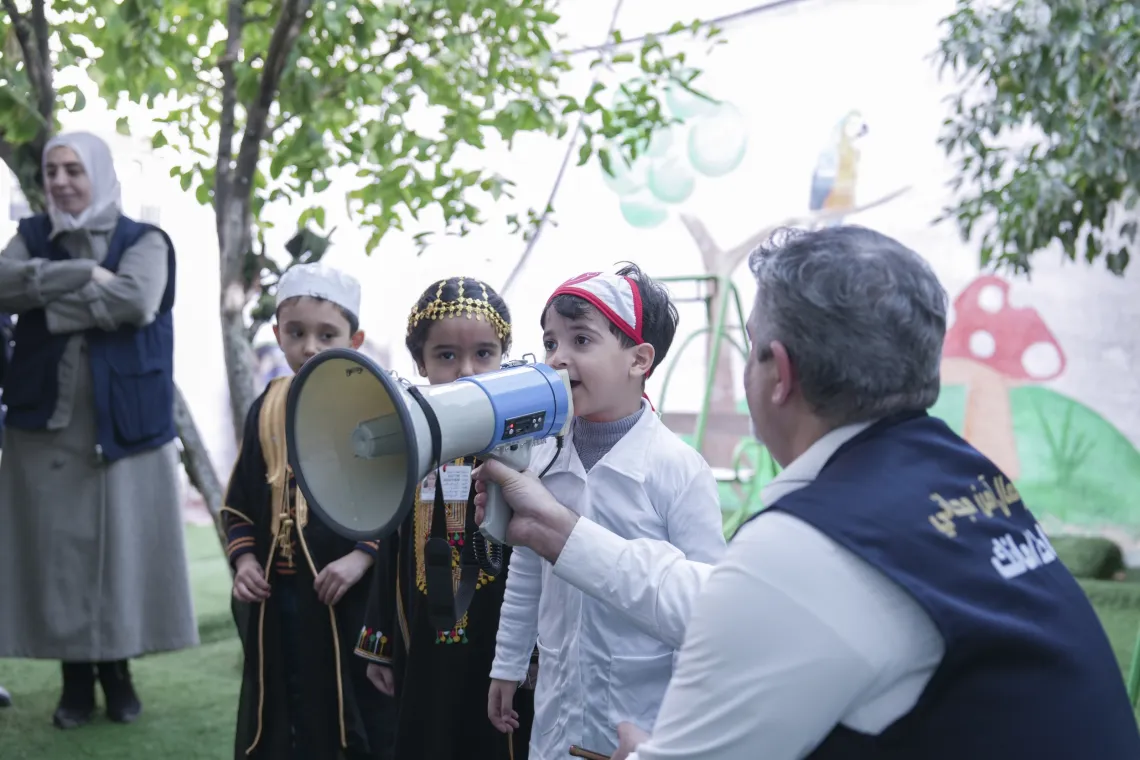
UNICEF/UNI953717/Johnny Shahan
Mohamed, 5, helps a health worker announce the immunization campaign in Kisweh, Rural Damascus.
“I shouted loudly, inviting children and their parents to come to the mobile team for vaccination. I want to take the vaccine so I can grow up healthy and strong.”
Building on previous rounds, the campaign provided vaccines against major childhood diseases such as polio, measles, and hepatitis B, along with other routine immunizations essential to protecting young children from preventable diseases.

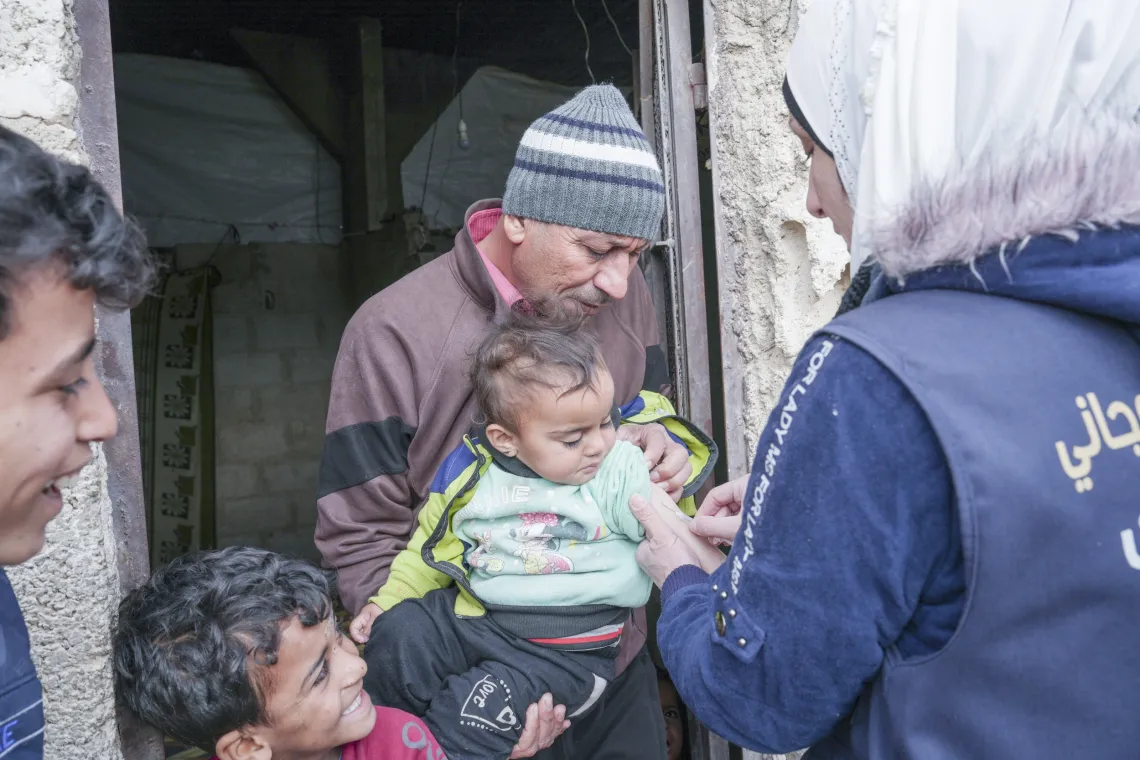
UNICEF/UNI953714/Johnny Shahan
Othman, 3, greets health worker Mohamed as a vaccination team arrives at his home during an immunization campaign in Kisweh, Rural Damascus.
“We have been displaced many times. This disrupted my children’s vaccination schedule. I am grateful that the team came today to help us catch up”
said his father, Khaled
UNICEF/UNI953715/Johnny Shahan
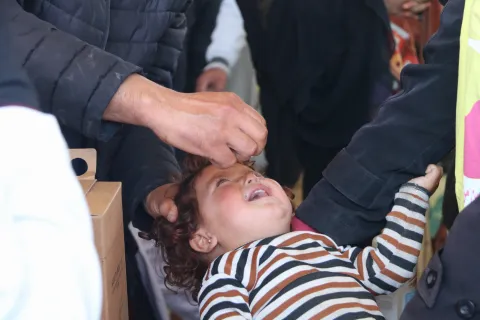
Sidra,1, receives her vaccine from a mobile health worker during an immunization campaign in Kisweh, Rural Damascus.
“We didn’t want to vaccinate our children as we were worried that it might cause high fever, but after speaking with the health workers, we felt reassured about the safety of vaccines,”
her grandfather, Khaled, said.
To help ensure no child was missed, UNICEF supported the Ministry of Health by mobilising nearly 900 community workers to conduct household visits and community engagement activities. Their role included informing caregivers about the importance of routine immunization and providing details on vaccination locations and schedules.

UNICEF/UNI953710/Johnny Shahan
Shawk, 4 months old, receives vaccine at a health centre during an immunization campaign in Kisweh, Rural Damascus.
“Shawk is the most precious thing in my life. I want her to grow up safe and healthy,”
her mother, Sahar, said.
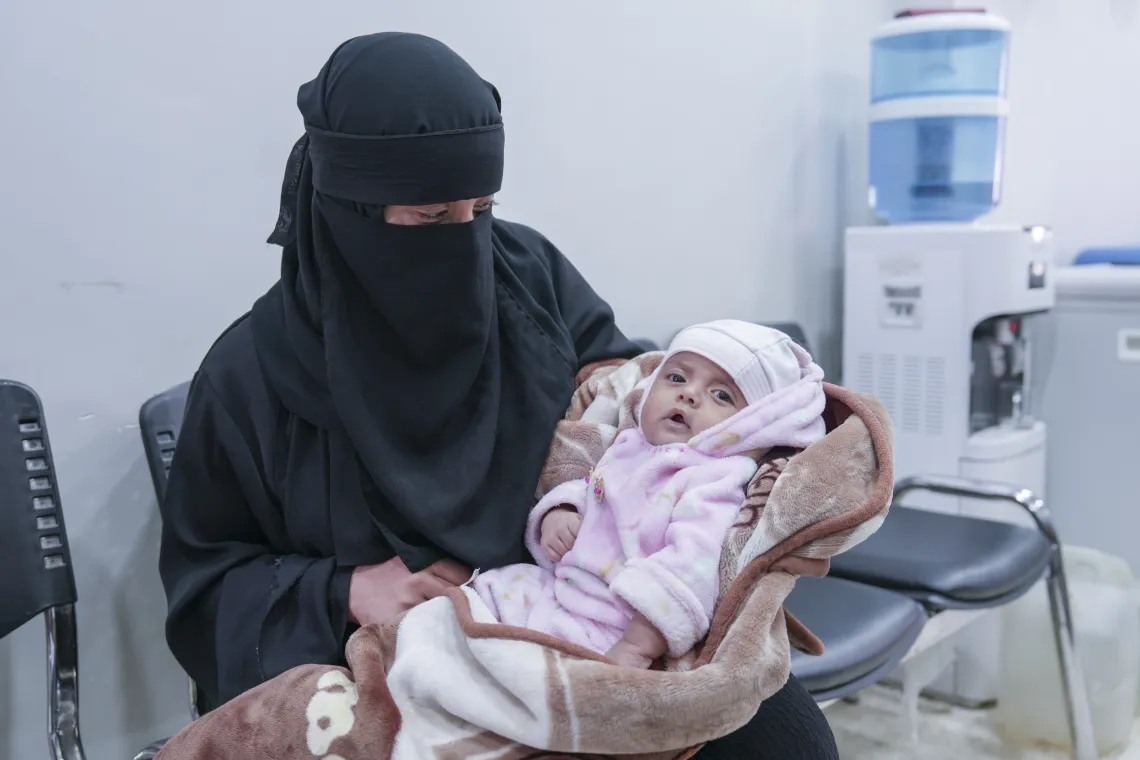
UNICEF/UNI953709/Johnny Shahan
Shawk, 4 months, sits calmly on her mother’s lap after receiving her vaccine at a health centre during an immunization campaign in Kisweh, Rural Damascus.
“I waited many years to become pregnant. From the moment I felt her inside me, I knew I would do everything I could to protect her,”
her mother, Sahar, said.
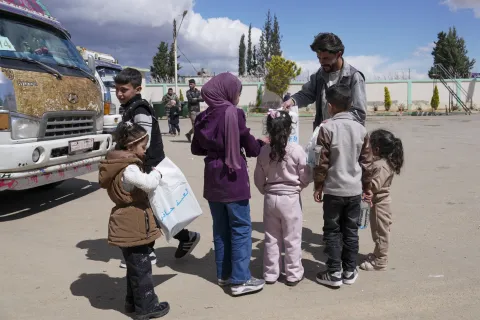
In Rural Damascus, the Kisweh health centre served the city and surrounding communities, supported by four mobile vaccination teams. These teams extended the reach of services to remote areas. In parallel, mobile teams visited collective shelters in Sayyeda Zeinab, to deliver immunization services to displaced families from As‑Sweida. Mobile teams enabled access hard‑to‑reach areas and provided timely vaccination services in remote places.

UNICEF/UNI953730/Johnny Shahan

UNICEF/UNI953731/Johnny Shahan
Hussein, 1, receives his vaccine in a shelter in Sayyeda Zeinab during an immunization campaign in Rural Damascus.
“When we were in As-Sweida, I always kept up with my children’s vaccination schedule. But our lives have been turned upside down over the past few months, and we needed this campaign to help us get back on track,”
said his father, Ghanam.


This campaign was possible because of the invaluable support of Gavi, the Vaccine Alliance, the Government of the United States; the Government of Republic of Korea; and CRH Construction Company through UNICEF Irish National Committee.
UNICEF remains committed to supporting national routine immunization efforts across Syria, sustaining continuous efforts and resources to help protect every child and ensure their access to life‑saving vaccines.