Pre-school meals means so much more to Dinithi and her friends
Amid crisis in Sri Lanka, mid-day meals continue to buffer children’s health and education

A typical day at Sri Mihindu pre-school in rural Udagama, Hanguranketha, in Sri Lanka’s Central Province, commences with the chanting of prayers.
5-year-old Dinithi and her friends join in the devotions led by head teacher, Ms Dilrukshi (37). After which, the school’s 38 children enjoy a range of play and learning activities throughout the day. The highlight of their day, however, is the free mid-day meal they receive.
“I am not hungry anymore because of the meal I get at school,” says Dinithi on the impact of the mid-day meal for thousands of pre-school children across Sri Lanka. “My friends and I enjoy these meals.”
“I love to study and play with my friends. And I hope we will continue to get meals in school,” adds Dinithi.
As the economic crises in Sri Lanka continues to impact communities across the country, pre-school mid-day meals continue to buffer children’s health and education. Facilitated by UNICEF Sri Lanka, with funding from UNICEF Australia and the Bill & Melinda Gates Foundation through UNICEF USA, this emergency response aims to provide the most vulnerable children in pre-schools across 8 districts with at least one cooked, nourishing meal per day.
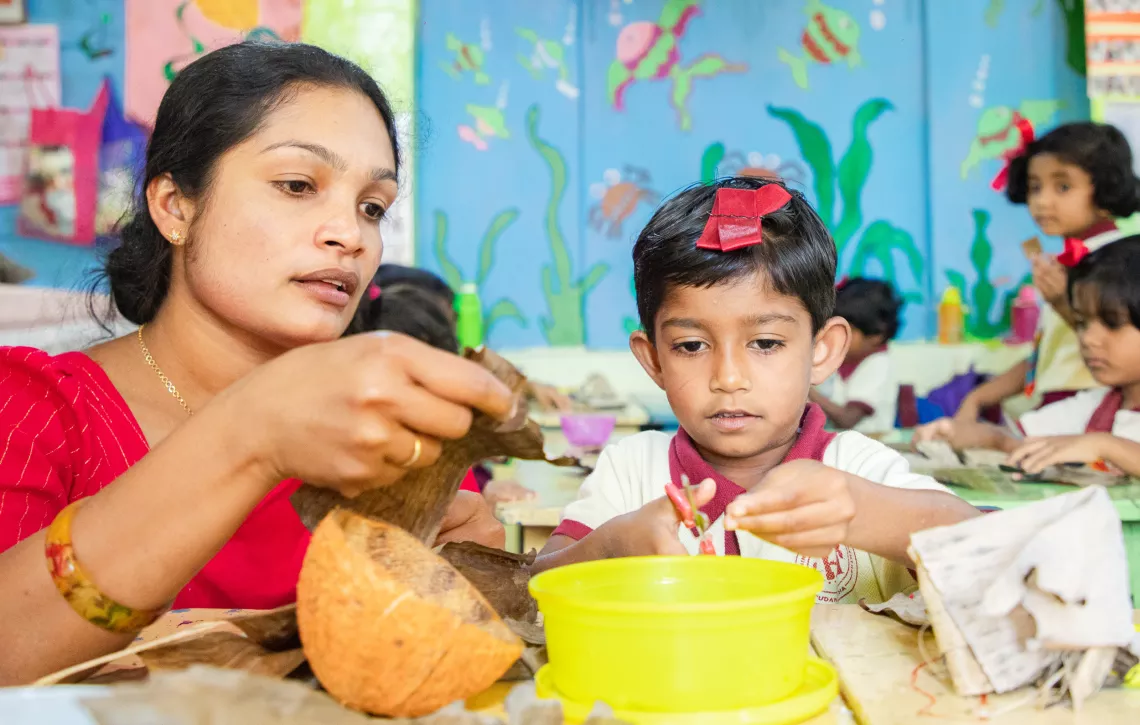
“The mid-day meal has made a positive impact on the children; they are now alert and active,” Dilrukshi affirms.
“The pre-school caters to the 1800 families of Udagama, a typical rural farming village. The vulnerabilities of these families have worsened since the economic crisis,” explains Dilrukshi. “Parents are helpless; they are unable to meet the children’s nutrition and educational needs. For my 15 years of experience teaching at this preschool, this is the first time I am seeing such hardships.”
“The enthusiasm and increase in performance among students, shows the impact the meals are making.”
Milk rice – a local healthy staple, with aromatic fish curry, is on the menu today. The pre-schoolers, having washed their hands, sit at their desks eagerly waiting to be served the wholesome combination.
While the meal itself is not designed to substitute what they would have ideally had at home, for many families like Dinithi’s across the country, this has become a lifeline as they would otherwise struggle to provide regular, nutritious food for their children.

“Being able to get nutritious food for their children for at least one meal, eases the burden on the parents and therefore, they are keen to send their children to school,” emphasises Dilrukshi.
“My child’s health has improved since the school meal programme; she has gained weight,” states Dinithi’s mother Malka (35). Dinithi’s deteriorating health had been red flagged to the mother by the local health official, but she has not had the capacity to take any action on her own. “I do not even have the means to take my child to the nutrition clinic as advised. My husband is not gainfully employed, and I find it difficult to provide for my three children,” she laments.
The country’s soaring prices have intensified food insecurity and have made even the basic healthcare inaccessible by many increasing the risk of malnutrition in the country. As families continue to face hardships, drastic measures such as education being cut short, especially for girls, is inevitable, further damaging families’ capacity to overcome their vulnerabilities.
The pre-school mid-day meal programme commenced in September 2022 and aims to ensure the most vulnerable children receive critical health interventions and remain in school. To-date the pre-school meal programme has reached over 37,000 children like Dinithi and her friends across 1500-plus resource-poor pre-schools and day-care centres in the eight districts.