Ensuring Continuity of Lifesaving Immunization in Sri Lanka
The Impact of the Canada for COVAX – UNICEF GLOBAL COVID-19 Vaccine Delivery initiative

In the face of economic hardship, Sri Lanka's public healthcare system faced the unprecedented challenge of ensuring that vaccines reach every child, mother, and vulnerable individual across the country. The economic crisis of 2022 placed the smooth continuity of the National Immunization Program - a cornerstone of the nation’s public health success – at risk.
Fuel shortages, rising costs, and logistical challenges placed pressure on an already strained system. Thanks to the interventions made by UNICEF via the Canada for COVAX – UNICEF GLOBAL COVID-19 Vaccine Delivery initiative worth US$620,671 funded by the Canadian government, Sri Lanka’s immunization efforts have continued uninterrupted, protecting millions from vaccine preventable diseases and reinforcing public trust in the national immunization program
At the heart of Sri Lanka’s immunization efforts lies the Central Vaccine Store in the capital Colombo; a facility that ensures vaccines are stored at the right temperature before being released for distribution across the country. During the economic crisis, power cuts and fuel shortages posed significant threats to maintaining the cold chain, a critical component of the vaccination system.
Without consistent electricity and fuel, the storage and transportation of vaccines from the Central Vaccine Store to regional and divisional levels faced major disruptions. This is where the initiative funded by the Government of Canada became a game-changer.

"We had a challenging period through 2022-2023 when the economic crisis impacted Sri Lanka," recalls Dr. Nimal Gamagedara, Consultant Epidemiologist at the Epidemiology Unit of Sri Lanka’s Ministry of Health.
"Although we had continuously received adequate funds to manage vaccine supply and delivery within the country, due to the impacts of the crisis we faced issues sustaining the program, as fuel prices skyrocketed. That was when the generous support of the Government of Canada through UNICEF provided a lifeline,” he explains.
The grant supported provision of fuel vouchers, and through them, the unimpeded fueling of vaccine distribution trucks, ensuring seamless vaccine supply from central vaccine stores to regional store and then to the sub-district (divisional) level. This intervention was particularly vital in rural areas where transportation challenges were exacerbated by the crisis.

The Central Vaccine Store is not just a storage facility - it is the beating heart of Sri Lanka’s immunization infrastructure. With 13 varieties of vaccines stored in its cold and freezer rooms, ensuring a consistent power supply is essential. However, frequent power cuts in 2022 during the economic crisis posed a serious risk to vaccine storage.
Randika Kobbagala, Officer In charge at the Central Vaccine Stores says, “Amid nationwide power cuts, the fuel vouchers received under the the Canada for COVAX – UNICEF GLOBAL COVID-19 Vaccine Delivery initiative helped power the generator at the Central Vaccine Store, maintaining the quality and safety of vaccines. Without this support, the integrity of the vaccines could have been compromised."
The grant also facilitated the provision of Ice-Lined Refrigerators to regional centers, further strengthening the vaccine cold chain. This has ensured that even in the most remote parts of Sri Lanka, vaccines remain viable and effective, protecting communities from deadly diseases such as measles, polio, and diphtheria.

In Sri Lanka’s hill country, the economic crisis created another layer of difficulty in vaccine distribution. The Regional Health Office in Kandy faced major hurdles in enabling transportation of vaccines from Colombo due to fuel shortages. However, with the support from the Government of Canada, they were able to keep their immunization program on track.
"The economic issues directly impacted the health sector. Transporting vaccines from Colombo to Kandy became a challenge due to fuel shortages. But we were able to overcome the challenge due to support received through fuel vouchers,” Dr. Krishantha, Indika, Regional Epidemiologist (Kandy) says.
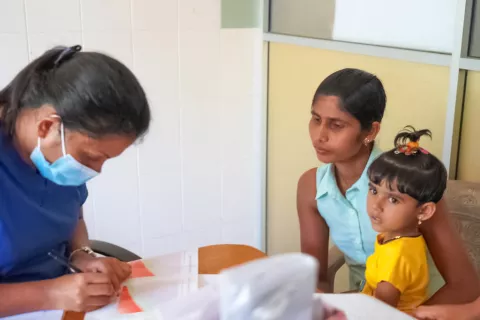
“Our primary concern was delivering vaccines on time to maintain Sri Lanka’s high vaccination coverage. We are immensely proud that despite the economic crisis, our staff continued to conduct vaccination clinics and ensured timely immunization for children and adults alike."
For the healthcare workers on the ground, the greatest accomplishment was ensuring that no child missed their scheduled vaccinations. Sri Lanka has a well-established history of strong immunization coverage, and the Canadian initiative played a vital role in preserving this legacy even during one of the toughest economic periods in recent history.
The success of Sri Lanka’s immunization program during the economic crisis is a testament to the resilience of the country’s healthcare system and the power of global partnerships.
“UNICEF and the Government of Canada ensured that the next generation of Sri Lanka is protected from deadly diseases. For this, we extend our deepest gratitude,” Dr. Krishantha adds.
Through timely interventions, strategic investments, and unwavering support, UNICEF helped Sri Lanka navigate one of the most challenging periods in its public health history. The grant’s impact was not just in numbers but in lives saved, communities protected, and a nation reassured that, even in crisis, immunization would not be compromised, maintaining the strong public trust in the national immunization program.