

From Home Visits to Safe Delivery: How a Network of Care is Supporting Eunice and Her Family
Provide preventive health services to families

When Eunice Anyango became pregnant with her third child, she wanted one thing above all else, a safe pregnancy and a healthy baby.
Living in the Dandora informal settlement with her husband, Joseph Odhiambo, a mechanic, and their two older children, Eunice knew that accessing healthcare during pregnancy could be costly for her family, as it is for many mothers in her community. Fortunately for Eunice, quality healthcare began long before she arrived at any health facility.
"We wanted to be prepared in case of any emergency," she says. "What helped most was having people in my community who explained where to go and what services were available for pregnant mothers like me."
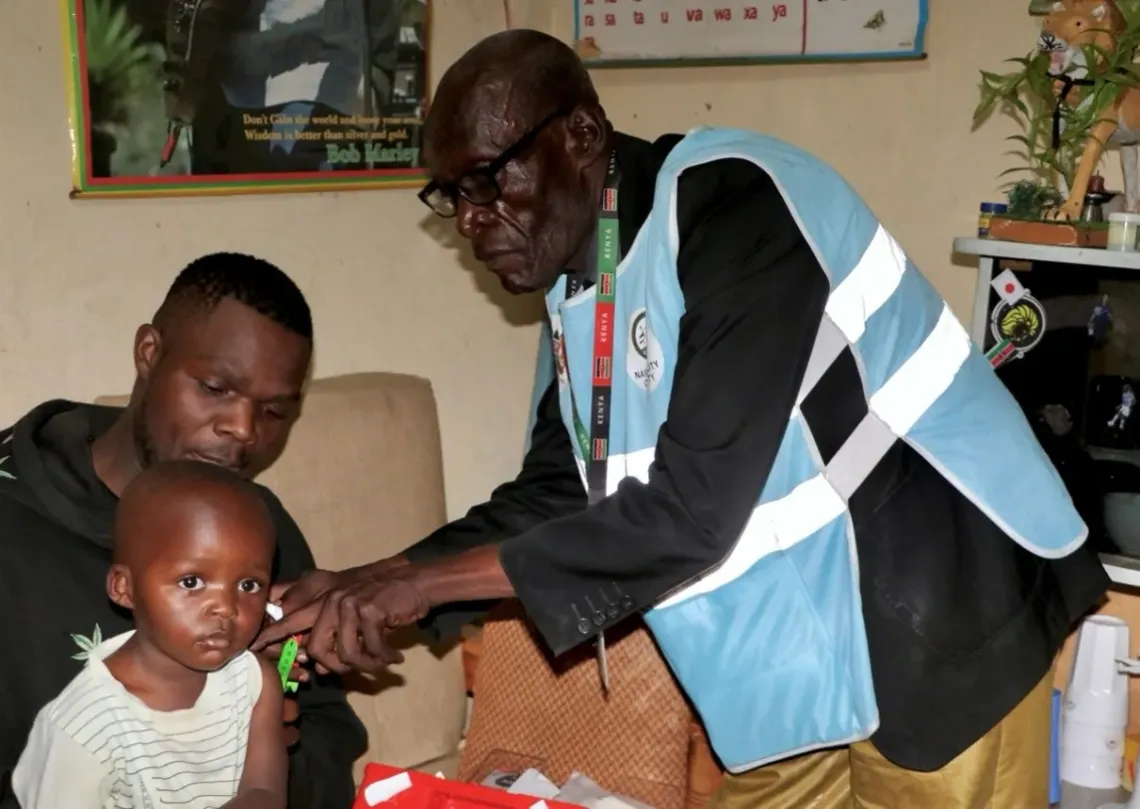
One of those people was Edward Omollo, a Community Health Promoter (CHP) who has spent more than 22 years supporting families in Dandora. Edward is often among the first frontline health workers that families encounter. Moving from household to household, he provides health education, checks on pregnant women and young children, and connects families to healthcare services. It was through interactions with Edward that Eunice learned the importance of attending antenatal appointments, seeking care early in her pregnancy and taking advantage of the services available to her.
"We are the link between families and the health system," says Edward. "Our work is to help not just mothers and children, but our community members stay healthy, identify problems early and ensure they receive the care they need."
Through Edward's support and regular follow-up, Eunice availed of antenatal services at the nearby Dandora II Health Centre, where health workers monitored her pregnancy, provided counselling and prepared her for safe delivery. The health centre forms part of Embakasi North, one of Nairobi County's Primary Health Care Networks (PCNs). A PCN aims to bring together community health services, primary healthcare facilities and referral hospitals into a coordinated system of care-centred on the needs of community members,, families and children.
Community Health Promoters (CHPs) like Edward, are at the heart of every PCN. CHPs conduct household visits, provide preventive health services to community members, monitor the health status of mothers and their children, and help identify health risks before they become emergencies especially for pregnant mothers. The next level includes primary healthcare facilities such as Dandora II Health Centre, where nurses, clinical officers, nutritionists and other critical health workers provide antenatal care, immunisation, nutrition services, family planning, non-communicable disease services, treatment for common illnesses, safe childbirth and post-natal services.
The network operates through a hub-and-spoke system, ensuring that when a patient's needs go beyond what can be managed at the primary care level, they can be referred seamlessly to facilities with more specialised expertise. At referral hospitals, healthcare specialists, including obstetricians, pediatricians, neonatologists, anaesthesiologists, specialist nurses and other healthcare professionals, work together to manage more complex medical conditions.
UNICEF is supporting eight of Nairobi County's eleven Primary Care Networks, helping strengthen coordination between community health services, primary healthcare facilities and referral hospitals so that women and children can access timely quality care throughout pregnancy, childbirth and early childhood.
“By investing in Primary Health Care Networks like what we’ve seen in Dandora, we are bringing quality health services to communities and helping make universal health coverage a reality for children and their families,” says Maiko Kamata, UNICEF Kenya’s Health Officer.
For Eunice, even as she continued to attend regular antenatal appointments at Dandora II Health Centre, Edward remained her support at the community and continued to check on her progress. When she went into labour, she safely delivered her son, Calvin Peter Odhiambo, at the Dandora II health facility.
"Everything went smoothly," she recalls. "The nurses supported me throughout the process. I felt safe because I knew where to go and there were people looking out for me."

The support to Eunice did not end after Calvin was born. Edward continued visiting the family's home, checking Calvin's growth and nutritional status, monitoring Eunice's wellbeing and providing advice on infant feeding and child health. These routine follow-up visits are critical to help ensure that mothers and babies remain healthy during the first few months after birth and that any concerns are identified early.
For mothers and newborns in Dandora requiring more advanced care, the Primary Health Care Network provides referral pathways to facilities such as Mama Margaret Uhuru Hospital, a Level 5 facility in Ruaraka Sub-County. As a specialist referral hub, the hospital supports patients referred from primary healthcare facilities across the network and provides a broad range of advanced healthcare and referral services.

"Strong links between community health workers, primary healthcare facilities and hospitals help ensure mothers and babies receive the right care at the right time," says Dr. Kimaiyo Meli of Mama Margaret Uhuru Hospital. "When referrals happen early and information follows the patient through the system, we are better able to manage complications early and prevent medical emergencies from happening.."
Today, Calvin is one and a half years old. He is a healthy and active toddler. As he plays beside her mother, Eunice reflects on the support her family has received, from Edward's household visits to the care she received during pregnancy, childbirth and beyond courtesy of the PCN.
"The care we received gave us peace of mind," she says. "Knowing that support was available both at home and at the health centre made all the difference for our family."
