The Guard Who Beat Mpox
Responding to mpox cases in Kenya

The doctor who had handled him with gloves entered the room, a file in hand.
“Your results are out,” he said. “You have mpox.” Stephen Mugoi, 51, riddled with lesions and blisters, a constant headache, fever, muscle aches, looked at him blankly. The doctor explained that the Mpox virus was a viral infection, which is related to smallpox. Will this thing kill me? Stephen, wondered, suddenly worried, thinking of his three children. As if reading his mind, the doctor added, “It’s far less deadly than smallpox, but we have to isolate you immediately and start the course of treatment.”
“I was shocked that I had suffered something so serious as to warrant isolation,” Stephen recalls. I didn't know what to expect.”
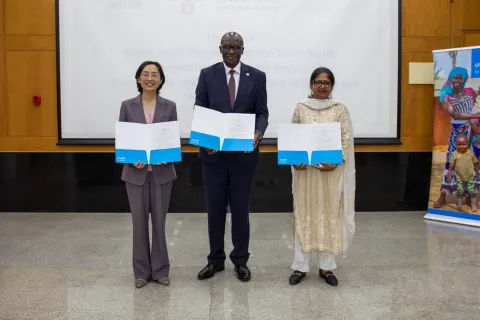
He was wheeled into another unit at Utange Field Hospital in Mombasa County, joining forty-six other mpox patients. The facility is one of thirty-one across eighteen counties that UNICEF, in partnership with the Mastercard Foundation and The Church of Jesus Christ of Latter-day Saints, has equipped with medical supplies and protective gear for frontline health workers.

There was some comfort, he says, in knowing he wasn’t alone. The ward was long and white-walled, the beds separated by makeshift cardboard dividers. “The doctors were very professional and kind,” he says. “They came in and out wearing masks and those hazmat suits that looked scary at first, but after a while, I got used to them.”
Stephen is almost certain he caught the virus at work. He’s a guard at a busy restaurant in Mombasa, where hundreds of people stream in and out every day. He often shakes hands with regulars or touches door handles and surfaces they’ve touched.
Stephen's case is just one of many that has prompted a coordinated response across Kenya. In Mombasa, prevention has now moved to the streets. UNICEF, the County Government, and their partners are training health workers and community champions to detect and respond to mpox cases early. They’re installing handwashing stations in markets, lodges, and schools—turning ordinary corners into small shields against infection. Meanwhile, prevention messages pulse through radio waves and phone screens across Kenya, reminding millions that hygiene remains our simplest, strongest defence.
Behind Kenya’s response is a quiet network of coordination. UNICEF, working with the Mastercard Foundation and The Church of Jesus Christ of Latter-day Saints, supports the Ministry of Health through a national mpox preparedness program that links doctors, counties, and policymakers. From training health teams to guiding national reviews, the goal is simple: to ensure the next outbreak finds the country ready, not scrambling.

After two weeks of intensive treatment, a different doctor—holding a different file—walked into Stephen’s room. This time, he came with good news: Stephen was free of the virus and could go home. Before discharge, he was advised to keep washing his hands with soap, avoid close contact with people—especially those with rashes or sores—and wear a mask in crowded places.
“I was also handed a leaflet with information I could share with others, a water jerrycan, and soap,” Stephen says.
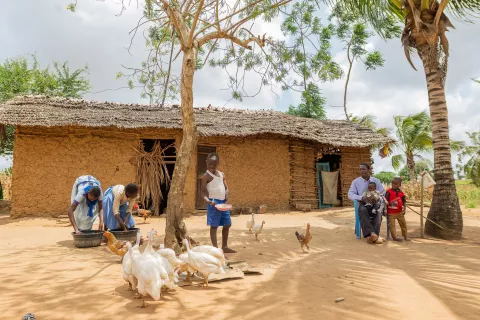
Now back home, Stephen spends most days resting and watching his children play. The scars are fading, though his caution isn’t. He still keeps a bar of soap by the door and flinches when someone offers a handshake. “You learn quickly what’s worth risking,” he reflects. He’ll return to work as soon as his unpaid leave ends.