Strengthening Emergency Response in Somalia
GeoSight uses frontier tech to guide timely and impactful relief efforts and save lives

Somalia grapples with extreme climate fluctuations, from the most severe drought in four decades to historic floods within a matter of months. From 2020 to 2023 drought pushed the nation perilously close to famine with about 43,000 deaths in 2022, half of whom were children under five.
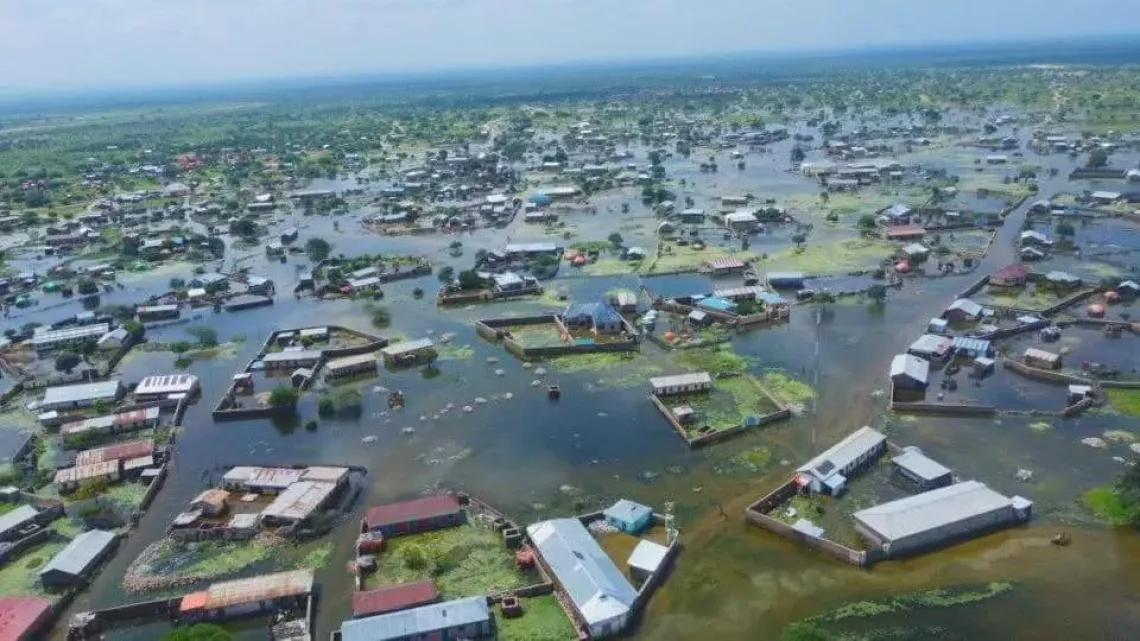
As the drought subsided, it gave way to historic Deyr rains and flooding in late 2023. Nearly half of the country's districts were affected by flooding, impacting 2.5 million people and submerging over 1.5 million hectares of farmland. Unprecedented rainfall submerged practically every building in Luuq, a city in Somalia's southwestern Gedo province, leaving hundreds of families stranded on rooftops.
Levi Eze, Emergy Specialist at UNICEF Somalia, South Central Region, was responsible for a rapid and efficient response to the crisis. He turned to GeoSight, a new web platform designed to transform the analysis and visualization of geospatial data to improve humanitarian preparedness and response, with a focus on improving outcomes for children.
“With multiple partners and conflicting reports, GeoSight emerges as a source of truth, allowing us to filter information by location and risk and ensuring our responses are based on reliable data,” says Levi.
GeoSight is a a groundbreaking tool supported by UNICEF’s Global Innovation Climate Portfolio to help guide data-driven and timely emergency response in places severely affected by climate change and the threat of natural disasters. The platform has been jointly developed and funded by the Division of Data, Analytics, Planning and Monitoring (DAPM), Office of Emergency Programmes (EMOPS) and ICT Division, with additional funding from the Real Time Data Initiative and the Government of Spain (AECID).
The succession of climatic crises in Somalia, compounded by conflict, led to a record 2.9 million displaced people in 2023. These events have emphasized the urgent need for innovative solutions like GeoSight to navigate and mitigate the impacts of natural hazards.
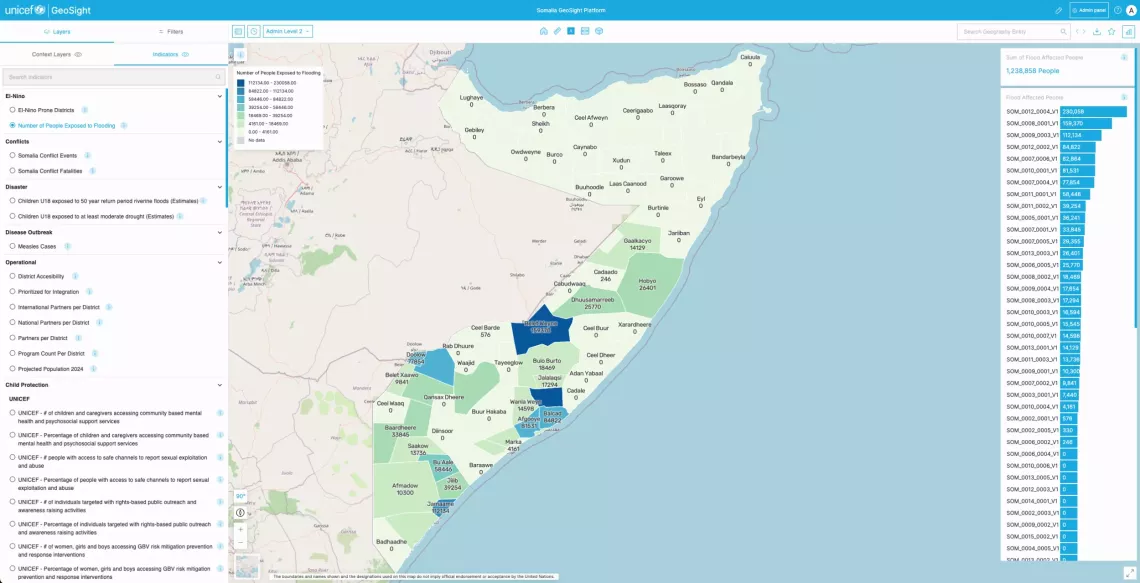
The web-based Geographic Information System (GIS) uses a range of open-source technologies to store, manage, and show spatial data on different risk factors, including security data, information about humanitarian access, climate risk indicators, and more.
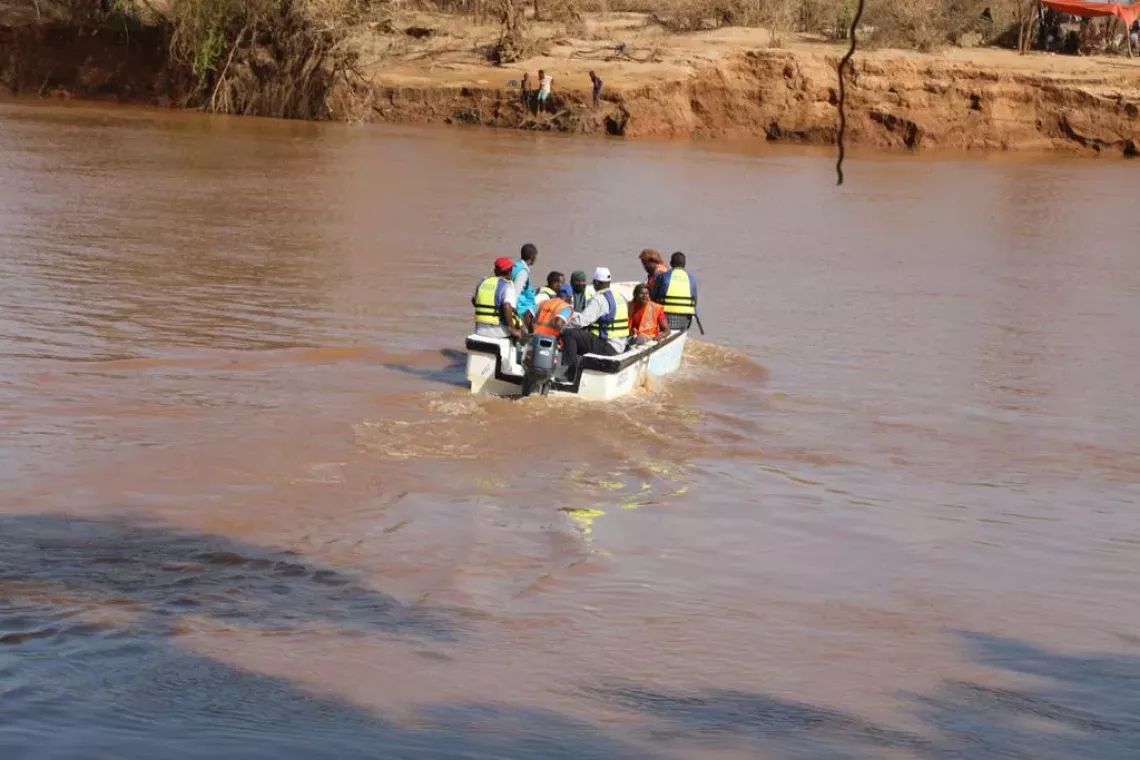
In 2023, Levi rapidly deployed UNICEF’s Rapid Response Teams stationed closest to the impact zone with boats to bring people to safety based on the data obtained through GeoSight.
At the peak of the crisis, the platform proved lifesaving. “GeoSight guided the deployment of life-saving rapid response teams, but also the humanitarian cargo relief and supply setups”, Eze recounts. “It offered unprecedented clarity of risks and impacts on the ground. It's made our work more targeted and effective."
To date, the innovative solution has directly and indirectly supported UNICEF Somalia in their ambition to reach 2 million people in 2024. After the successful pilot in Somalia, GeoSight is entering the acceleration phase, with plans to extend access to NGOs and government entities in Kenya, Cambodia, and Lebanon.
Together with partners, UNICEF is dedicated to supporting the growth of GeoSight and other innovative solutions and approaches to ensure decisions for children's welfare are informed, timely, and effective.
About UNICEF Climate Innovation Portfolio
UNICEF recognizes that it is key to meaningfully engage children and young people to innovate and shape environmental policies in disaster risk preparedness and risk reduction.
The UNICEF Innovation Global Climate Portfolio identifies, validates and scales transformational and frontier innovations that respond to key programmatic challenges that, if solved, will unlock faster progress for a climate secure and resilient future for children and young people. The initiative Innovation30 – Young Climate Innovators Shaping the Future sources transformational solutions developed by young people under the age of 30.
The Global Climate Innovation Portfolio aligns with a diverse partner network to champion impactful solutions, especially with and for communities in the over 190 countries where we operate. With a shared purpose, we catalyze increased investments to source, pilot, iterate and scale solutions to help transform communities and build hope in addressing the global climate crisis.
Read more about UNICEF Global Innovation Portfolios.
Explore more about GeoSight
Learn more about Somalia Humanitarian Response Report
Learn more about GeoSight Somalia