Putting Children at the Centre of Impact Investing
VisionFund International is embedding Child-Lens Investing into inclusive finance.
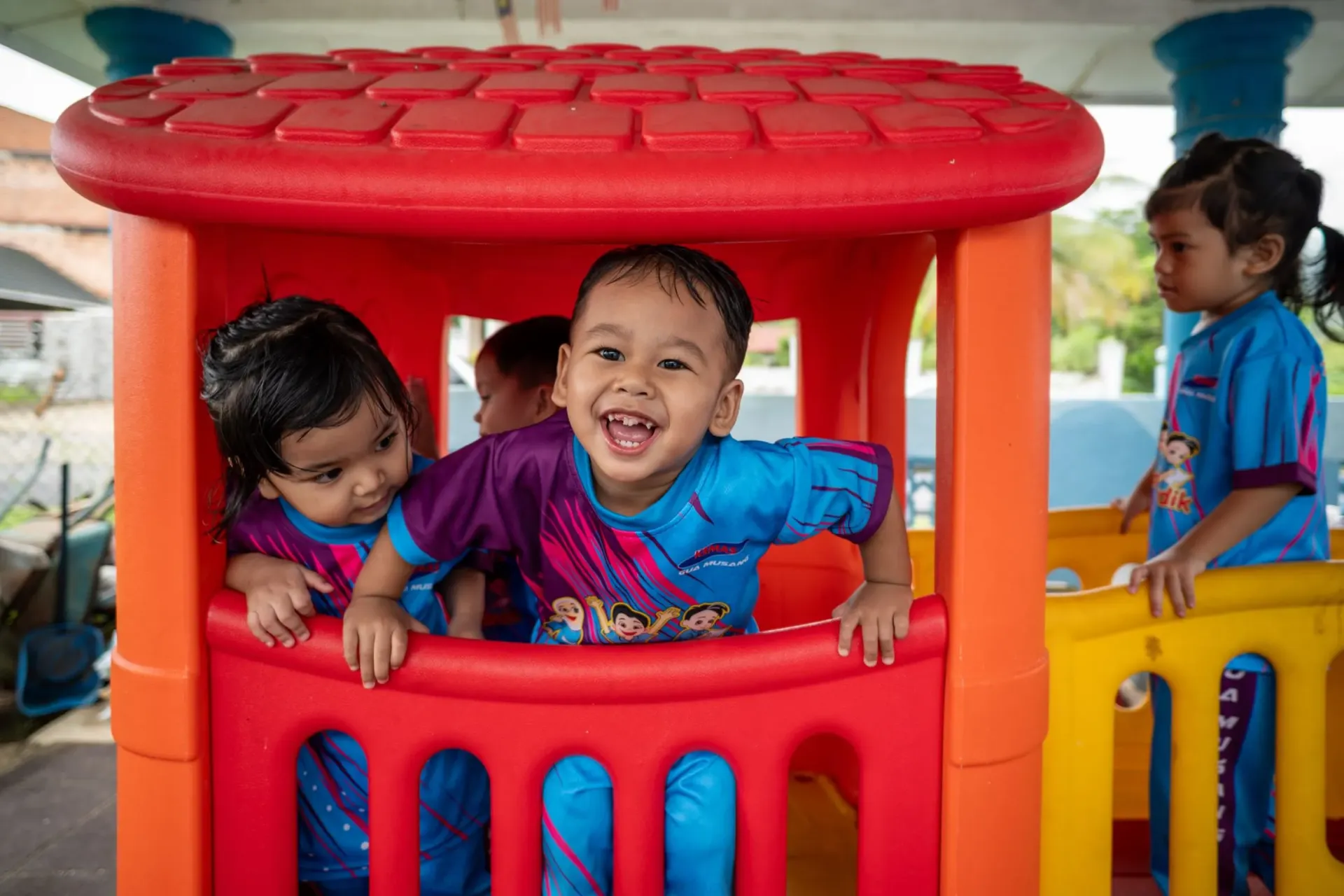
VisionFund International is the financial services arm of World Vision International, one of the world’s largest humanitarian aid and development organisations with an explicit focus on child well-being. VisionFund delivers loans, savings, insurance, market access and training directly to households and small businesses - primarily rural women - across 29 countries in Asia, Africa, Latin America, and Eastern Europe. In FY2025 VisionFund served nearly 953,000 active borrowers and provided insurance coverage to 1.6 million people.
As a member of the UNICEF Child-Lens Investing Community of Practice (CLI CoP), VisionFund is committed to embedding child considerations into inclusive finance - in their own operations and across the broader sector. We spoke with Josh Olson, Global Director for Impact and Engagement at VisionFund International, about what it takes to make that commitment real.
Q1 — Could you briefly describe VisionFund’s investment approach and mission?
Our mission is not simply to extend financial access, but to deepen impact for vulnerable families — with children’s well-being at the centre of everything we do. Our THRIVE model, co-designed with World Vision, layers financial services onto a foundation of mindset change, savings group strengthening, and resilience-building — sequenced to address poverty’s root causes. Financial services can play a more powerful role in building resilience for families with children and at VisionFund we are consistently asking ourselves how we can better meet the needs of the households we serve.
Q2 — Why do you see a child lens as an important addition to financial inclusion investing?
A child lens is extremely useful for any financial service provider or investor. At VisionFund, applying a child lens is a natural addition to our child-focused organisation, and has prompted us to refocus our products and services on reducing financial stress and strengthening households’ resilience to shocks, including climate, health and business failures. These shocks can translate directly into harm for children, for example through reduced nutrition, interrupted schooling, and increased risk of hazardous work.
A child lens asks us to go further — not just whether a loan was repaid, but whether it has strengthened a household’s ability to invest in its children’s futures. It also surfaces risks we might otherwise miss, for example products that are financially sound but inadvertently increase household stress or reduce caregivers’ capacity to protect their children.
Q3 — How does a child lens show up in your investment practice?
It shows up at multiple levels simultaneously:
- Our traditional reach metrics — such as active borrowers, geographic coverage — provide the foundation. We then apply overlays or “lenses” that help us interpret these metrics in the context of our mission. The first lens is vulnerability mapping: we have mapped 350 branches across 15 countries to the Multidimensional Child Vulnerability Index, a tool built in partnership with World Vision and the Institute for Economics and Peace. This gives us subregional geospatial mapping that identifies where children face the greatest compounded risks such as exposure to extreme weather or multidimensional poverty, which in turn enables us to better tailor our products and branch growth.
- The second overlay is depth of service: we track whether clients access savings, insurance, or training alongside credit, because we find that holistic service bundles produce better child well-being outcomes than credit alone.
- A third layer is creating child safeguards from the very beginning: our credit policy excludes businesses engaged in activities harmful to children, and child labour is treated as a live risk with guardrails embedded in operating protocols across the network.
Q4 — What tools or approaches do you use to assess child-related impact and inform investment decisions?
Beyond the tools described above, we continue to refine a theory of change to better understand child impact pathways and how our services contribute to positive outcomes. This, in turn, informs our learning agenda. For example, in FY25, we conducted an independent quasi-experimental study of our health insurance product in Ecuador to assess the causal effects of our product on child healthcare. Looking ahead, we are partnering with the Collaborative for Econometrics and Integrated Development Studies (CEIDS) at the University of Notre Dame to build a child lens into best-in-class evaluation methods. We are also participating in the IRIS+ working group to integrate a child lens into the framework, recognising that what gets measured at the sector level shapes where capital flows.
Q5 — What indicators or criteria do you use to assess the reach and depth of impact on children and families?
In addition to our approach to meaningful overlays on reach metrics (e.g., children reached in most vulnerable areas), we have a client voice feedback system that is built in-house and collects feedback about perceived child well-being outcomes. The data is collected through call centers and standardised across product lines, enabling repeatable feedback cycles and qualitative drill-down to inform product design and operational decisions.
Child well-being indicators include:
- food security
- school attendance
- healthcare access
- caregivers’ ability to support their children
These are signals, not causal findings — our client voice is a management tool rather than proof of attribution — but they help guide our product decisions and research agenda. Measuring children’s outcomes directly, rather than through adult proxy reporting, remains an acknowledged gap we are actively working to address through our research partnerships.
Q6 — What has been working well, and what challenges have you encountered?
What works is the integration with World Vision. Shared field presence, co-designed tools, and a common purpose mean the child lens is embedded in operations — not added as a reporting layer after the fact. Bringing client voice in-house has been transformative: we get repeatable, actionable cycles rather than one-off snapshots, and qualitative insights now flow directly into product improvements.
The challenges are equally real. Attribution remains difficult — separating VisionFund’s contribution through financial services from World Vision’s broader programming requires rigorous evaluation design and sustained investment. Proxy reporting also means we are still largely relying on adults to speak on behalf of children. We seek to hold these tensions with honesty and transparency. The poet Maya Angelou’s words resonate with me: “Do the best you can until you know better. Then when you know better, do better.” That is the spirit we are trying to bring to ourselves — and to the sector.
The child lens isn’t a cost line — it’s often what makes a product genuinely useful to the families most likely to recommend it.
Q7 — What advice would you offer to other investors looking to integrate a child lens?
Start simple. The first rung of the Child-Lens Investment Framework (CLIF) asks whether your clients care for children — a question for which you may already have relevant data. The child lens isn’t a cost line — it’s often what makes a product genuinely useful to the families most likely to recommend it. Engage with the CLI ecosystem: none of us has to build this infrastructure alone, and learning compounds quickly when practitioners and investors at different stages share what is working.
The urgency is clear – nearly two out of three children globally are living in monetary poverty, according to the 2025 State of the World’s Children report by UNICEF. Simple choices that consider children’s well-being in data, investment processes and product design across financial markets can make a powerful difference.