Innovation Across Borders: Kenya
Elizabeth Mururi and Wali Mwalugongo of Fresh Life share how they’re working with UNICEF to scale dignified, safe sanitation across urban informal settlements.
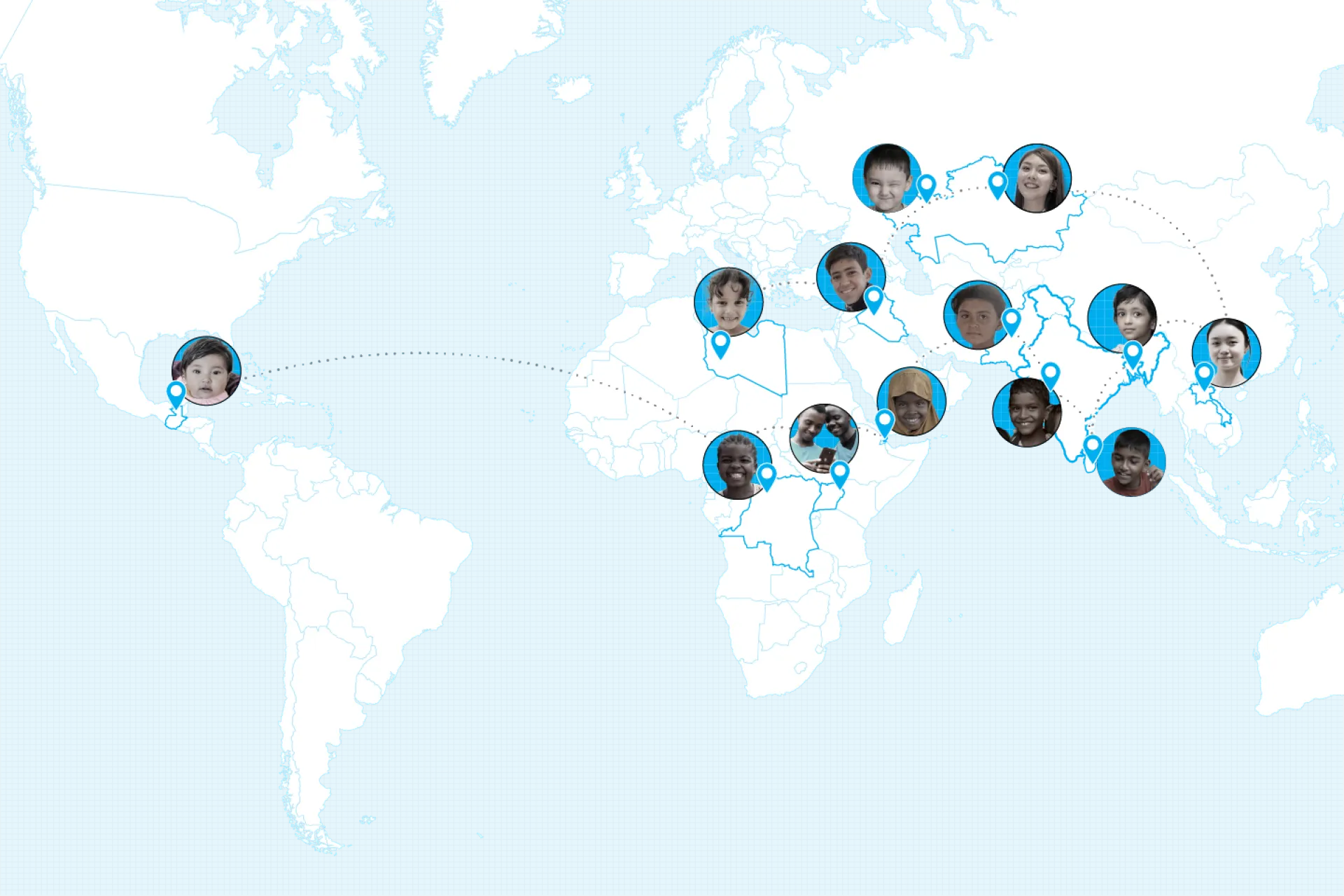
Across 190 countries and territories, UNICEF colleagues and partners are on the frontlines of the greatest challenges affecting the lives of children and young people. Innovation Across Borders highlights the experiences, successes and learnings of innovation champions, committed to making positive social impact.


What is the problem you set out to solve?
We created Fresh Life to address the sanitation crisis in rapidly growing urban informal settlements, where population growth has far outpaced urban planning and access to basic services. Across many African cities, communities are living in densely populated settlements without safe sanitation infrastructure, creating major health, environmental, and dignity challenges. From the beginning, we focused not just on toilets themselves, but on the entire sanitation value chain: providing safe and private facilities, removing and transporting waste, and ensuring it is properly treated or reused. As Fresh Life continued to grow, we also began asking how our learnings could extend beyond the places where we directly operate, and how we could help other organizations and SMEs deploy safely managed sanitation systems in their own communities.
What has been the impact of your innovation?
We now operate across Nairobi, Kisumu, and Eldoret in Kenya, as well as Lusaka in Zambia, with approximately 9,000 container-based toilets installed across our network. Through these systems, we provide around 330,000 people each day with access to safe sanitation. The model has also created economic opportunities through more than 8,300 Fresh Life entrepreneurs who operate toilets as businesses, whether through pay-per-use models, improving rental properties, or retaining tenants. Many of these entrepreneurs are young to middle-aged people, some of whom grew up in households where their parents were early adopters of Fresh Life toilets and are now running businesses of their own within the same communities. Through our partnerships with UNICEF – the Kenya country office, the Sustainable WASH Innovation Hub, and the Spark Accelerator – we are now translating 15 years of operational experience into an open-source deployment toolkit for non-sewered sanitation that can help other organizations and SMEs scale similar models in urban and low-income areas, while improving health outcomes, strengthening waste management systems, and expanding access to climate-smart sanitation solutions.

What challenges have you encountered?
One of the biggest challenges for us has been integrating within government systems and building acceptance for non-sewered sanitation. When we started, we believed that if we could prove the model worked, government buy-in would follow naturally, but the process has been much more complex and non-linear than we expected. It has required years of advocacy, relationship-building, and navigating political transitions, regulatory systems, and partnerships. Governments are often more familiar with traditional sewer infrastructure, so introducing container-based sanitation meant spending significant time explaining the model, working closely with communities and local leaders, and helping stakeholders see how these systems function in practice and why they are necessary in dense urban settlements. UNICEF Kenya and the Sustainable WASH Innovation Hub have played an important role in supporting policy engagement and helping bring governments closer to this work, particularly as interest grows around non-sewered sanitation solutions to help meet 2030 sanitation goals. Over time, we have formalized partnerships and memoranda of understanding with governments across the cities where we operate, and our hope is to eventually move beyond technical collaboration toward formal service contracts with the government as part of ensuring universal access to sanitation.
What have the high points been?
There have been several major high points for us over the years, including helping shift policy conversations around sanitation and formalizing agreements with government utilities for the provision of non-sewered sanitation systems. Another major milestone came in 2024, when we launched the first results-based financing model in urban sanitation, a mechanism where funding is tied directly to verified results rather than traditional funding structures. After 15 years of operations, it was a proud moment to put forward our work as proven delivery, backed by strong systems, data, and validation processes. We are also very honoured to become one of the first sanitation organizations to be ‘carbon credit verified’ – proof that our sanitation services and model actually offset carbon emissions. As well, developing the methodology, securing certification through the Verra Registry, and participating in the voluntary carbon market are significant milestones. These successes have helped create new pathways not only for Fresh Life, but for the broader sanitation sector.


What’s next for this innovation?
The next phase of our work focuses on translating and codifying Fresh Life’s operational experience into practical tools and models that can be adopted by others beyond the places where we directly operate. We are working with UNICEF to develop an open-source deployment toolkit for non-sewered sanitation that can help SMEs and other organizations implement similar models in urban and low-income communities. The toolkit combines container-based sanitation and other non-sewered approaches, alongside guidance on digital systems, waste collection, maintenance, and service delivery. As part of this work, we are piloting the toolkit with SMEs to test adoption and implementation in real operating environments, while also providing technical advisory support through our advisory arm. Ultimately, the goal is to help expand access to affordable, climate-smart, and safely managed sanitation in places where Fresh Life itself may never directly operate.
Do you have any messages for colleagues and partners looking to innovate?
One of the clearest pieces of advice we would give is to work with government from the start, particularly in sectors like sanitation where public systems play such a central role. We would also emphasize the importance of flexibility, agility, and openness. Solutions need to be shaped around the realities of the people and places they serve, rather than assuming one model will work everywhere. Testing ideas, learning from communities, adapting quickly, and staying responsive to changing needs are all critical parts of building solutions that last.