Mobile Clinics Deployed in New Displacement Sites in the metropolitan area of Port-au-Prince, Haiti
UNICEF and its partners are at the forefront to respond to the immediate needs of the newly displaced populations in Port-au-Prince.

- Français
- English
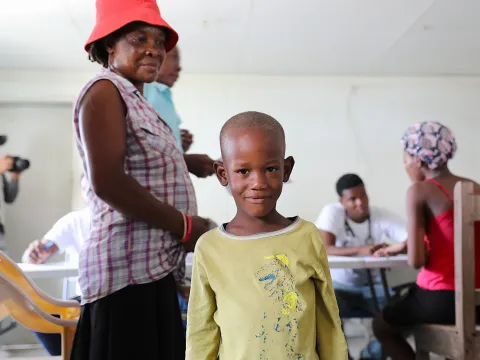
PORT-AU-PRINCE, Haiti, 9 September 2023 - As population movements persist in the metropolitan area of Port-au-Prince, UNICEF and its partners are stepping up their efforts to respond to the needs of those newly displaced due to the resurgence of violence in various parts of the city. Thousands of people, the majority being women and children in search of safety, have sought refuge in temporary locations, including schools, scattered across the capital.
"We had to leave our home in haste, unable to take anything with us. We are uncertain about when we can depart from this site, as the threats from armed groups continue to loom in the area. Bandits set fire to our houses while we were already enduring challenging circumstances," says Judeline (not her real name), a mother of two young children.
To the north of Port-au-Prince, in Carrefour-Feuilles, where threats and assaults by armed groups are pronounced, nearby schools such as the Lycée des Jeunes Filles (Young Girls' High School), have been spontaneously turned into temporary shelters for hundreds of families.
"Displacement sites are typically overcrowded and overwhelmed, which increases the risk of disease transmission. Families living under these conditions face health risks, including cholera, malaria, malnutrition, and limited access to healthcare and vaccinations," explains Jean Bosco Hulute, Head of Health and Nutrition at UNICEF in Haiti.

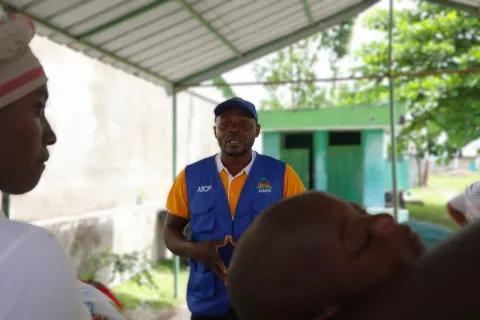
UNICEF, in collaboration with its partner Médecins du Monde, has deployed mobile clinics to proactively address all potential risks of disease outbreaks and provide care to those affected.
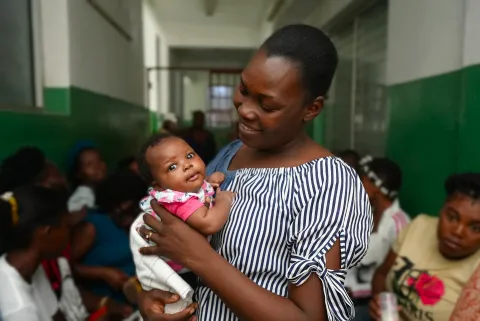
"We offer an integrated package of services to children and their families, including consultations for children and pregnant women, providing care for injuries, supplying medications for the sick, identifying and treating cases of malnutrition, and administering vaccinations to children," reports Dr Jimmy Almoza, from Médecins du Monde (MDM), a vital partner of UNICEF.
"We focus on cholera screening as sanitation conditions are precarious, and the country is grappling with this perilous waterborne disease," adds Dr Jimmy.
"In a single day, we have been able to provide consultations to more than 487 individuals, predominantly children and women, including pregnant women. Common health issues among children include malnutrition, respiratory infections, and diarrhea. We offer immediate care and appropriate treatments."
Since August 12, a total of 19,470 people has become newly displaced in the metropolitan area of Port-au-Prince, finding shelter in temporary sites where conditions remain extremely precarious.
In addition to deploying mobile clinics, UNICEF, with CERF Funds, has installed water reserves at the affected sites, provided the displaced with water, hygiene, and sanitation kits, established psychosocial support, implemented measures to prevent the risk of violence and exploitation, particularly gender-based violence, and explored various slopes to ensure children receive an education for the upcoming school year.