Sitting quietly in the middle of a boat, the breeze swept across my face, carrying the scent of water and the quiet beauty of the islands as we moved slowly across Lake Volta. The landscape unfolded gently, offering a moment of reflection before we reached the Twin Dwarf Islands, Afram Plains North in the Eastern Region of Ghana, about 4.5 hours from the capital, Accra.

It was then that I saw him.
A young boy stood barefoot at the water's edge, wearing a simple white singlet. He watched us as we approached the muddy bank. I wondered why he was there alone on a weekday. As we reached the shore, he stepped forward to meet us, and I soon realized he was there to help. The boat instructor exchanged a few words with him, and he began assisting us, pulling the boat through the shallow water.
Curiosity drew me to him. "Hi, can I talk to you?" I asked. A shy smile broke across his face. "Sure," he replied.
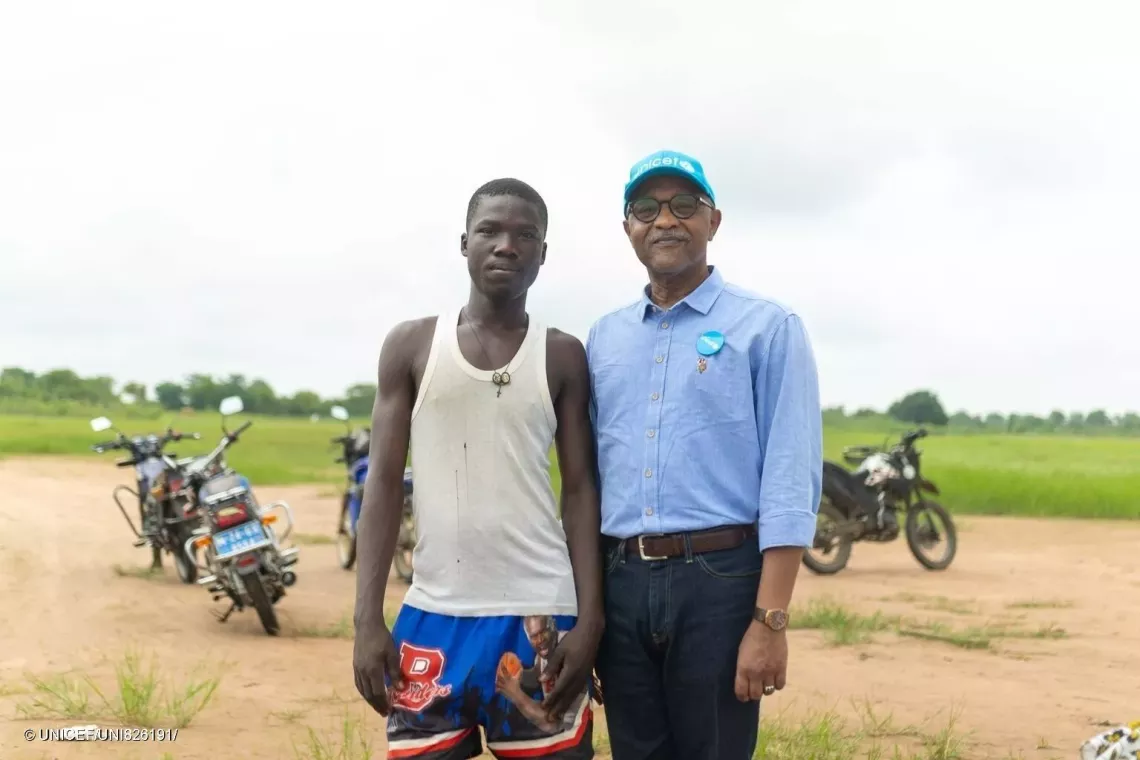
He introduced himself as Jacob, a 17-year-old from Sidi Kope, one of the Twin Dwarf Islands. I explained I was from UNICEF Ghana, visiting to understand the realities children face here. When I asked why he was at the lake, he explained schools were on break. Jacob shared that he was in Junior High School Form 3, preparing for his final exams next year. Since there is no junior high school in his community, he attends one in Brubin, a community across the lake.
I learned that Jacob is the youngest of ten children and the only one in his family who has ever been to school. His determination to continue his education struck me. Despite the lack of electricity and basic services in his community, Jacob moved away from his family just to attend school. He explained he was working at the lakeshore to help his uncle and earn a little income—around 20 to 30 cedis—to buy cassava cereal, sugar, and peanuts to sustain himself.

When I asked about his dreams, Jacob’s eyes lit up. Though he was not certain about his future profession, he was sure about one thing: he wants to succeed and give back to his community, showing others that it's possible to change their story. As we left the bank on a motorbike, I watched him return to the boat, his small frame determined against the vastness of the lake and the challenges he faces.
Jacob’s story stayed with me, reminding me of the quiet resilience of many young people in Ghana’s hard-to-reach communities—places where children still struggle for access to basic, quality education, water, and electricity. His story is not just about him; it is the story of many children who are full of dreams but are held back by a lack of resources and opportunities.

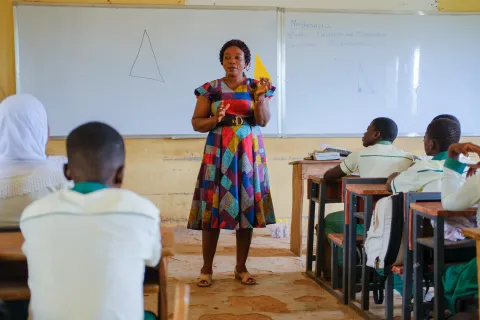
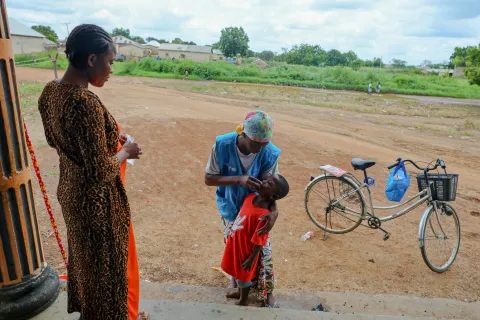
During our mission to the Eastern Region, I met others whose stories echoed Jacob's. A student in Bumpata shared his dreams despite a classroom in terrible condition and a single teacher guiding them through all seven subjects. Mothers shared their struggles to register their children’s births because there was no registration center nearby. Expectant mothers spoke of their fears, knowing the nearest health facility required a three-hour walk.
These are not just stories; they are lived realities. Accompanying our team as a communication consultant helped me see how issues of health, education, water, and sanitation are not isolated problems, but interconnected barriers that can define a child’s future. These encounters continue to shape my perspective on our work.

They remind us why we must continue to advocate and push for resources to reach these communities. Stories like Jacob's and the many resilient people I met inspire hope, demand our attention, and call us to action so that every child, no matter where they live, has the opportunity to reach their full potential.