School Curriculum Audit

About
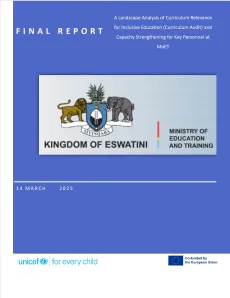
Purpose and Scope: This UNICEF/EU co-funded report, commissioned by the Ministry of Education and Training (MoET) and finalized in March 2025, audited Eswatini's primary and secondary curricula (English, Expressive Arts, and Agriculture) against a Diversity, Inclusion, Equity, and Justice (DIEJ) framework. The methodology combined a desk review of national policy documents and teaching/learning materials with extensive stakeholder consultations, including curriculum developers, inspectors, teachers, headteachers, ECESWA, FODSWA, parents, and learners with disabilities, to assess how well Eswatini's strong policy commitments to inclusive education translate into actual classroom practice.
Key Findings: The audit found a significant gap between policy and practice. While national policies (the National Education and Training Sector Policy 2018, Eswatini Standards for Inclusive Education 2019, and ESSP 2022–2034) demonstrate strong commitments to inclusive education, curriculum materials show limited representation of persons with disabilities, inadequate differentiation for diverse learners, rigid assessment structures, and insufficient multilingual/sign-language support. Strengths include cultural inclusivity (especially in Expressive Arts) and gender-balanced content, but stakeholders flagged persistent challenges: minimal teacher training in inclusive methods, shortages of assistive technology (especially in rural areas), weak collaboration between curriculum developers and SEN specialists, and no strong accountability mechanisms to enforce inclusive standards.
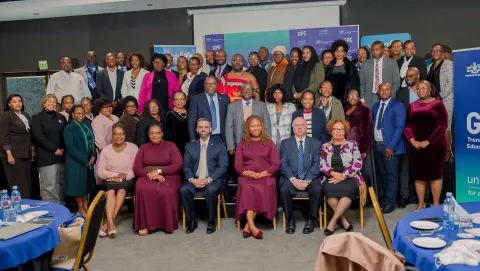
Recommendations and Outlook: The report proposes a phased action plan, short-term priorities (2025–2027) include mandatory teacher training on inclusive instruction, syllabus revisions, and expanded accessibility resources (Braille, assistive devices); medium-term priorities include formalizing Swazi Sign Language as a subject, launching inclusive vocational pathways, upgrading school infrastructure, and reforming national assessment frameworks. A pilot Training of Trainers workshop (40 participants, February 2025) demonstrated the promise of this approach, lifting self-reported understanding of inclusive education from 2.4/5 to 4.6/5. The report concludes that closing Eswatini's policy-practice gap will require sustained investment, stronger monitoring/accountability systems, and closer collaboration across MoET, schools, and disability advocacy groups to ensure truly inclusive education for every learner.