Access to late birth registration gives new hope to children in Kirundo province
In the fourth phase of the project "Giriwanyu Kibondo," implemented with the technical and financial support of the United Kingdom Committee for UNICEF, thousands of children in the province of Kirundo have their rights protected and their future secured

- English
- Français
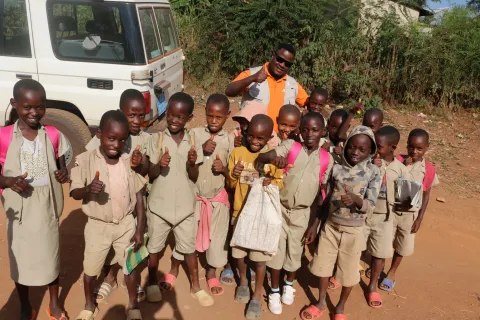
One Friday morning, on Rusaga Hill in the commune of Bugabira, Kirundo province, we met Jean Baptiste Mutaniyonka, a married father of eight children. Two of his children, Valles Iratuzi, 13, and Olivier Karerwa, 10, aspire to become a doctor and a teacher, respectively. However, their dreams were nearly shattered because their father had not registered them with the civil registry at birth. Consequently, these children faced significant challenges in continuing their education until UNICEF supported late birth registrations in their province.
"Either they were expelled from school, or we were constantly summoned to explain. It disturbed them greatly," recounts their father. According to him, this delay in registration was due to financial constraints and the considerable distance between their home and the civil registry office. He adds that he must travel 30 to 40 kilometers to reach the civil registry office, an insurmountable obstacle for him and his neighbors, especially those living with disabilities, who eventually give up on this process.
Fortunately, thanks to UNICEF's support, these problems are now a thing of the past. To support birth registration in the province of Kirundo, the Giriwanyu Kibondo Phase IV project, funded by In the fourth phase of the project "Giriwanyu Kibondo," implemented with the technical and financial support of the United Kingdom Committee for UNICEF, thousands of children in the province of Kirundo have their rights protected and their future secured., has allowed many children, including Valles Iratuzi and Olivier Karerwa, to be registered despite the delay and to fully enjoy their rights, facilitating their access to education and other essential services. This intervention aims to strengthen access for children whose births were not registered within the legal timeframe to civil registry documents.

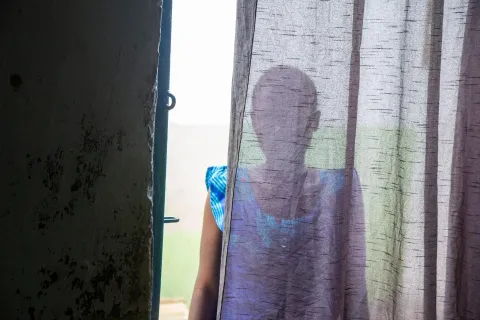
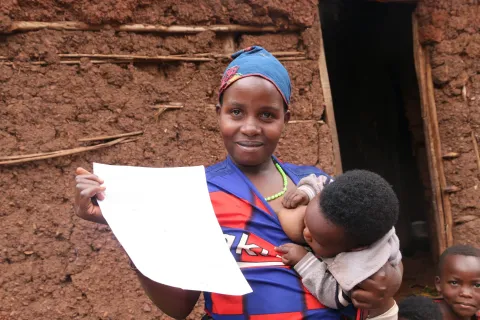
Due to a lack of information, some families were unaware that registering their children guaranteed them protection and did not pose a threat. "I was afraid they would take my child away or that he would be burned by the sun," recounts Emelyne Niyokwizera, a young mother of an albino child. Because of the non-registration at birth, her child, under five years old, could not benefit from free care. When he fell ill, she resorted to self-medication because she couldn't afford hospital fees. "Thanks to UNICEF's support, I have now been able to register my child, and he can now access his rights. He receives free treatment, and even for a cold, I quickly run to the hospital."
According to Grâce Itangishaka, provincial civil registry controller of Kirundo, this province had one of the lowest birth registration rates, with only 54%. Thanks to UNICEF's support, 144,414 children from communities in this province have been registered with the civil registry and have received their birth certificates.
Thanks to this catch-up initiative, Burundi is getting closer to the goal of ensuring access to essential social services and child identity for all. UNICEF continues to support the government in its efforts to increase registration rates within legal deadlines through interoperability.