

CENTERS FOR EARLY CHILDHOOD DEVELOPMENT ARE AN INVESTMENT THAT PROVIDES A VISIBLE RETURN
To ensure that every child realises the right to develop to their full potential, we continue to appeal to decision-makers to increase investment in children
- Bosanski/Hrvatski/Srpski
- English
A year ago, Amar's dad went for an examination at the Health Center in Maglaj. When he finished, on his way home, he noticed the doors with a tag "Speech therapist". He knocked and asked only one question. "My son is two years old, he only says the words mom and dad, should I bring him to you?"
After an affirmative answer, Amar came to the Center for Early Childhood Development, which has been functioning as part of the Health Center in Maglaj since 2015.
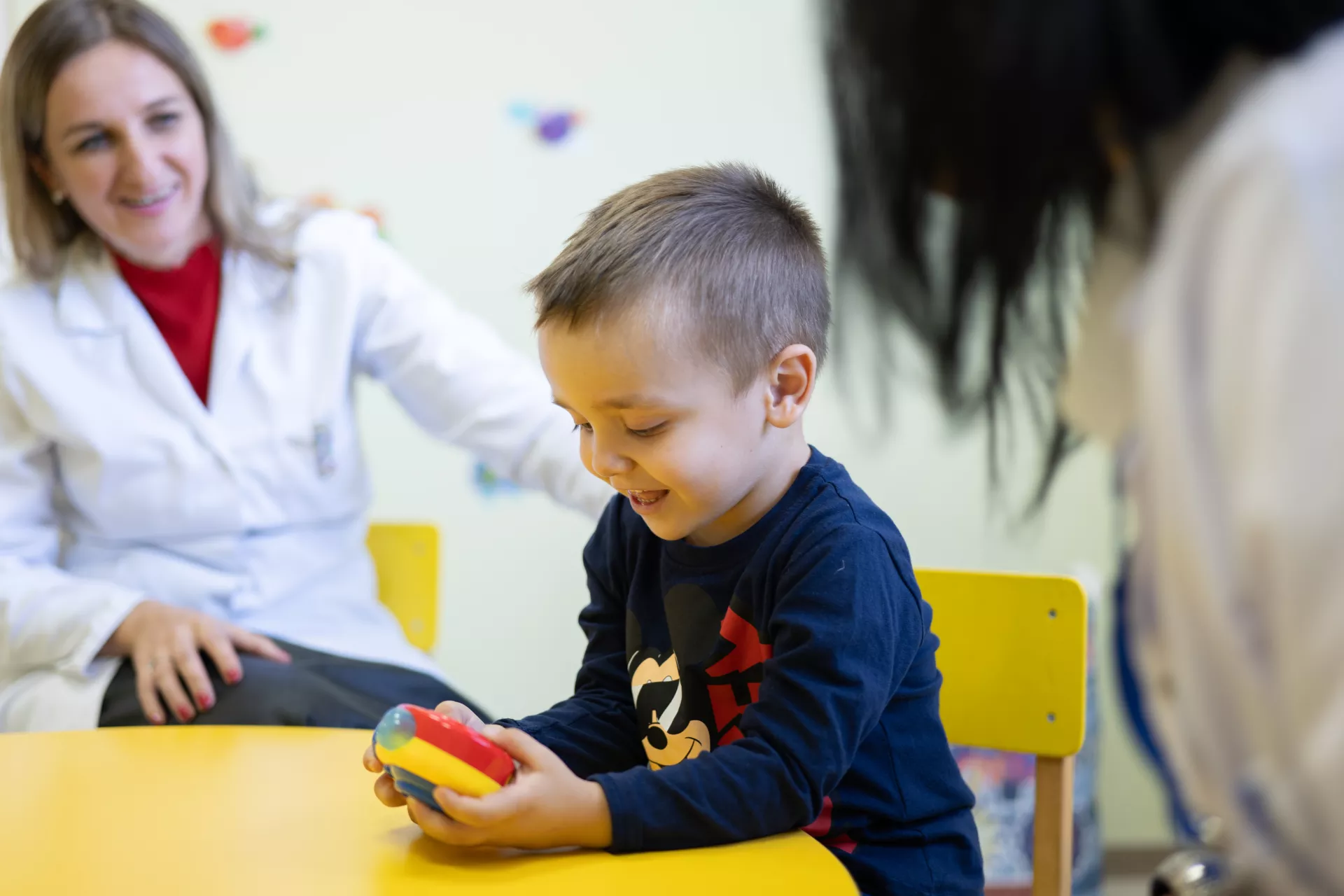
Amar was first referred to a pediatrician, and after it was established that there are no functional obstacles to speech development, the rest of the team at the Center, which also includes a psychologist and a speech therapist, established, using standardized developmental scales for the early diagnosis of developmental difficulties in children, that Amar has neither cognitive nor behavioral deviations from his age and that early intervention with him will take place through a program of continuous work with a speech therapist. Amar has been coming to the center for a year, twice a week, and while we watch him arrange wooden figures with the speech therapist, naming each one and imitating its sound, his mom Selma tells us:
"Progress is evident. Now we can communicate. In addition to the fact that he is now completely verbal, I also notice that he is less shy, withdrawn, that he is more open in his communication with children and adults, and only now do I feel that I could enroll him in kindergarten without any worries."


Samra Jusufspahić is a speech therapist and coordinator of the Maglaj Early Childhood Development Center, one of the fifty-three such centers in Bosnia and Herzegovina, the establishment of which was initiated by UNICEF BiH as part of the Early Childhood Development programme. Today, most centers are functional within the health centers, or less often as part of kindergartens or centers for social work.
Samra says that around a hundred children pass through the center every year and that there is a noticeable trend of increased need for early detection and intervention services, especially the need for speech therapy treatment, since the examination by a speech therapist became an integral part of the systematic examination that children undergo before entering elementary school. There are most children with disabilities in the development of speech, children from the autistic spectrum, and there are also those with combined difficulties. Early intervention is adapted to the diagnosis, and parents participate in working with the intervention team from the beginning, to master the techniques and skills of stimulating the child's development, which they can then practice daily.
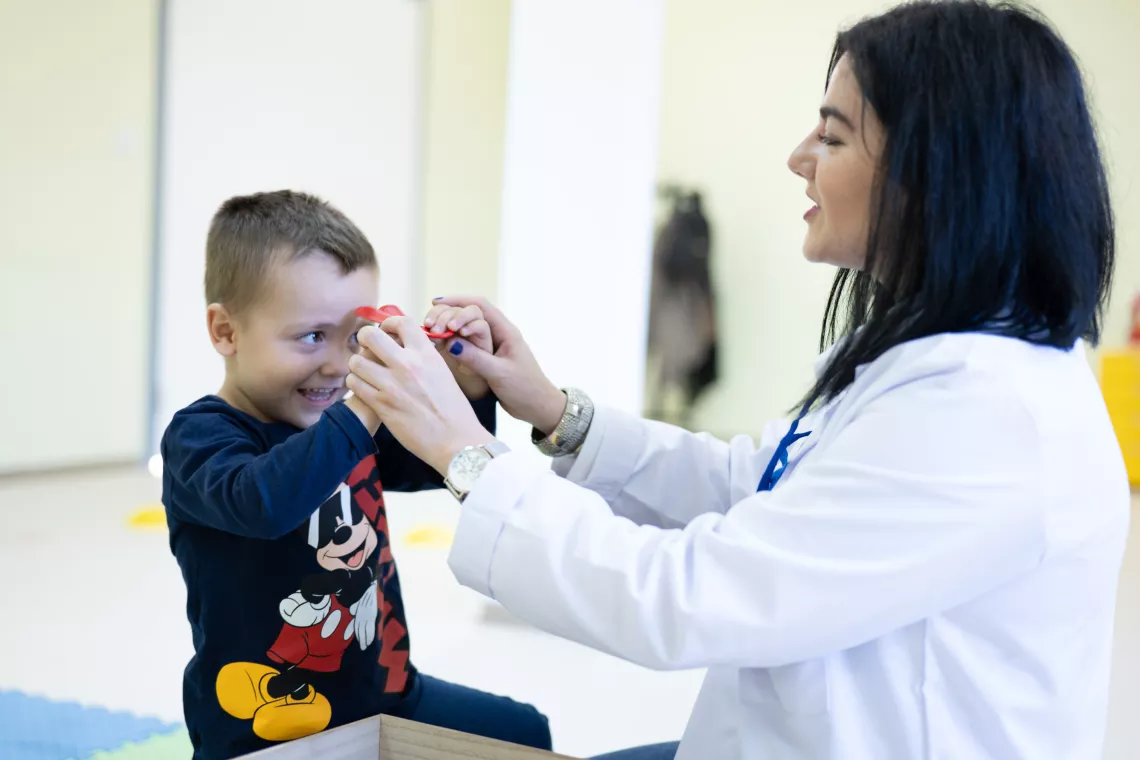
In addition to working in the center, the team also makes an annual visit to kindergartens in Maglaj, to detect possible developmental deviations in children, who are then being referred to the center for further treatments. In addition, they hold annual meetings with elementary school pedagogues, before the beginning of the school year, to familiarize them with the condition of the children who start school and were, or are currently, users of the center, and for the school staff to be prepared, to plan the engagement of assistants, or creating customized programs.
An ideal team of the center would also involve the special education teacher, but unfortunately, since the standardisation and systematisation of workplaces is determined according to the number of inhabitants, and not according to the growing need, this position is not sistematised.
At the beginning of the establishment of centers for early childhood development in Bosnia and Herzegovina, UNICEF, with the help of donors such as the European Union and the Austrian Development Agency, funded also the salaries of employees, but today these positions are financed from the budget, they are institutionalized within the system, and UNICEF and donors provide support in staff training, procurement of equipment and didactic aids, furniture, and continuous development of professional staff.
Development scales have adopted as standard, both in the Republika Srpska and in the Federation of Bosnia and Herzegovina, and formal intersectoral cooperation has been achieved in each municipality where the center exists, so that there are mechanisms for referring children between the health, education, and social sectors.
After Amar, we also met Imran, who has been visiting the center for six months. Imran is 4.5 years old. He did not speak at all until he was four. Father Halid faced a serious health issue, which became a problem for the whole family, just in the period when Imran, according to the developmental milestones, was supposed to speak. Both he and his wife Adela are aware that in those moments they could not provide their son with adequate support and developmental incentives, while the others, who took care of him, spoiled the boy a little, so there was no adequate encouragement for the development of his speech.


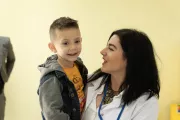
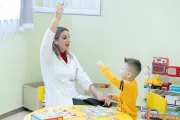
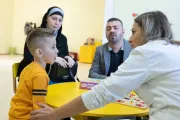
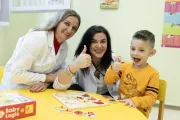
"Imran from six months ago and Imran today are two different children. In addition to improving his speaking skills, he has much better attention, focus, relationship with elders and peers. Imran also attends kindergarten and the progress in speech is resulting with progress in early learning as well.", parents and speech therapist Samra agree.
As part of the EU and UNICEF program for the Reform of the healthcare system in Bosnia and Herzegovina, ten more Centers for Early Childhood Development will be established, two of which in Sarajevo.
UNICEF will continue to support the integration of early development services in health, education, and social systems, focusing also on the necessity of strengthening parenting skills, for the sake of ability of early recognition of developmental delays.
To ensure that every child realises the right to develop to their full potential, we continue to appeal to decision-makers to increase investment in children, since every convertible mark invested in this sector returns fourfold to society, and the cost of not investing in the next three decades could cost the country unimaginable 388 million marks.
We all have invested in Imran and Amar and the progress is already visible, and it will result with their socialisation, learning outcomes, acquisition of new skills. Ultimately, they will be functional and productive adults. The society is obliged to make such progress feasible for every child in Bosnia and Herzegovina.


