UNICEF calls for more investment as South Asia remains a global epicentre for undernourished and anaemic adolescent girls and women
Despite progress, South Asia has over one third of the world’s stunted children (nearly 54 million) and over 25 million children suffer from wasting.

KATHMANDU, Nepal, 18 September: UNICEF today kicked off a three-day regional conference on nutrition in Kathmandu, Nepal with the aim of scaling up equitable nutritional care for girls and women in South Asia.
Organised by UNICEF Regional Office for South Asia, the conference is being attended by government representatives, development partners, researchers, jurists and stakeholders from South Asia (Afghanistan, Bangladesh, Bhutan, India, Nepal, Maldives, Pakistan, and Sri Lanka). Over the next three days, experts will reflect on the nutrition situation of adolescent girls and women in the region and exchange innovative solutions to counter this crisis preventing generations of girls and women from reaching their full potential.
Women’s nutrition is central to breaking the intergenerational cycle of malnutrition in South Asia. The region is the home to one third of the world’s undernourished children, according to the UNICEF report Undernourished and Overlooked. Likewise, one in five women in South Asia are underweight, and one in two are anaemic[1]. UNICEF’s research also shows that the regions with the highest levels of maternal undernutrition also contain the highest numbers of child undernutrition.
“Good nutrition is essential to help girls and women thrive and succeed in life. At the same time, a mother’s nutrition health has a direct and critical impact on her child. This is why the child undernutrition crisis in South Asia can’t be solved without addressing girls' and women’s undernutrition. We need to work collectively and make sure that the nutrition of women and children is at the centre of the national development agenda,” said Sanjay Wijesekera, Regional Director of UNICEF South Asia, at the inauguration of the conference.
In recent years, national governments across all countries of South Asia have made concerted efforts to address undernutrition among children and women. However, the progress is too slow, successes have been uneven and not shared equally among and within countries. The situation was further exacerbated by the COVID-19 pandemic, the incessant and escalating conflicts and natural disasters and the current economic downturn.
“Incorporating the delivery of nutrition interventions within health, food and social protection systems has the potential to achieve maximum impact. Only in this way can we address under-nutrition in children together with malnutrition in adolescent girls, pregnant and breastfeeding mothers,” Sanjay added. He urged countries to allocate adequate resources and investment in adolescent girls’ and women’s nutrition.
One out of every four women (307 million) of reproductive age suffers from micronutrient deficiencies in South Asia. Around 63% of children under the age of five experience stunted growth during the first six months of life.[2] This is the critical period, known as the first 500 days [3] of a child’s life, when a child is entirely reliant on the mother for nourishment.
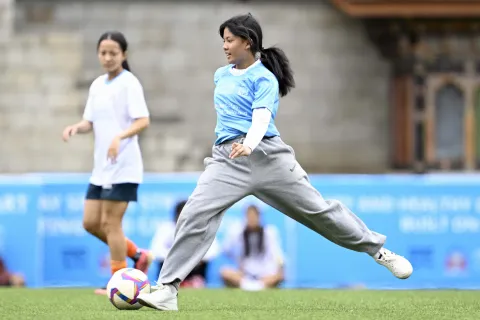
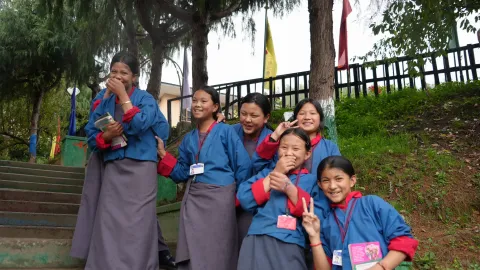
While the nutritional status of adolescent girls and women have improved in Bhutan today, much remains to be done in addressing high prevalence of anaemia and improved compliance to iron folic acid supplementation. With 27.3 per cent of pregnant women, 36.1 per cent of non-pregnant women and 31.3 percent of adolescent girls, anemic, anaemia is a public health concern for Bhutan.
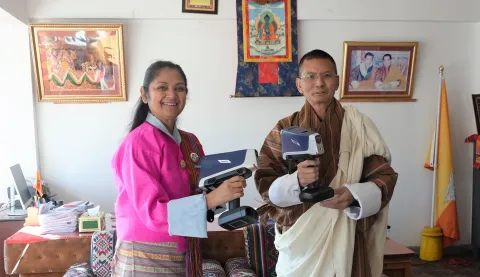
To improve the maternal and childbirth outcomes, the Ministry of Health and UNICEF will be soon introducing the multiple micronutrient supplements (MMS) for pregnant women and breastfeeding mothers until six months. This will not only help reduce the burden of anemia, but also address other micronutrient deficiencies in pregnant and breastfeeding women as well as breastfeeding children. Each multivitamin and mineral tablet contains 13-15 micronutrients.
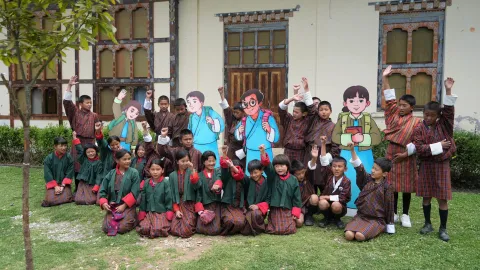
In addition, overweight and obesity among adolescent girls is a growing concern that requires system strengthening to address the triple burden of malnutrition - undernutrition, overnutrition and micronutrient deficiencies. The Ministry of Education and Skills Development and partners have plans to strengthen local produce supply for the school feeding program through linkages with farming cooperatives enhance supplies of fortified rice and oil, improve the school agriculture program among others.
Adolescent girls and women from the poorest households are twice as likely to suffer from underweight as those from the wealthiest households. The disparities among urban and rural poor families are the worst.
Capitalizing on this important regional moment, UNICEF is calling upon governments in South Asia to:
- Improve access to affordable nutritious foods – including fruits, vegetables, eggs, fish, meat and fortified foods.
- Implement policies and mandatory legal measures to protect from nutrient-poor and unhealthy ultra-processed foods and beverages.
- Improve access to essential nutrition services before and during pregnancy and while breastfeeding, including in humanitarian crises.
- Expand access to social transfer programmes, including in fragile settings and humanitarian crises.
- Implement gender-transformative policies and legal measures that strengthen social and economic empowerment.
####
Notes for Editors:
For B-roll and multimedia, click here.
For further inquiries:
Pravaran Mahat, UNICEF South Asia, [email protected] / +977 9802048256
[1] Report: Undernourished and overlooked - UNICEF
[2] Report: Undernourished and overlooked - UNICEF
[3] From conception to first six months of life.
Media contacts
About UNICEF
UNICEF promotes the rights and wellbeing of every child, in everything we do. Together with our partners, we work in 190 countries and territories to translate that commitment into practical action, focusing special effort on reaching the most vulnerable and excluded children, to the benefit of all children, everywhere.
For more information about UNICEF and its work for children, visit www.unicef.org.