For every child in Azerbaijan: what we achieved together
Today, as UNICEF’s operational presence in Azerbaijan transitions to a new modality, we celebrate the lasting progress we've built together

For more than 30 years, UNICEF and the Government of Azerbaijan have worked together to advance the rights and wellbeing of every child in the country. From responding to humanitarian needs to supporting long-term national development, our partnership has helped deliver real and lasting change.
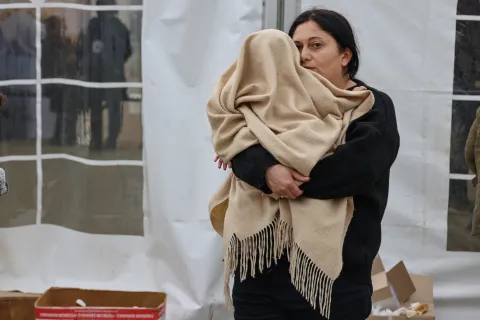
UNICEF's presence in Azerbaijan began in 1993, at the Government’s request, in response to a major humanitarian crisis. We provided thousands of displaced families with everything from medicine and sanitation supplies to psychosocial support and early learning centers.
As children's needs evolved over time, so did UNICEF’s role - shifting from emergency response to a long-term technical support across child protection, health and nutrition, education, and youth and adolescents’ development.
Today, as UNICEF’s operational presence in Azerbaijan transitions to a new modality, we celebrate the lasting progress we've built together. From improved child survival rates to stronger national systems, these milestones are a testament to the power of sustained partnership and shared commitment.
Below are some of the most meaningful achievements from this shared journey - milestones that will continue to shape the lives of children in Azerbaijan for years to come.
1. Azerbaijan's first-ever National Child Strategy
With support from UNICEF, the Government developed the country's landmark framework on behalf of children – a strategy that places children's rights at the centre of national development. Among other elements, the plan helps keep children safer from violence: so far, 10,000 teachers have been trained in child safeguarding and 3.6 million people across the country reached with violence prevention messages.
2. Doubling of preschool enrolment
When early childhood education is high-quality and accessible, it can improve children's cognitive development, educational attainment and even long-term health. This is why increasing its availability in Azerbaijan has been a priority for UNICEF – and for the Government too.
Thanks to national investments in early learning, Azerbaijan's preschool enrolment rate doubled from 2015 to 2024, from 14 per cent to 35 per cent. With bold targets set for 50% coverage by 2026, the groundwork for universal preschool is firmly in place.
3. A plunge in child mortality
Since the 1990s, Azerbaijan has made remarkable development in maternal and child health. Initiatives such as the Universal Progressive Home Visiting Model, which supports families through regular home visits by healthcare workers for vaccinations, development checks and early support – have contributed to a dramatic reduction in under-five mortality, from 95 to 18 per 1,000 live births. UNICEF has been proud to support these efforts as a technical partner.
4. Better data for smarter policies
With UNICEF’s s support , Azerbaijan strengthened its child data systems, making accurate, reliable information central to policy. National surveys now track progress on health, education, and inclusion, supporting more targeted decision-making.
5. A safer world
With the legacy of conflict still present, UNICEF and the Government worked together to protect children from explosive remnants of war. Since 2021 alone, more than 190,000 people, including children in high-risk areas, have received life-saving risk education through schools and communities.
6. Engaging youth in the policies that impact them
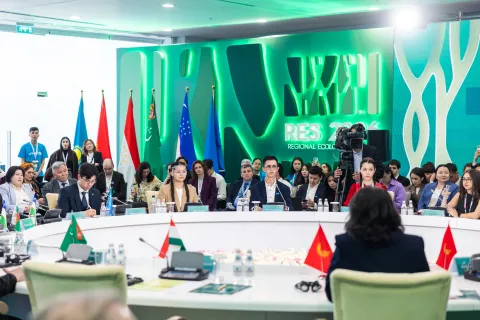
UNICEF launched Azerbaijan’s first Youth Climate Envoy programme, training 31 young people to participate in national and global climate dialogues, including COP29. Youth-led Climate Weeks, forums, and policy workshops gave voice to young Azerbaijanis and helped shape environmental policies from the ground up.
7. Mental health support for thousands of children
Since 2020 alone, UNICEF's mental health and psychosocial programmes have equipped 80,000 children and educators with tools for emotional resilience.
8. Lasting life skills
Adolescents need more than academic skills to thrive. In partnership with the Government, UNICEF invested in life skills, career guidance and climate advocacy. The Basic Life Skills (BLS) programme, now embedded in Youth platforms and vocational institutions, has helped over 15,000 young people annually build resilience, emotional intelligence, and confidence.
9. Inclusion for young people with disabilities
UNICEF’s Student Acceleration Programme created inclusive career pathways through mentorship and training, leading to successful job placements. Meanwhile, inclusive education reforms from the Government, supported by UNICEF, have trained 15,000 educators and reached 40,000 children with diverse learning needs.
10. Long-term resilience
UNICEF supported Government reforms in social protection, focusing on shock‑responsive social protection, and strengthened child budgeting initiatives, and published Azerbaijan’s first child‑focused budget brief, helping to understand to what extent national spending reflects children’s needs.
While UNICEF’s operational presence in Azerbaijan is coming to a close, the impact of our work endures - in national strategies, in stronger systems, and above all, in the lives of children and families across the country. Going forward, UNICEF will continue to support Azerbaijan through its regional office and headquarters, offering technical expertise and guidance aligned with national priorities and demand.